
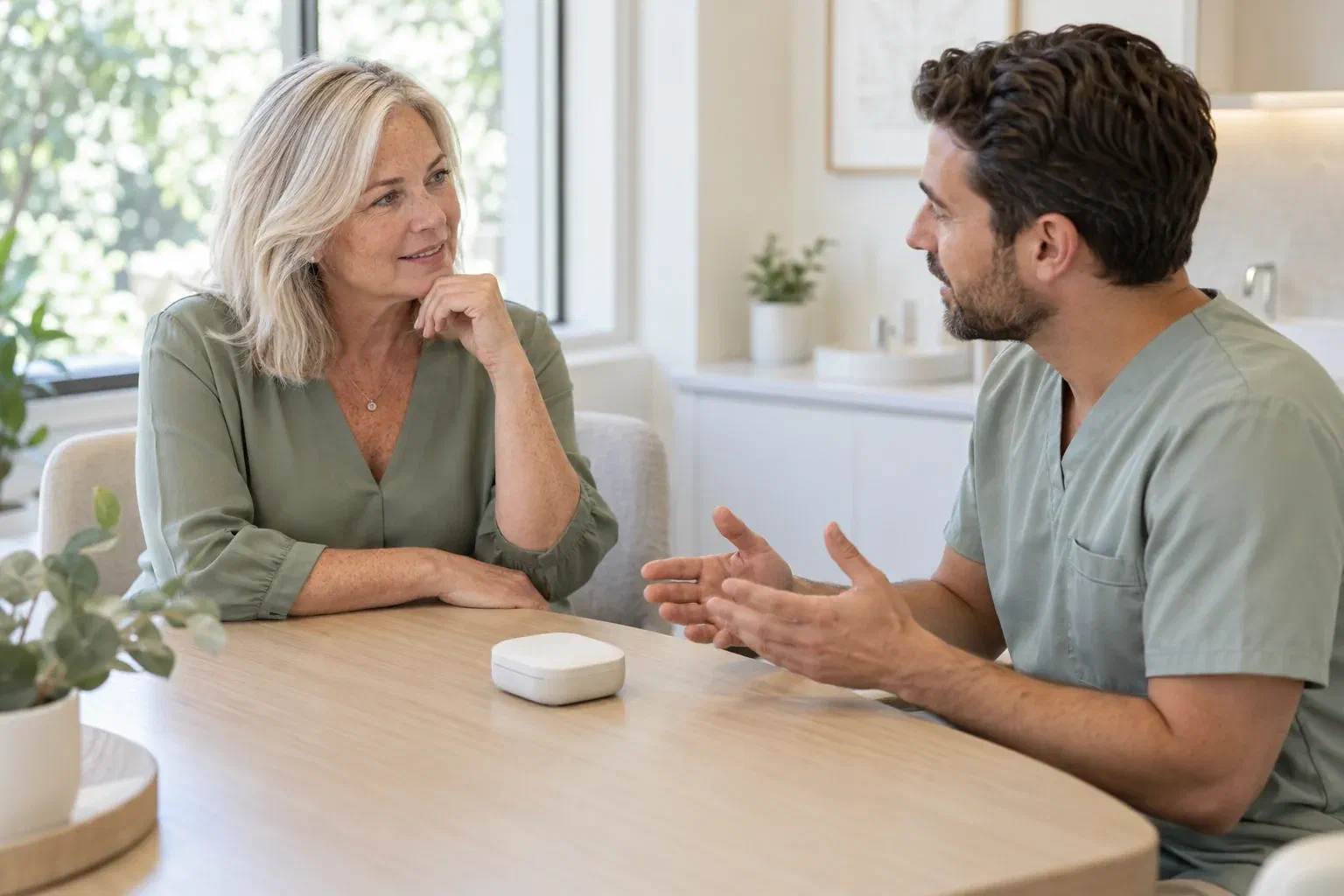
Illustrative consultation about replacing a custom oral sleep appliance
Specialized Care

Sleep Appliance Replacement in Halton Hills

If your first sleep appliance always felt bulky, made you drool or left your jaw stiff, replacing it is a chance to ask what else might suit. People across Halton Hills can review design options against current teeth and their sleep plan.

Halton Hills · a second chance at comfort

What if the next appliance did not have to be the same kind?

Some people wear their appliance faithfully for years while never quite liking it. It might crowd the tongue, keep the lips apart, or make mornings stiff around the jaw joint. When that device finally wears out, cracks or goes missing, the replacement visit becomes a good moment to talk honestly about what was hard, rather than reordering the same thing.

Make a list before you come. What bothered you most, and when — falling asleep, during the night, or after waking? Did you ever skip nights because of it? Equally useful: what did you like? Those answers help the dentist judge whether a different design is worth considering or whether the old one simply needs an updated fit.

Bring the device if you still have it, and tell Milton Dental Clinic who made it and which physician looks after your sleep condition. Options are discussed in light of your current mouth and treatment plan, not just preference. A design change is never automatic, but neither is repeating one that kept you from wearing it.

Talk about a better-suited replacement
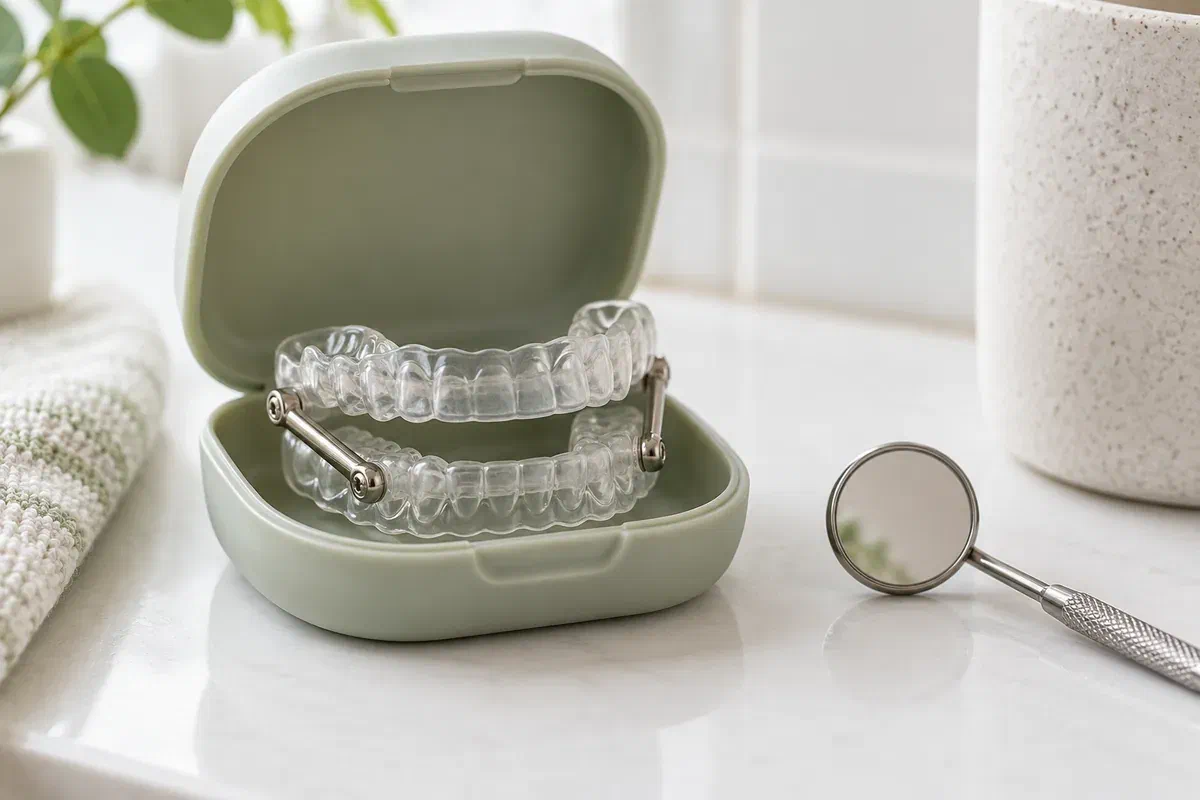
Illustrative connected oral sleep appliance inside an open protective case
Why you are here now

Name the trigger, and the frustrations behind it.

Most replacement visits start with something concrete — loss, damage, a changed mouth. If the old appliance was also hard to live with, mention that too. Each issue points the assessment in a slightly different direction.

It is lost, and you were not sorry to see it go

Record roughly when you last wore it, and contact the original provider to ask about records. Then call your sleep physician: even an uncomfortable appliance was part of prescribed treatment, and stopping it is a change they should know about and can advise on.

It has cracked or loosened after hard use

Bring it in, along with any broken pieces. Whether repair is reasonable depends on the defect, design, parts and fit — not just age or how minor it looks. If the device was already uncomfortable, that may also weigh into whether repairing it is worth discussing.

Comfort or your mouth has changed

Describe jaw soreness, tooth tenderness, dry mouth, excess saliva or any change in your bite, along with new fillings, crowns or missing teeth. If symptoms have returned, tell your sleep-care provider too. Discomfort that is ignored can undermine any device, old or new.

Please do not keep forcing yourself through a device that hurts, binds or has damaged parts. Contact the treating provider for advice, and ask your physician about sleep care while you are not wearing it.

What this review can open up

Your complaints about the old device are useful data.

The dentist cannot improve on a design without knowing what went wrong with it. Explain what felt awkward and what felt fine, and whether your physician ever confirmed the appliance was effective. Set against today’s examination, that history helps distinguish a design problem from a fit problem — and from discomfort that has another cause.

Practical sequencing matters as well. A planned crown or extraction could affect any new design, and your sleep clinic may want to weigh in before something different is made. Deciding together what comes first, and who looks after fitting and follow-up, reduces the chance of trading one ill-suited device for another.

Patient information: AADSM — current assessment, appliance management, and coordinated follow-up

A current look at teeth and jaw

Teeth, gums, restorations, bite and jaw movement are assessed because they determine which designs are realistic. Ask whether any finding rules options in or out, or needs treatment first. How the old device performed is helpful, but the examination today is what guides the choice.

Records that show what you had before

Details of the original design, earlier scans, adjustment notes and sleep reports help the dentist understand your starting point. Ask which can be obtained and which need redoing. Records describing the old device may matter more than the old impressions, which may be out of date.

A clear plan for trying something new

If a different design is chosen, ask how the adjustment period will be supported and how its effect will be reviewed with your physician. Find out who to call while you wait and if the early weeks are tough. A new style may take time to get used to.

Working toward the right device

Listen first. Examine. Compare. Then fit.

Pack the appliance alongside your list of likes and dislikes, or explain what is missing. By the end of the visit you should know why a new device is on the table and what has to be decided before one is offered.

  1. Talk through life with the old device

    Explain why you need a replacement and what wearing the original was really like. Share how often you used it, the provider who made it and your physician’s details. Mention whether you are currently going without treatment and any advice you have received.

  2. Assess the mouth and jaw

    The dentist examines oral health, the teeth that would anchor a device and how your jaw moves. Planned dental work may affect timing. Ask how these findings shape the range of designs that might suit, and whether other care should come first.

  3. Compare suitable designs

    If replacement is appropriate, the dentist explains which designs could work, why, and how they differ from what you had. You will cover the records needed, estimated costs and expected stages. Ask what trade-offs each design carries. Timing is confirmed by the treating provider.

  4. Fit and fine-tune with follow-up

    A new device — especially a different style — is checked in your mouth on fitting day, and you are taught to handle it and told where it starts. Expect one or more follow-up visits for comfort, and ask how they line up with your physician’s review. Avoid applying the old setting or changing parts unless instructed.

Settling in

Give a new design time, and report what is not working.

Guidance depends on the reason for replacement and on whether your current appliance is safe to wear. Ask for clear instructions about the waiting period and about adapting to the new device.

Tell your physician about any gap in use

If you have stopped wearing the old appliance, let the provider managing your sleep condition know and ask about interim care. Do not drop other prescribed treatment or try a generic guard. If you are sleepy during the day, seek medical advice and avoid driving while drowsy.

Flag dental changes promptly

New dental work, a broken tooth, pain or a different-feeling bite after records are taken can alter the fit. Raise it as soon as you notice, rather than at the end of a fitting appointment.

Learn the new style from the beginning

A different design may go in, come out and feel quite unlike the old one. Practise handling it, and confirm cleaning, storage and any permitted adjustment. Keep a short diary of comfort in the first weeks, and ask when you should call if things are not improving.

Possible choices

Same style, different style, or a step back first.

Ask what each path is expected to improve and what it will not. A different design may help with comfort, but it will not resolve discomfort caused by a dental problem or explain returning symptoms on its own.

When replacement is supported by the review

A new custom appliance, same or different design

After dental and medical information is considered, a replacement may be appropriate. Ask which design is suggested, what records it needs and how fitting will be arranged. The decision should weigh your past experience as much as today’s findings, with follow-up planned.

When the existing device was working for you

Repair, if it still makes sense

If the old appliance was comfortable and effective, a repair may be assessed. The type of break, the material, whether parts can be found and how it seats today all matter. Ask what repair would accomplish and how it would be checked. It is not always feasible or economical.

When the real issue is not the device

Addressing comfort or treatment questions first

If jaw pain, a dental problem or a change in treatment response is behind the difficulty, another assessment or pathway may be needed. The dentist may involve the original provider or your physician. Ask what to tackle first so the next device starts on firmer ground.

Halton Hills questions

Questions about trying a different appliance.

Bring your questions about design, comfort, costs and the transition. Your examination and records help the dentist give answers that fit your mouth.

(905) 876-4488
My first appliance made my jaw ache every morning. Will a different one help?
Possibly, but morning jaw discomfort can have several causes. The dentist will examine your jaw and bite and consider the previous design before suggesting whether a different approach is worth trying.
What are the main differences between sleep appliance designs?
Designs vary in how they connect the upper and lower parts, how they are adjusted, how much room they leave for the tongue and how much jaw movement they allow. The dentist can explain which features may matter for you.
Excess drooling was a problem with my last device. Is that common?
Changes in saliva are often reported when starting an oral appliance and frequently settle. If it persisted with your previous device, mention it; it is useful information when considering design and fit.
If I switch designs, will my sleep physician need to know?
Yes. A different design is a change to your treatment, so your physician should be informed. They can decide whether and when its effect should be reviewed.
Could a new design cost more or less than my old one?
Costs vary with design, materials and the records involved. The dentist can give you an estimate once a suitable option has been identified. Check any coverage questions directly with your plan.
How long does it take to get used to a new style of appliance?
It differs from person to person. Some adapt within days; others need longer or need adjustments. Ask what to expect, and report discomfort rather than waiting it out.
Visiting from Halton Hills

An honest account of wearing it helps most.

If your appliance is lost, broken or worn out — or never felt right in the first place — Milton Dental Clinic can talk through what comes next. Mention where it was made, the doctor overseeing your sleep care and whether you are still wearing it, and the visit can be planned around your concerns.

Which design comes next is settled by today’s examination and by the treatment your sleep physician has prescribed.

Visit Milton Dental Clinic
Unit 1, 342 Bronte St. S, Milton, ON L9T 5B7
Get directions Clinic hours
Monday–Thursday
11am–7pm
Friday–Sunday
By appointment only

Areas we serve

  • Milton
  • Oakville
  • Mississauga
  • Georgetown
  • Halton Hills
  • Acton
  • Campbellville
  • Brampton
  • Burlington
  • Puslinch
  • Rockwood
  • Erin
  • Caledon
  • Etobicoke
  • Old Milton
  • Bronte Meadows
  • Timberlea
  • Dorset Park
  • Dempsey
  • Clarke
  • Beaty
  • Coates
  • Harrison
  • Scott
  • Willmott
  • Ford
  • Bowes
  • Cobden
  • Walker
  • Mountain View
  • Milton Heights
  • Hawthorne Village
  • Valley View
  • Fallingbrook
  • Nassagaweya
  • Trafalgar
  • Esquesing
  • Nelson
  • Brookville
  • Moffat
  • Glen Williams
  • Norval
  • Limehouse
  • Stewarttown
  • Ashgrove
  • Hornby
  • Silver Creek
  • Speyside
  • Scotch Block
  • North Oakville
  • River Oaks
  • Glen Abbey
  • West Oak Trails
  • Palermo
  • Bronte Creek
  • College Park
  • Joshua Creek
  • Uptown Core
  • Preserve
  • Iroquois Ridge
  • Lisgar
  • Meadowvale
  • Meadowvale Village
  • Churchill Meadows
  • Erin Mills
  • Central Erin Mills
  • Streetsville
  • East Credit
  • Creditview
  • Heartland
  • Sheridan
  • Mount Pleasant
  • Credit Valley
  • Huttonville
  • Churchville
  • Springbrook
  • Northwest Brampton
  • Bram West
  • Fletcher's Meadow
  • Fletcher's Creek South
  • Alton Village
  • Orchard
  • Millcroft
  • Headon Forest
  • Tansley
  • Brant Hills
  • Tyandaga
  • Kilbride
  • Lowville
  • Aberfoyle
  • Morriston
  • Arkell
  • Hillsburgh
  • Freelton
  • Carlisle
  • Waterdown
  • Flamborough
  • Mountsberg

How can we help?

Milton Dental Clinic

Have a question about your smile? Choose the option that works best for you.

For urgent dental concerns, please call.
Messages are reviewed during clinic hours.