

Illustrative consultation about replacing a custom oral sleep appliance
Specialized Care

Sleep Appliance Replacement in Mississauga

A sleep appliance that pinches going in, rocks once it is seated, or leaves teeth tender at breakfast is telling you something. From Mississauga, arrange an exam that works out whether the device, your teeth or both have changed.

Fit that has quietly shifted

Tight at night, sore by morning.

Fit problems rarely arrive all at once. One week you notice a little more pressure on a back tooth; a month later the tray clicks into place only after a firm push, or it feels loose enough to drift. Plastic can wear and distort, but teeth and restorations move and change too. Working out which is happening is the first job.

Bring the appliance and, if you can, note which teeth feel it most and when. Does soreness fade within an hour of taking it out, or linger into the afternoon? Is a recent filling or crown involved? Small details like these help the dentist decide whether the problem lies in the device, in the mouth, or somewhere between.

Let Milton Dental Clinic know who made the appliance and which physician oversees your sleep treatment. Coming from Mississauga, you may have had it made elsewhere; that is fine. The dentist can explain a fitting assessment and how to coordinate with others involved. Recreating the old shape without checking today’s teeth would not show it still suits you.

Have a changed fit assessed
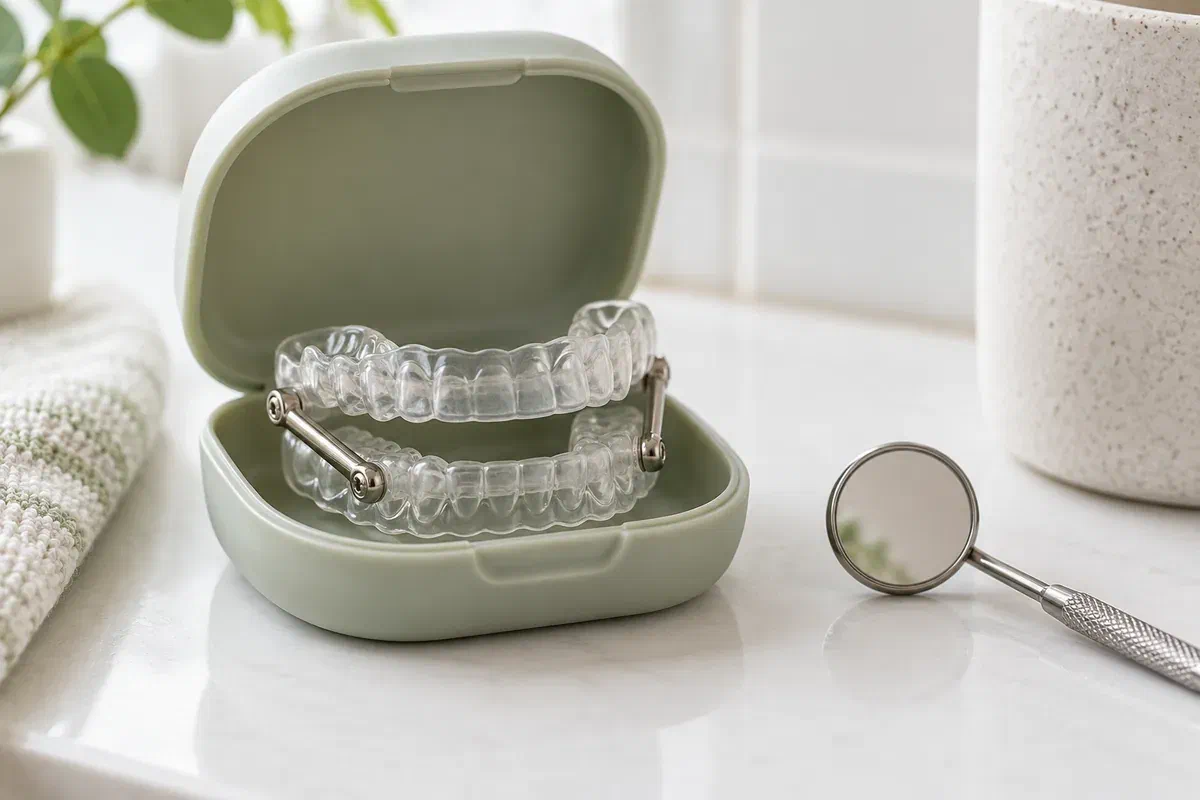
Illustrative connected oral sleep appliance inside an open protective case
Telling fit problems apart

Pinching, loose or gone: three reasons to look again.

A device that hurts, one that is damaged and one that has disappeared each raise different questions. Explaining which you are facing lets the dentist decide what to examine before replacement is weighed.

There is no device to assess

If it has been lost, write down when you last wore it and contact its maker about records. Those may need updating. As the appliance is part of prescribed care, speak with your sleep physician about how to manage until a replacement decision is reached.

The tray has warped, cracked or loosened

Heat, cleaning products, grinding and ordinary use can all change a device’s shape or weaken its parts. Bring it in rather than bending it back yourself. Small-looking flaws are not always fixable, and older devices are not always finished; the specifics decide.

Your teeth no longer match the tray

New restorations, shifting teeth, an extraction, gum recession or a changed bite can all make a once-comfortable device pinch or rock. Mention any of these, along with returning sleep symptoms. A replacement may be needed, but the dental change itself still needs proper attention.

Please do not push a device into place if it binds or hurts, and stop wearing one that is cracked or loose. Contact the treating provider and check with your physician about sleep care while it is out of use.

What a fit assessment can show

Separating a tired appliance from a changing mouth.

Your experience is evidence. Tell the dentist when the device last felt right, what changed first and whether your sleep physician ever confirmed it was effective. Combined with an examination, that timeline can reveal whether the appliance has drifted out of shape or whether your teeth have moved on without it.

Knowing the cause also clarifies timing. If a filling or crown is planned, finishing it before new records may make sense. If the sleep clinic has not reviewed you recently, they may want to. Deciding the order, and who handles fitting and follow-up, keeps a new appliance from being made for a mouth still in flux.

Patient information: AADSM — current assessment, appliance management, and coordinated follow-up

Examining the teeth the appliance grips

The whole mouth is assessed, from gums and fillings to how the jaw opens, with particular attention to the teeth that feel pressure. Ask whether anything needs treatment before a new device is considered. Past comfort is useful, but it does not stand in for a current examination.

Deciding which records still fit

Specifications of the original device, dental charts, adjustment notes and sleep reports provide background. Ask what can be retrieved and what has to be retaken. If fit has changed, an older scan is especially likely to need replacing.

Planning the in-between weeks and the review

Settle what you will do while a decision is pending, and get a name to call if the wait stretches. Find out what the fitting involves and who will check, afterwards, that your sleep is responding. A well-fitting tray on day one is progress, but the review that follows is part of the same treatment.

Step by step

How a fit problem is worked through.

Arrive with the device and any notes about when discomfort began. The appointment looks at why replacement is being considered, and what should happen before a new device is offered.

  1. Map the discomfort

    Point out which teeth or areas feel pressure, when it started and how long it lasts. Mention how often you wear the device, who made it and when your sleep care was last reviewed. If you have stopped wearing it, say so, and share any advice your physician has given.

  2. Compare device and mouth

    With the appliance seated, the dentist looks for gaps, rocking and pressure points, then examines it on its own for wear or distortion. Oral health and jaw movement are checked as well. A crown or filling that is recent, or still on the calendar, could reshuffle what happens next, so ask what each finding means for you.

  3. Choose a direction

    Should a new device make sense, you will go over the design on offer, which scans or impressions are needed, a cost estimate and the stages involved. It is fair to ask how this design will spare the tooth that has been aching. Any dates come from whoever is making the appliance; please do not plan around a guess.

  4. Fit carefully and follow up

    A replacement is checked for fit and comfort on its own, with handling instructions and a prescribed starting position. Ask how dental and medical follow-up will be coordinated. Avoid recreating the old setting or reshaping anything yourself unless the instructions allow it.

Until the fit is sorted

Protect your teeth and your sleep plan in the meantime.

Advice depends on what the assessment finds and whether the current device is safe to wear. Ask for clear direction on the waiting period and on easing into a new appliance.

Talk to your sleep physician about a pause

Putting the device away because it hurts is sensible, but it leaves your sleep condition untreated, so tell the provider who manages it. Carry on with anything else you have been prescribed, and resist reaching for a drugstore guard. Feeling drowsy in the daytime is a reason to call your doctor and to leave the car keys alone.

Keep the team updated on dental changes

Once scans or impressions are done, any new crown, chip, toothache or shift in how your teeth meet can throw off the fit of what is being made. Call when it happens, instead of saving it for the fitting chair.

Notice how the new device feels

Rehearse getting it in and out a few times, and double-check how it should be cleaned and stored and whether you may adjust it. Over the first nights, keep track of any spot that presses and report it rather than putting up with it. If comfort has not settled when you expected, phone.

Possible outcomes

The fix depends on where the misfit comes from.

Ask what each option resolves and what it leaves. A new appliance will not cure pressure from an untreated dental problem, and it will not explain why symptoms returned if that has not been investigated.

When the mouth has changed and replacement is supported

A new device made to today’s teeth

After dental and medical information is reviewed, a replacement may be suitable. Ask which design and records are needed and how fitting will be planned. It should reflect current findings and the fit problems you experienced, with follow-up included.

When the device itself is the issue

Repair or refit of the existing appliance

Some fit or component problems may be assessed for repair. That depends on the damage, the material, the parts and how well it seats now. Ask what repair would change and how it would be checked. It will not suit every case, and it is not always economical.

When an oral or medical change needs attention

Dental treatment or a wider review first

Sometimes the tray is fine and the trouble sits in a tooth, the gums or the bite — or in a sleep condition that now responds differently. That problem may need treating before any new device is considered. Expect the dentist to compare notes with your physician or the clinic that made the appliance, and ask plainly which step should come first.

Asked by Mississauga appliance wearers

Fit questions that come up often.

Bring questions about pressure, looseness, costs and the waiting period. Your examination and records allow the dentist to answer them for your mouth.

(905) 876-4488
Is some tooth soreness after wearing a sleep appliance normal?
Mild tenderness that fades soon after removal can occur, especially early on. Soreness that is new, lasts into the day or is getting worse should be reported so the fit and your teeth can be checked.
Could hot water or a dishwasher have warped my appliance?
Heat can distort some appliance materials. Clean it only as your instructions describe. If it may have been exposed to heat and now fits differently, stop wearing it and bring it in for assessment.
My device feels loose. Is it safe to keep wearing it?
A loose appliance may not hold the jaw as intended and could dislodge. Contact the treating provider for advice before continuing, and let your sleep physician know if you need to stop.
If a new filling changed the fit, does that mean a whole new appliance?
Not always. The dentist will look at how much the tooth surface changed and how the device sits. Sometimes other approaches can be assessed; sometimes new records and a replacement are more appropriate.
Can a replacement be designed to avoid the spot that hurt before?
Tell the dentist exactly where pressure occurred. Design and fit can be planned with that in mind, though no device can be promised to feel perfect, and adjustments at fitting and follow-up are normal.
Does feeling comfortable in a new device mean my sleep treatment is working?
Comfort helps you wear it, but effectiveness has to be assessed separately. Ask your providers how and when your response to the replacement will be reviewed.
Booking from Mississauga

Tell us where it pinches.

Has your appliance started to pinch, rock or feel loose, or has it gone missing or broken? Milton Dental Clinic can help you work out why. Share who made it, who manages your sleep care and whether you are still wearing it, so the appointment can be set up around the problem you are having.

Replacement decisions depend on the current dental examination and the coordinated sleep-care plan.

Visit Milton Dental Clinic
Unit 1, 342 Bronte St. S, Milton, ON L9T 5B7
Get directions Clinic hours
Monday–Thursday
11am–7pm
Friday–Sunday
By appointment only

Areas we serve

  • Milton
  • Oakville
  • Mississauga
  • Georgetown
  • Halton Hills
  • Acton
  • Campbellville
  • Brampton
  • Burlington
  • Puslinch
  • Rockwood
  • Erin
  • Caledon
  • Etobicoke
  • Old Milton
  • Bronte Meadows
  • Timberlea
  • Dorset Park
  • Dempsey
  • Clarke
  • Beaty
  • Coates
  • Harrison
  • Scott
  • Willmott
  • Ford
  • Bowes
  • Cobden
  • Walker
  • Mountain View
  • Milton Heights
  • Hawthorne Village
  • Valley View
  • Fallingbrook
  • Nassagaweya
  • Trafalgar
  • Esquesing
  • Nelson
  • Brookville
  • Moffat
  • Glen Williams
  • Norval
  • Limehouse
  • Stewarttown
  • Ashgrove
  • Hornby
  • Silver Creek
  • Speyside
  • Scotch Block
  • North Oakville
  • River Oaks
  • Glen Abbey
  • West Oak Trails
  • Palermo
  • Bronte Creek
  • College Park
  • Joshua Creek
  • Uptown Core
  • Preserve
  • Iroquois Ridge
  • Lisgar
  • Meadowvale
  • Meadowvale Village
  • Churchill Meadows
  • Erin Mills
  • Central Erin Mills
  • Streetsville
  • East Credit
  • Creditview
  • Heartland
  • Sheridan
  • Mount Pleasant
  • Credit Valley
  • Huttonville
  • Churchville
  • Springbrook
  • Northwest Brampton
  • Bram West
  • Fletcher's Meadow
  • Fletcher's Creek South
  • Alton Village
  • Orchard
  • Millcroft
  • Headon Forest
  • Tansley
  • Brant Hills
  • Tyandaga
  • Kilbride
  • Lowville
  • Aberfoyle
  • Morriston
  • Arkell
  • Hillsburgh
  • Freelton
  • Carlisle
  • Waterdown
  • Flamborough
  • Mountsberg

How can we help?

Milton Dental Clinic

Have a question about your smile? Choose the option that works best for you.

For urgent dental concerns, please call.
Messages are reviewed during clinic hours.