
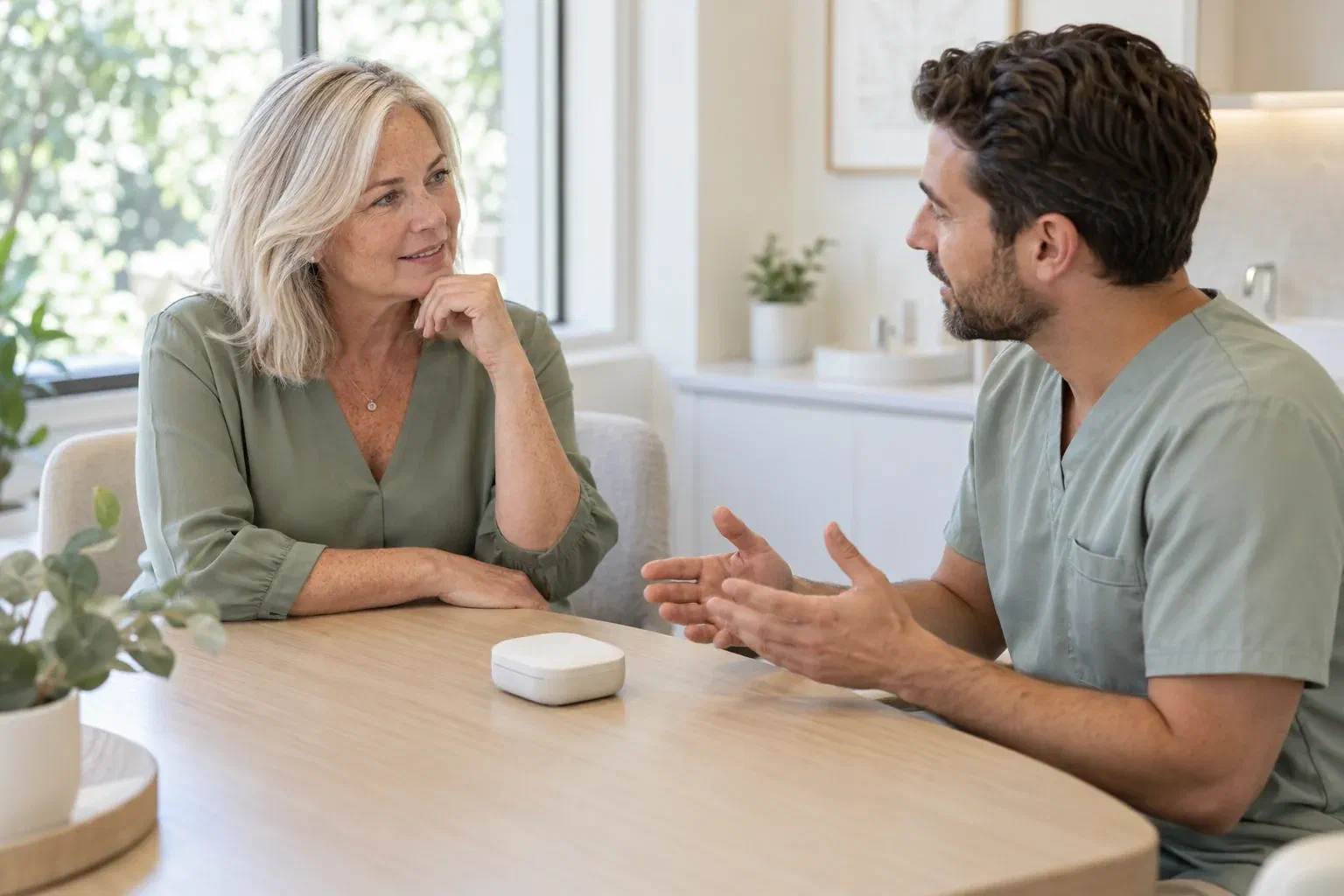
Illustrative consultation about replacing a custom oral sleep appliance
Specialized Care

Sleep Appliance Replacement in Old Milton

Your sleep appliance has been with you a long time, and so have the crowns, fillings and small shifts that came after it. From Old Milton, our nearby Bronte Street practice can review how your mouth has changed before a successor device is planned.

Old Milton: an older appliance, a newer mouth

How much has changed since your first device was made?

Plenty of people around Old Milton, the town’s historic downtown, have worn the same oral sleep appliance for years. Over that stretch, teeth get crowned, fillings get replaced, a molar may be lost, and gums can recede. Each of those changes alters the surfaces a device grips, which is why a successor is planned from today’s mouth rather than from the old mould.

Start by gathering what you can. The device itself, even if it is worn thin or cracked, tells the dentist a lot. So does your account of how it felt in its best years and when that began to slip. A loose fit in the last few months, for instance, can point to dental change rather than simple wear.

Tell our team who made the original and which doctor or sleep clinic follows your condition now; after many years those may not be the same people. From there, the dentist can explain what assessment fits your situation and how to share information. Remaking an old shape without review would not show whether it still suits you.

Talk about replacing a long-used appliance
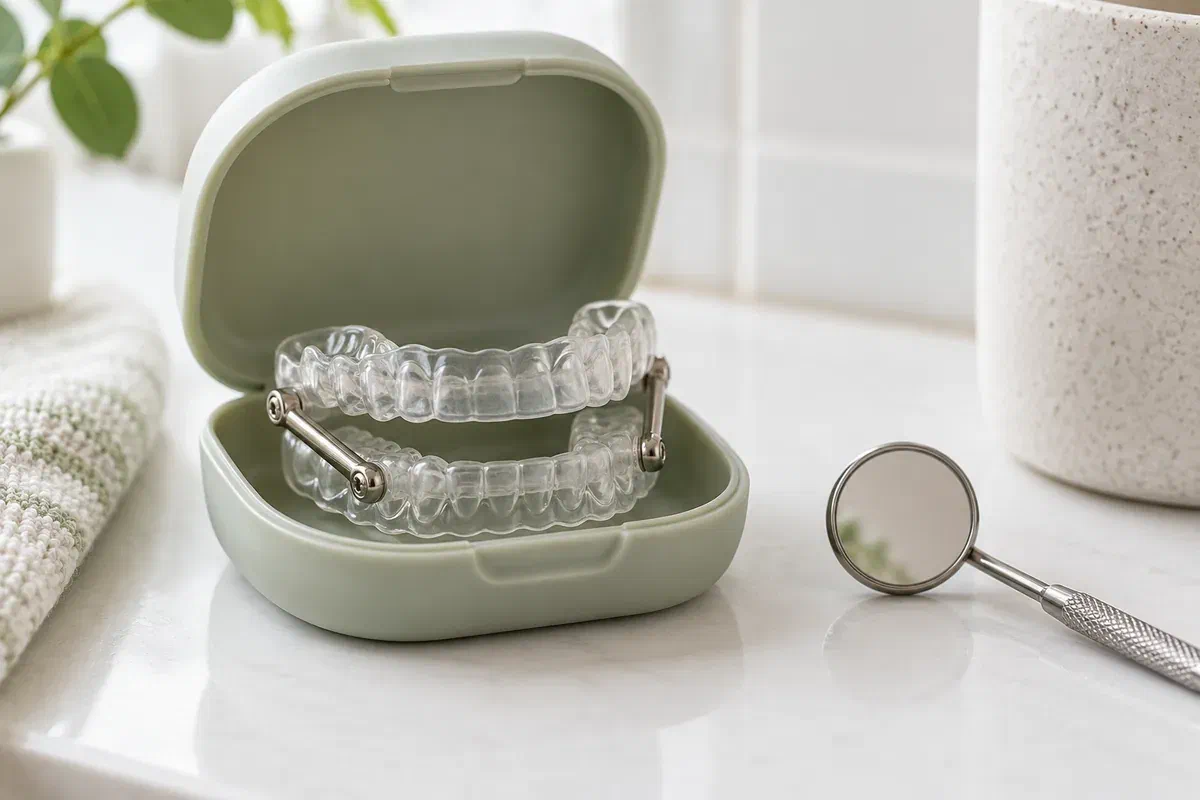
Illustrative connected oral sleep appliance inside an open protective case
Signs a long-serving device needs a review

Wear, loss and change are not the same problem.

An appliance can reach this point for different reasons. Pinning down which one applies — or which combination — shapes what the dentist needs to look at before anything new is made.

It has gone missing after years of nightly use

Note when you last had it and contact the original provider about any records they still hold; older files may be incomplete. Because the appliance belongs to prescribed treatment, let the physician managing your sleep condition know and ask how to handle the nights before a decision is reached.

The material has thinned, cracked or loosened

Long use can leave clouded, thin or split plastic and connectors that no longer hold firmly. Bring it in for a look. A device is not due for replacement purely because it is old, and a minor-looking flaw is not always repairable. Design, parts and the way it fits now all count.

Dental work has altered the teeth it holds

Mention crowns, bridges, implants, extractions, gum treatment or a bite that feels different. If snoring or tiredness has returned, tell your sleep-care provider as well. A replacement may be part of the answer, but a dental problem or a treatment that has stopped working deserves its own attention.

An appliance that has to be pushed into place, or has cracked or loose components, should be set aside. Ask the treating provider for advice, and check with your physician about an interim plan if you cannot wear it.

What years of use can teach

A long track record is worth reading carefully.

Someone who has worn an appliance for a decade knows things no file records. Which nights felt best? When did jaw stiffness show up? Was the device ever rechecked by a sleep physician? Sharing that history lets the dentist compare it with the present examination instead of assuming the original design will simply perform again.

It is also a good moment to look at the bigger dental picture. A tooth that may need a crown, a filling showing its age or overdue periodontal care can change the timing. Settling what comes first, and who handles fitting and follow-up, helps the new appliance match a mouth that is stable.

Patient information: AADSM — current assessment, appliance management, and coordinated follow-up

An examination of today’s teeth and jaw

The dentist looks at the teeth, gums, restorations, bite and jaw function a new device would rely on. Ask whether anything should be treated beforehand. Years of success with the first appliance are reassuring, but they do not replace checking the mouth you have now.

Deciding what old records are still useful

Device details, past dental charts, adjustment notes and sleep-clinic letters can fill in the history, even if some are dated. Ask which can be requested and which need to be updated. An impression taken many years ago is unlikely to reflect the current mouth just because it was kept.

A plan for the interval and after

Ask what to do while the replacement is arranged and who to contact if it takes longer than expected. Find out how the new device will be fitted and how its effect on your sleep condition will be reviewed. Delivery is a milestone, not the conclusion of care.

From review to fitting

Look back, look closely, then plan the successor.

Bring the appliance and any older paperwork, or tell us what has been lost along the way. The visit sets out why replacement is being considered and what needs to happen before a suitable device can be provided.

  1. Go over the appliance’s history

    Describe what prompted the visit and how regularly you wore the device until now. Share the original provider’s name and your most recent sleep-care review, however long ago. Mention whether you are currently going without treatment and whether a physician has advised you about that gap.

  2. Examine how the mouth has changed

    The dentist checks oral health and the teeth and tissues that would support a new appliance. Restorations placed since the first device, or work still planned, may change the order of care. Ask which findings matter and whether other dental or specialist treatment should come before new records.

  3. Consider the design, records and estimate

    If replacement is suitable, the dentist explains the proposed design, the records required, estimated costs and the expected stages. Ask how the choice reflects what you learned from the old device. Timing should be confirmed by the treating provider rather than assumed.

  4. Fit the new device and schedule review

    The replacement needs its own fit check, handling instructions and prescribed starting position. Ask how dental follow-up and medical review of effectiveness will be coordinated. Do not carry over old settings or adjust components unless the instructions for this particular device allow it.

During the changeover

Stay connected to your sleep care while the device is replaced.

Guidance depends on why replacement is needed and whether the existing appliance is still safe. Ask for clear instructions about the waiting period and about settling in with the new one.

Let your physician know about any gap

If you have stopped wearing the old appliance, tell the provider managing your sleep condition and ask what interim care fits. Do not abandon other prescribed treatment or improvise with a generic guard. If you feel sleepy during the day, seek medical advice and avoid driving while drowsy.

Flag dental changes before fitting day

A new restoration, a lost tooth, pain or a bite change after records are taken can affect how the replacement seats. Tell the team as soon as it happens rather than raising it at the very end of the fitting visit.

Learn the replacement from scratch

After years with one device, habits run deep. Practise insertion and removal, and confirm cleaning, storage and any allowed adjustment for the new one. A similar look does not mean the same handling. Keep its instructions together, and ask when to call if the early weeks are difficult.

Choosing the next step

Pick the option that answers the real problem.

Ask what each route would fix and what it would not. A fresh appliance is not automatically the cure for discomfort, recurring breakage or symptoms that have returned, unless the reason behind them is understood.

When the review supports replacement

A newly made custom device

A replacement may be suitable once dental and medical information has been considered. Ask which design and records are involved and how fitting will be scheduled. The decision should draw on today’s findings and your long experience with the first appliance, with follow-up arranged.

When the current appliance may still serve

Checking whether repair is reasonable

Some faults can be assessed for repair. Whether that makes sense depends on the damage, materials, components and present fit. Ask what a repair would achieve and how the device would be checked afterwards. An older appliance may have limits, and repair is not always economical.

When your needs are no longer the same

A fuller dental or sleep-care review

If oral health, comfort or treatment response has shifted, a new assessment or another care pathway may be appropriate. The dentist may consult the original provider or your sleep physician. Ask which issue needs solving first so a replacement does not repeat an old difficulty.

Common questions near Old Milton

What long-time appliance wearers want to know.

Bring questions about the old appliance, its fit, costs and the changeover. Your records and examination make the conversation specific to your mouth.

(905) 876-4488
My appliance is over ten years old but still fits. Should I replace it anyway?
Not automatically. Fit, condition, materials and how well treatment is working all matter more than age. Have it examined, and ask your sleep physician whether your treatment response has been reviewed recently. Replacement is considered when the assessment supports it.
Why does my old device suddenly feel loose after a new crown?
A crown changes the shape of the tooth surface, and appliances often rely on those surfaces to stay in place. Stop forcing it and bring both the device and details of the dental work to an appointment so the dentist can assess what has changed.
Can an impression from many years ago be used to make the replacement?
Possibly as a reference, but teeth and restorations rarely stay identical for that long. The dentist needs to judge whether it represents your mouth now, and new records are often needed. Mention any dental treatment since the original was made.
Does long-term appliance use change the bite?
Bite changes can occur with some oral appliances over time. If your teeth meet differently in the morning or during the day, mention it. The dentist can examine your bite and discuss it alongside the decision about a replacement.
My sleep clinic discharged me years ago. Who do I contact about treatment now?
Your family doctor is a good starting point if you no longer have a sleep specialist. Our team can explain what dental information to share, and your physician can decide whether a medical review is needed before or after a replacement.
Is a newer appliance design worth asking about after so long?
It is reasonable to ask. Designs and materials vary, and the dentist can explain which options may suit your mouth and treatment. What you found comfortable or difficult with the old device helps guide that discussion, though suitability still needs assessment.
Old Milton visits

Tell us how many years your appliance has served.

Contact Milton Dental Clinic about a long-used sleep appliance that is worn, lost, damaged or no longer comfortable. Mention whether you still have it, who made it and whether your treatment is on hold, and we will discuss the right assessment arrangements.

A successor device is planned around current dental findings and your coordinated sleep-care plan.

Visit Milton Dental Clinic
Unit 1, 342 Bronte St. S, Milton, ON L9T 5B7
Get directions Clinic hours
Monday–Thursday
11am–7pm
Friday–Sunday
By appointment only

Areas we serve

  • Milton
  • Oakville
  • Mississauga
  • Georgetown
  • Halton Hills
  • Acton
  • Campbellville
  • Brampton
  • Burlington
  • Puslinch
  • Rockwood
  • Erin
  • Caledon
  • Etobicoke
  • Old Milton
  • Bronte Meadows
  • Timberlea
  • Dorset Park
  • Dempsey
  • Clarke
  • Beaty
  • Coates
  • Harrison
  • Scott
  • Willmott
  • Ford
  • Bowes
  • Cobden
  • Walker
  • Mountain View
  • Milton Heights
  • Hawthorne Village
  • Valley View
  • Fallingbrook
  • Nassagaweya
  • Trafalgar
  • Esquesing
  • Nelson
  • Brookville
  • Moffat
  • Glen Williams
  • Norval
  • Limehouse
  • Stewarttown
  • Ashgrove
  • Hornby
  • Silver Creek
  • Speyside
  • Scotch Block
  • North Oakville
  • River Oaks
  • Glen Abbey
  • West Oak Trails
  • Palermo
  • Bronte Creek
  • College Park
  • Joshua Creek
  • Uptown Core
  • Preserve
  • Iroquois Ridge
  • Lisgar
  • Meadowvale
  • Meadowvale Village
  • Churchill Meadows
  • Erin Mills
  • Central Erin Mills
  • Streetsville
  • East Credit
  • Creditview
  • Heartland
  • Sheridan
  • Mount Pleasant
  • Credit Valley
  • Huttonville
  • Churchville
  • Springbrook
  • Northwest Brampton
  • Bram West
  • Fletcher's Meadow
  • Fletcher's Creek South
  • Alton Village
  • Orchard
  • Millcroft
  • Headon Forest
  • Tansley
  • Brant Hills
  • Tyandaga
  • Kilbride
  • Lowville
  • Aberfoyle
  • Morriston
  • Arkell
  • Hillsburgh
  • Freelton
  • Carlisle
  • Waterdown
  • Flamborough
  • Mountsberg

How can we help?

Milton Dental Clinic

Have a question about your smile? Choose the option that works best for you.

For urgent dental concerns, please call.
Messages are reviewed during clinic hours.