

Illustrative conversation about snoring and oral-appliance suitability
Specialized Care

Snoring Appliances

Explore whether a custom oral appliance has a suitable role in your snoring care. Start in Milton with a discussion of symptoms, possible sleep apnea, dental health, and the follow-up needed before choosing a device.

A closer look at appliances for snoring

Consider the cause of the snoring before choosing a mouthpiece.

An oral appliance may be considered for some adults who snore after the appropriate assessment. A commonly used design holds the lower jaw in a planned forward position during sleep. It is not the same as an ordinary sports mouth guard or a guard intended to protect teeth from grinding, even when the devices look similar.

The first question is what the snoring represents. Snoring can occur with obstructive sleep apnea, and sound alone cannot establish that the problem is limited to noise. Medical evaluation is needed to determine the relevant diagnosis before appliance treatment is chosen, with a dental assessment to consider whether the mouth can appropriately support the proposed device.

At Milton Dental Clinic, tell us how snoring affects you, whether anyone has noticed breathing pauses, and whether you already have sleep-care advice. We can discuss the appropriate assessment pathway and dental considerations. The aim is a suitable plan for the person and the condition, rather than selecting a product before the important questions have been answered.

Discuss assessment before choosing a snoring appliance
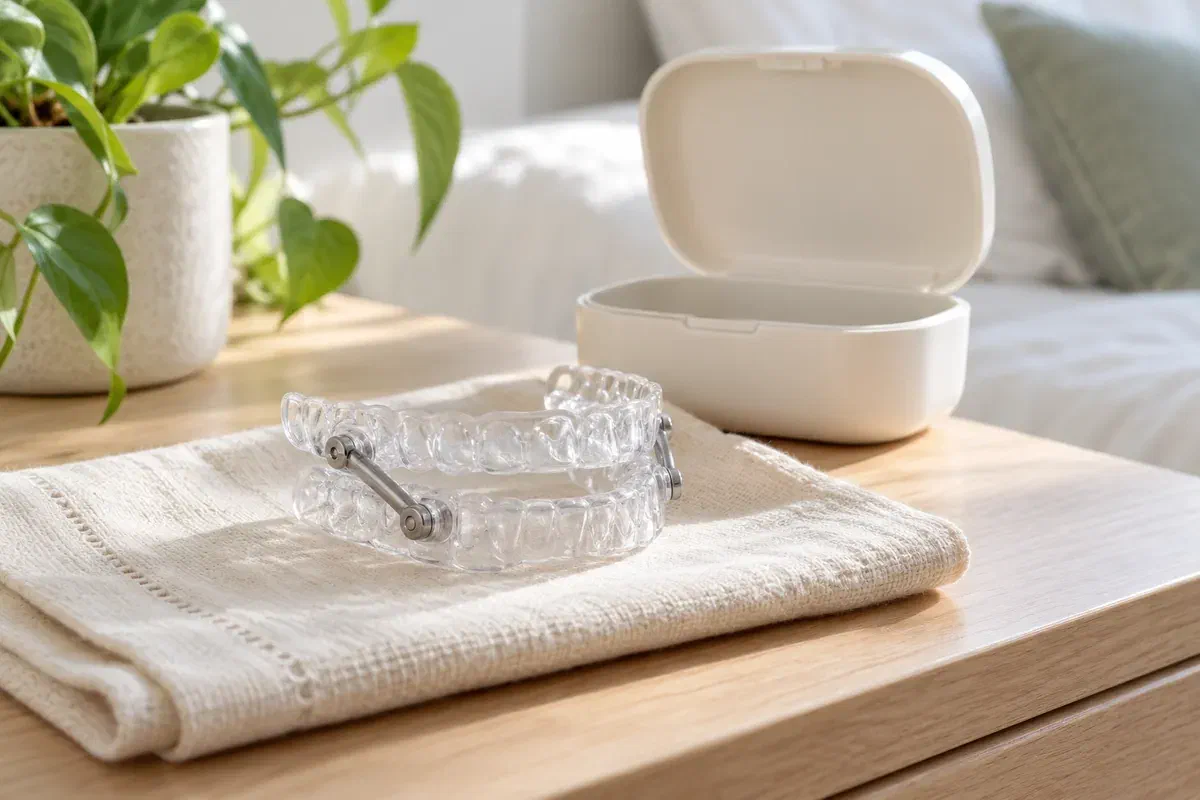
Illustrative custom mandibular advancement appliance beside its protective case
Questions to answer before appliance treatment

A quieter night should begin with an informed decision.

Share your symptoms and previous experience without feeling that you need to diagnose yourself. The information helps distinguish a discussion about snoring from a plan that also needs to address a medical sleep condition.

Snoring with pauses, gasping, or daytime sleepiness

Tell a medical provider about these symptoms and ask about sleep evaluation. A mouthpiece should not be used to bypass assessment of possible sleep apnea. Explain whether the concern is new or worsening and whether sleepiness affects activities that require alertness, including driving.

Dental or jaw concerns that may affect wearing a device

Mention loose or painful teeth, gum problems, recent restorations, missing teeth, and jaw symptoms. These findings can influence suitability and design or indicate a need for care first. Do not assume that a device is appropriate simply because it can be fitted over the teeth.

A previous mouthpiece that was uncomfortable or unhelpful

Bring it and explain where it came from, how it was used, and why you stopped. A previous experience is useful, but it does not by itself prove that every appliance will fail or that another design will work. The clinician needs to understand the device and the original treatment context.

This page concerns adult appliance assessment. A child who snores needs an appropriate medical evaluation; an adult-style anti-snoring mouthpiece should not be chosen as a substitute for that assessment.

What individualized appliance planning adds

Match the device to the findings and explain how it will be reviewed.

When an oral appliance is appropriate, planning should address more than the shape of the trays. Ask why the proposed design suits your dental findings, what the intended effect is, and what limitations apply. A clear discussion includes comfort, handling, possible side effects, and the need for continuing review.

Your priorities also matter. Explain if you are concerned about jaw discomfort, cleaning, travel, or being able to remove the device. These practical questions help make the plan usable. They should be considered alongside the diagnosis and oral assessment, rather than treated as details to discover after an appliance has been supplied.

Patient information: AADSM — assessment, appliance management, and ongoing care

A device considered for a defined clinical purpose

Ask whether the plan concerns diagnosed primary snoring or treatment within a sleep-apnea care pathway. The distinction affects the wider assessment and follow-up. A custom device may have a role, but an appliance should not be described as a universal cure for all causes of snoring.

A clinical fit and a clear starting routine

Fitting allows the clinician to assess the device in your mouth and teach insertion, removal, and care. Ask which adjustments are permitted and which require professional attention. The initial plan should be specific to your appliance, not copied from a friend or a generic internet schedule.

A plan for comfort, oral effects, and treatment response

Ask how jaw symptoms, tooth pressure, and changes in the bite will be monitored. Clarify how response will be assessed and when medical input is needed. Continuing review matters even when the appliance feels familiar, because comfort and reduced noise do not answer every question about the treatment.

From a snoring concern to a considered option

Understand the sleep history, examine the mouth, and discuss the choices.

Bring any sleep-care reports and previous appliance information. You can begin by describing the problem; you do not need to arrive knowing the device name or deciding that an appliance is the treatment you want.

  1. Discuss the snoring and the medical assessment pathway

    Explain how often snoring is noticed, its impact, and any associated symptoms or previous testing. The team can discuss the need for medical evaluation and relevant records. A screening conversation helps identify concerns, but it does not replace a diagnosis or appropriate testing by the sleep-care provider.

  2. Assess dental suitability and any care needed first

    The clinician reviews the teeth, supporting tissues, restorations, bite, and jaw function relevant to appliance use. Ask what the findings mean for the options. Some concerns may require treatment, further assessment, or coordination with another provider before it is sensible to proceed with a device.

  3. Compare an appliance with the other appropriate approaches

    Discuss the intended benefit, limitations, alternatives, and practical requirements in light of the diagnosis. Ask about costs, fitting, and follow-up before making a decision. If an appliance is selected, the provider explains the records and stages needed rather than assuming immediate delivery at the first consultation.

  4. Fit the device and arrange review of its use

    The supplied appliance needs a clinical check and instructions for handling, cleaning, and the prescribed starting plan. Ask when to report discomfort or difficulty wearing it. Confirm how the response will be evaluated and how the medical sleep provider remains involved where relevant to your care.

Using a prescribed snoring appliance

Follow the device-specific plan and speak up when something changes.

The first period of use should have clear instructions and a contact route for problems. Do not assume that discomfort must be endured or that a larger jaw movement will necessarily produce a better result.

Use the appliance as demonstrated

Practise insertion and removal at fitting and keep the written guidance. Follow only the adjustment instructions that have been explicitly prescribed for your device. If handling remains difficult, ask for help rather than biting it into position, bending a component, or making an unplanned setting change.

Report persistent pressure, pain, or a changed bite

Explain which area is affected, when symptoms appear, and whether they interfere with use. The clinician can review the appliance and the mouth together. Do not reshape the device yourself or continue using one with a broken component or an unsafe fit.

Keep the response under review

Discuss whether snoring has changed and whether other symptoms remain. Attend the agreed dental and medical follow-up and tell the team if use has been inconsistent. A partner's observation can be useful, but it does not replace indicated evaluation of sleep-apnea treatment effectiveness.

Considering the right approach to snoring

An appliance is one option within a diagnosis-led plan.

Ask what is contributing to the snoring and which approaches are appropriate in your situation. The recommendation should take account of the assessment, your preferences, and any medical sleep condition that needs treatment.

When the diagnosis and dental findings support it

A custom oral appliance after appropriate assessment

An appliance may be considered with an individualized fitting and follow-up plan. Ask why the proposed design is appropriate and what changes should prompt review. Its role should be explained without promising complete elimination of snoring or assuming that every patient can tolerate the same design.

When the cause or wider health picture needs attention

Medical review and management of contributing factors

A medical provider can assess relevant nasal, sleep, health, or lifestyle factors and discuss appropriate care. Tell them about medicines and existing treatment rather than stopping anything yourself. An appliance discussion should leave room for a different approach when the findings point elsewhere.

When snoring accompanies a diagnosed sleep condition

A coordinated sleep-apnea treatment pathway

Treatment may involve PAP, an appropriate oral device, or other medically directed care depending on the assessment. Ask how effectiveness will be checked and how dental findings affect the options. The objective extends beyond reducing the sound, so continued medical involvement remains important.

Patient information: NHLBI — medical treatment options for sleep apnea

Questions before choosing an anti-snoring device

Understand the purpose, the fit, and the follow-up.

Similar-looking mouthpieces can have different functions. Ask about the specific device being considered and how it fits into the assessment and treatment plan for your snoring.

(905) 876-4488
Is a snoring appliance the same as a night guard for teeth grinding?
No. A grinding guard and an appliance intended to influence jaw position during sleep have different purposes. Do not assume your existing guard treats snoring or sleep apnea. Bring it to the assessment so the clinician can explain its role and whether another approach is appropriate.
Why might a snoring appliance hold the lower jaw forward?
A mandibular advancement design uses a planned jaw position to help maintain the upper airway during sleep. Suitability and positioning require assessment and device-specific instructions. More advancement is not automatically better, and the appliance should not be adjusted beyond the prescribed plan.
Can I choose a snoring mouthpiece before checking whether I have sleep apnea?
An appropriate medical evaluation should establish the relevant diagnosis before appliance treatment is chosen. Snoring can accompany obstructive sleep apnea, and a dental examination or sound recording cannot reliably rule it out. Ask how the assessment should be arranged before selecting a device.
Are missing teeth an automatic reason that no snoring appliance can be considered?
Not every situation has the same answer. The number and position of teeth, supporting tissues, restorations, and possible designs require individual assessment. Ask what the findings mean for suitability rather than choosing a product on the assumption that all appliances need exactly the same dental support.
Can an oral appliance for snoring change how my teeth meet?
Changes in the bite or tooth position can occur with oral-appliance use, and jaw or tooth discomfort also needs attention. Discuss these possibilities before treatment and keep follow-up appointments. Report persistent changes so the provider can assess them instead of trying to correct the bite yourself.
If my partner hears less snoring with an appliance, does that prove sleep apnea is controlled?
No. Reduced noise is useful feedback, but it does not establish adequate control of sleep apnea. Follow the medical provider’s plan for evaluating treatment response, including testing when indicated, and continue the dental reviews needed to assess the appliance and its oral effects.
Discuss snoring appliances in Milton

Start with an assessment that looks beyond the noise.

Contact Milton Dental Clinic to discuss your snoring concerns and the appropriate dental assessment. Tell us about previous sleep testing, existing treatment, or a mouthpiece you have already tried so the conversation can begin with the information that matters.

Appliance suitability follows appropriate medical evaluation and individual dental assessment.

Visit Milton Dental Clinic
Unit 1, 342 Bronte St. S, Milton, ON L9T 5B7
Get directions Clinic hours
Monday–Thursday
11am–7pm
Friday–Sunday
By appointment only

How can we help?

Milton Dental Clinic

Have a question about your smile? Choose the option that works best for you.

For urgent dental concerns, please call.
Messages are reviewed during clinic hours.