

Illustrative conversation about snoring and oral-appliance suitability
Specialized Care

Snoring Appliances in Etobicoke

A custom snoring appliance takes several visits, so it helps to plan them well. From Etobicoke, we can organise the steps around your medical assessment, gather records early, and explain which problems to call about before you make the trip.

Making each visit count

Fewer trips, better prepared

Coming from the west end of Toronto, the practical question is often how many appointments a snoring appliance will take. The honest answer is several, spread over weeks: an assessment, records, a fitting, and reviews. With some planning, those visits can be organised so that each one does as much as possible.

The order still matters. Snoring can be a sign of obstructive sleep apnea, and that needs a physician’s evaluation before a device is chosen. Your own family doctor or a sleep clinic closer to home can handle that step. Arriving with the results means our first appointment can move straight to the dental questions.

Those questions are about your teeth, gums, and jaw. Most snoring appliances hold the lower jaw slightly forward during sleep, which places demands on the teeth that anchor them. It is a different device from a sports or grinding guard. We examine what your mouth can support and explain the options before anything is made.

Plan an appliance assessment from Etobicoke
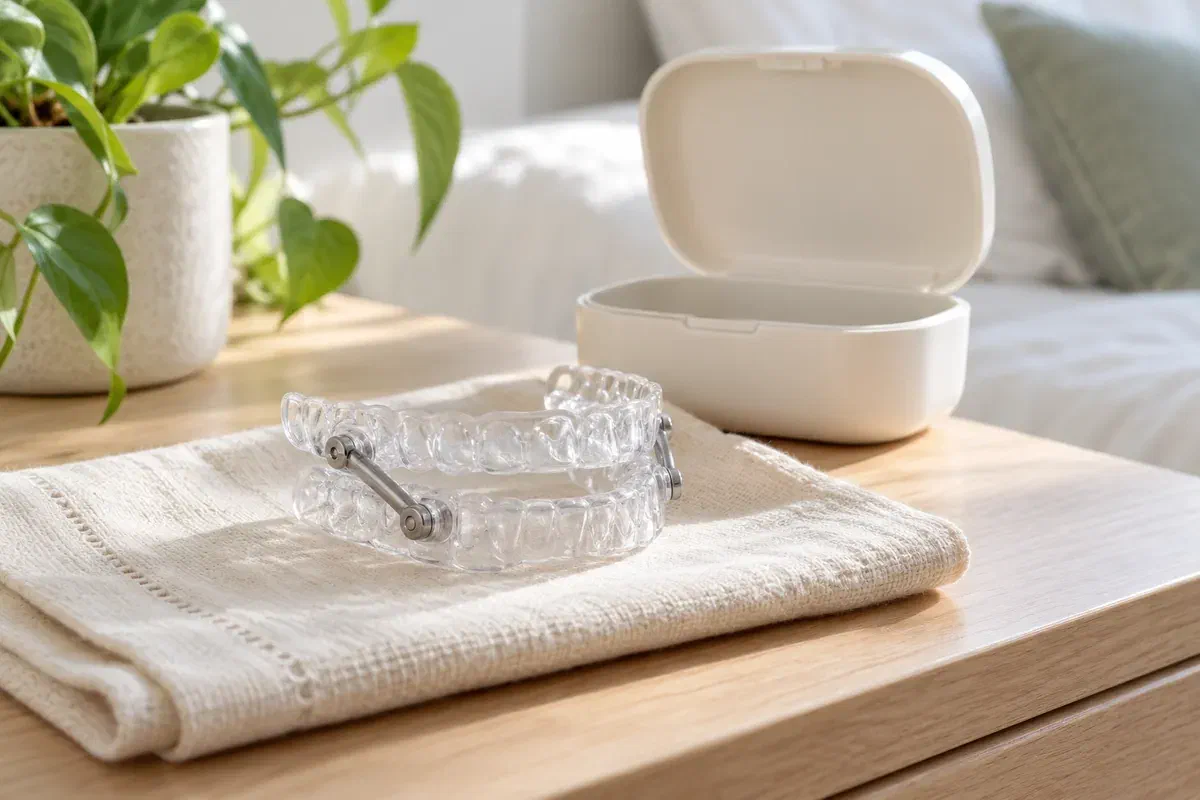
Illustrative custom mandibular advancement appliance beside its protective case
Sort these out before the first visit

A little preparation saves a return trip.

You do not need to diagnose yourself. Telling us about these points ahead of time lets us see whether a medical step comes first and what to examine when you arrive.

Breathing pauses, gasping, or daytime sleepiness

Raise these with a physician near you and ask about a sleep evaluation. An appliance should never be used to skip that. If sleepiness is affecting your driving, including the drive to appointments, tell your doctor and let us know, so visits can be arranged safely.

Teeth or gums that need care first

Mention loose or painful teeth, gum problems, recent crowns, gaps, and jaw pain or clicking when you book. Some of these may need treatment before an appliance is sensible, or may change the design. Knowing early helps us plan visits rather than discover the issue at fitting.

A guard you already own

Bring any previous mouthpiece to the first appointment, along with what you remember about where it came from and why you stopped. That saves time. A past device that failed does not rule out every design, and it does not guarantee a new one will succeed.

Our appliance assessments are for adults. If a child at home snores, arrange a medical evaluation; an adult anti-snoring mouthpiece is not a substitute.

What careful planning gives you

One device, chosen for good reasons, with reviews you can manage

A planned appliance comes with an explanation: why this design suits your teeth and bite, what it should do, and what it will not. You should also understand comfort, handling, likely side effects, and how often reviews are needed. For a longer trip, it helps to know that schedule in advance.

Mention practical constraints early. If you can only come on certain days, worry about a long drive with a sore jaw, or want a design that is easy to clean and take out, those points shape the plan. They deserve weight alongside the diagnosis and dental findings, not as afterthoughts.

Patient information: AADSM — assessment, appliance management, and ongoing care

Purpose agreed before records are taken

Make sure you know whether the device is for diagnosed primary snoring or part of a sleep-apnea treatment plan. That determines how closely it is followed and by whom. No appliance treats every cause of snoring, and none should be presented that way.

A fitting visit that covers everything

At fitting, the clinician checks the device in your mouth and teaches you to place, remove, and clean it, so you are confident before heading home. Ask which adjustments you can make. Your early routine should come from your plan alone.

Reviews spaced around your situation

Find out what the clinician will look for at each check, from a tender jaw to teeth that start meeting differently, and how your physician will assess the result. Reviews can be planned to suit you, but they should not be skipped once the appliance feels normal.

A realistic visit plan

How the appointments can be grouped

Send or bring your sleep reports, a medicine list, and any previous appliance. If you do not have those yet, call us first; we can explain what would make the first visit most useful.

  1. Before you come: medical step and paperwork

    We talk through your snoring, symptoms, and testing, ideally by phone or at the start of your first visit. Where a medical evaluation has not happened, we can explain why it should come first. Screening questions help, but diagnosis belongs to your physician or sleep-care provider.

  2. First visit: a thorough dental exam

    The clinician checks your teeth, gums, restorations, bite, and jaw movement, and explains what the findings mean. If treatment or another assessment is needed first, we plan it with your travel in mind rather than adding unexpected trips.

  3. Decision and records

    Compare what an appliance could offer with its limits and with other options for your diagnosis. Ask about costs, the number of appointments, and follow-up. If you choose to go ahead, records may be taken at the same visit or the next one, depending on your findings.

  4. Fitting and the first review

    You receive the appliance, a fit check, and instructions on handling, cleaning, and starting use. We schedule the first review and agree how your physician will assess the response. Ask what kinds of problem need a visit and which can be handled by phone.

When you are home with the device

Know which problems mean a call, a visit, or care nearer home.

The early weeks should come with written instructions and a direct way to reach us. Call before driving in so we can advise whether a visit is needed, and never advance the jaw further than prescribed.

Practise handling before you leave

Use the fitting appointment to rehearse inserting and removing the appliance until it feels manageable, and keep the instructions by your bed. Adjust only what your plan allows. If it becomes awkward at home, phone us rather than forcing or bending it.

Call about soreness or a bite that feels different

Describe where it hurts and when, and whether you can still wear the device. Some issues can be talked through; others need a look in person. Do not reshape the appliance yourself. For swelling, severe pain, or an injury, seek urgent care closer to home.

Keep the review appointments

Let us know how snoring and other symptoms have changed, and whether you have been wearing the appliance regularly. Attend dental and medical follow-ups. A partner’s observations are welcome, but they cannot replace evaluation of sleep-apnea treatment where that is indicated.

Options for Etobicoke adults

Several roads lead to better sleep. The diagnosis picks one.

Ask what is likely contributing and which approaches suit your circumstances, including how much travel each involves. The recommendation should reflect your assessment, your preferences, and any sleep condition needing separate care.

When diagnosis and dental exam agree

A custom appliance, if the findings support it

A fitted device with planned reviews may be one choice. Expect to hear why this particular design was chosen and what should bring you back early. It is not a promise of silence, and it will not suit every mouth in the same way.

When medical factors may be behind the snoring

Care from a physician closer to home

Your own doctor can review nasal, sleep, health, or lifestyle factors and recommend treatment, often without much travel at all. Keep them informed about medicines and current treatment, and do not stop anything on your own. A dental device may not be needed.

When a sleep disorder has been confirmed

Shared care for sleep apnea

Treatment might be PAP, an oral device, or other care your physician directs, depending on testing. Our role is to report the dental findings that affect those choices and monitor the mouth if a device is used. Your physician continues to oversee the response.

Patient information: NHLBI — medical treatment options for sleep apnea

Planning questions from Etobicoke

What to know before committing to the visits

Similar-looking appliances can have very different purposes. Ask about the specific device being discussed and how it fits into your medical and dental plan.

(905) 876-4488
How many trips should I plan for a snoring appliance?
Usually at least an exam, a records stage, a fitting, and reviews, though some steps can be combined depending on your findings. If dental treatment is needed first, that adds visits. We can outline a likely schedule after your first appointment.
Can my own family doctor handle the sleep evaluation?
Yes, start there. Your doctor can assess symptoms and arrange testing where appropriate. Bring or send us the results so the dental assessment can build on them rather than repeat questions.
What if the appliance cracks between appointments?
Stop wearing it and call us. A damaged device can irritate the mouth or fit unsafely. Bring all the pieces, and do not glue or file it yourself. If you use other prescribed sleep treatment, ask your physician what to do in the meantime.
Is my teeth-grinding guard treating my snoring?
Probably not. A grinding guard protects the teeth; a snoring appliance holds the jaw in a planned position during sleep. Bring the guard to your exam so the clinician can explain its purpose and whether another approach makes sense.
Why does the appliance need a forward jaw position?
A mandibular advancement appliance positions the lower jaw to help keep the upper airway open during sleep. The amount is decided through assessment and set out in your instructions. Moving it further on your own is not a shortcut.
Does less snoring mean I can cancel my follow-up?
Please keep it. Quieter nights are encouraging but do not confirm that sleep apnea is controlled. Reviews also check your teeth and jaw, and your physician may want testing to judge the response.
Booking from Etobicoke

Call first, and we will help you plan the visits.

Phone Milton Dental Clinic at (905) 876-4488 to talk about a snoring appliance and what the first appointment should cover. Mention earlier sleep testing, current treatment, or a mouthpiece you have tried, so we can use your time well.

An appliance is considered only after medical evaluation and an individual dental assessment.

Visit Milton Dental Clinic
Unit 1, 342 Bronte St. S, Milton, ON L9T 5B7
Get directions Clinic hours
Monday–Thursday
11am–7pm
Friday–Sunday
By appointment only

Areas we serve

  • Milton
  • Oakville
  • Mississauga
  • Georgetown
  • Halton Hills
  • Acton
  • Campbellville
  • Brampton
  • Burlington
  • Puslinch
  • Rockwood
  • Erin
  • Caledon
  • Etobicoke
  • Old Milton
  • Bronte Meadows
  • Timberlea
  • Dorset Park
  • Dempsey
  • Clarke
  • Beaty
  • Coates
  • Harrison
  • Scott
  • Willmott
  • Ford
  • Bowes
  • Cobden
  • Walker
  • Mountain View
  • Milton Heights
  • Hawthorne Village
  • Valley View
  • Fallingbrook
  • Nassagaweya
  • Trafalgar
  • Esquesing
  • Nelson
  • Brookville
  • Moffat
  • Glen Williams
  • Norval
  • Limehouse
  • Stewarttown
  • Ashgrove
  • Hornby
  • Silver Creek
  • Speyside
  • Scotch Block
  • North Oakville
  • River Oaks
  • Glen Abbey
  • West Oak Trails
  • Palermo
  • Bronte Creek
  • College Park
  • Joshua Creek
  • Uptown Core
  • Preserve
  • Iroquois Ridge
  • Lisgar
  • Meadowvale
  • Meadowvale Village
  • Churchill Meadows
  • Erin Mills
  • Central Erin Mills
  • Streetsville
  • East Credit
  • Creditview
  • Heartland
  • Sheridan
  • Mount Pleasant
  • Credit Valley
  • Huttonville
  • Churchville
  • Springbrook
  • Northwest Brampton
  • Bram West
  • Fletcher's Meadow
  • Fletcher's Creek South
  • Alton Village
  • Orchard
  • Millcroft
  • Headon Forest
  • Tansley
  • Brant Hills
  • Tyandaga
  • Kilbride
  • Lowville
  • Aberfoyle
  • Morriston
  • Arkell
  • Hillsburgh
  • Freelton
  • Carlisle
  • Waterdown
  • Flamborough
  • Mountsberg

How can we help?

Milton Dental Clinic

Have a question about your smile? Choose the option that works best for you.

For urgent dental concerns, please call.
Messages are reviewed during clinic hours.