

Illustrative conversation about snoring and oral-appliance suitability
Specialized Care

Snoring Appliances in Mississauga

Finding PAP hard to live with, or wondering whether a mouthpiece could do the job instead? Adults from Mississauga can talk through that decision with us, alongside the physician who manages their sleep care, before anything changes.

Questions about switching treatment

The mask on the nightstand that rarely gets worn

It is a familiar story. A sleep study led to PAP, the machine proved hard to get used to, and now someone has mentioned that a dental device might be easier. That may be worth exploring. It is also a decision that belongs with your sleep physician as much as with a dentist, because your diagnosis is what the device would need to treat.

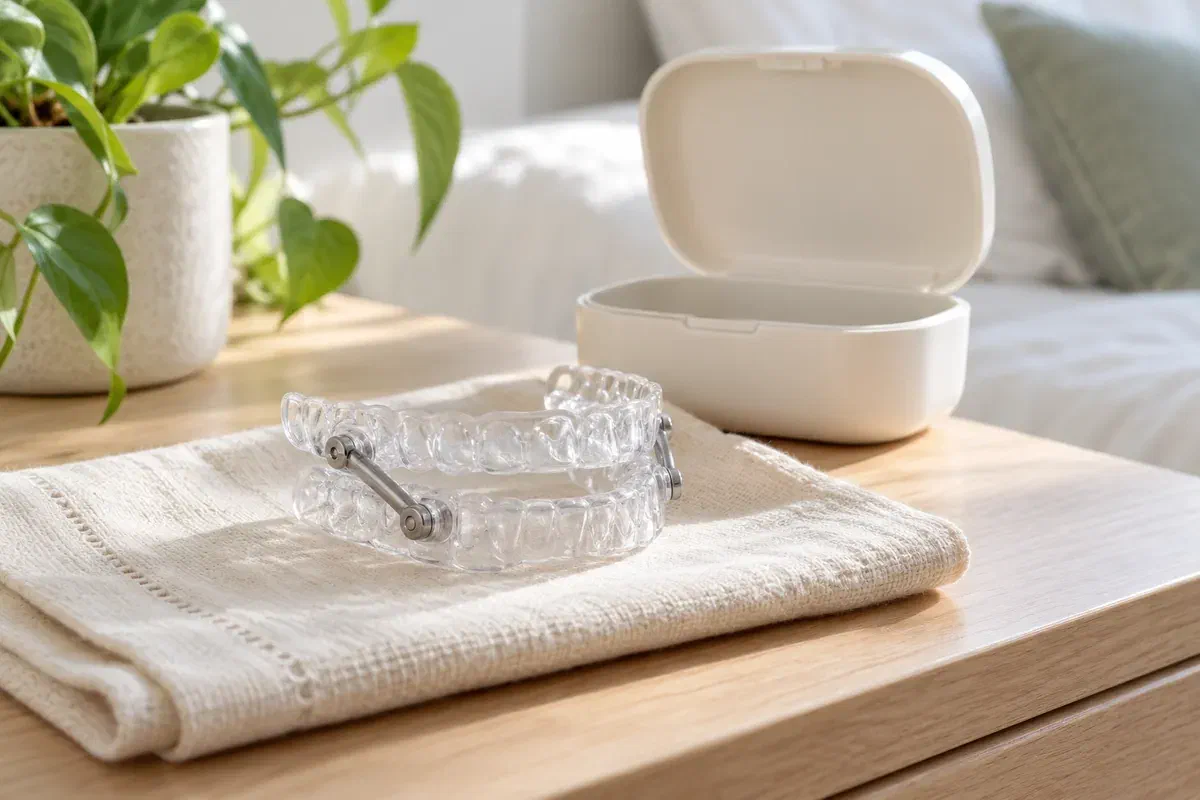
Oral appliances for snoring and some cases of sleep apnea usually work by guiding the lower jaw slightly forward overnight. They are custom made, checked in the mouth, and reviewed over time. A grinding guard or a sports guard may look similar, but neither is designed for that purpose.

When you come from Mississauga with this question, we focus on the dental side: whether your teeth, gums, and jaw can support a device, and what wearing one would involve. Your physician decides whether an appliance is an appropriate treatment for your condition, and how its effect would be checked.

Explore an appliance alongside your sleep plan
Illustrative custom mandibular advancement appliance beside its protective case
Before anything changes

What needs to be clear before a switch is considered

Nothing on this list is a test you have to pass. These details simply help us and your physician see whether a dental device belongs in the conversation, and in what role.

How your sleep condition is being managed now

Tell us your diagnosis, what treatment you were prescribed, and how often you actually use it. If symptoms such as pauses, gasping, or daytime sleepiness are returning, tell your physician promptly. Mention any effect on driving or other tasks that demand alertness.

The health of the teeth that would hold a device

Mobile or sore teeth, gum disease, recent restorations, missing teeth, and jaw joint pain or clicking all need attention. They may change what design is possible or mean treatment is needed first. A device that seats over the teeth is not automatically one they can tolerate.

Anything you have tried besides PAP

Bring any mouthpiece you have used, store-bought or custom, and tell us how long you wore it and why you stopped. Previous experience informs the plan. It does not show that all appliances will fail, nor that a new design will suit you.

These assessments are for adults. Children who snore need a medical evaluation, and an adult anti-snoring mouthpiece should not be substituted for it.

If an appliance becomes part of your care

A planned device, not a guess

When your physician agrees that an oral appliance may be appropriate, the dental plan should explain the proposed design, why it suits your mouth, what it is expected to achieve, and what limits apply. You should also hear about comfort, how to handle it, possible side effects, and the review schedule.

Part of the appeal of a device over PAP is often practical: no hose, no noise, easier travel. Say what draws you to it, and what worries you, such as jaw stiffness or cleaning. Those points are part of planning, considered together with your diagnosis and dental findings from the start.

Patient information: AADSM — assessment, appliance management, and ongoing care

A defined role in your treatment

Your records should make clear whether the device addresses primary snoring or is part of sleep-apnea treatment. That changes how closely its effect is monitored and who is involved. An appliance can be useful, but it should never be framed as the answer for every snorer.

A supervised fitting and starting routine

At the fitting, the clinician checks how the appliance seats and shows you how to place, remove, and clean it. Ask which changes, if any, you can make. Your starting routine comes from your prescription, not from a colleague who wears a different device.

Follow-up that keeps your physician involved

Ask how jaw comfort, tooth pressure, and bite changes will be watched, and how your physician will judge the response. Reviews continue once the device feels ordinary. Being comfortable and quieter is encouraging, but it does not settle whether the condition is controlled.

How the dental side proceeds

Check in with your physician. Then examine, decide, fit.

Bring your sleep study report and your PAP prescription details if you have them. If you only have questions so far, that is fine; the first appointment can start there.

  1. Review your diagnosis and current treatment

    We go over your sleep history, testing, and how your existing therapy is working for you. We can explain what information your physician may want to share. Our conversation is not a diagnosis, and decisions about your sleep treatment stay with your sleep-care provider.

  2. Assess the mouth for appliance support

    The clinician examines your teeth, gums, restorations, bite, and jaw movement. Ask what the findings mean for a possible device. Dental treatment, further assessment, or a discussion with your physician may be needed before going further.

  3. Weigh the appliance against your current therapy

    Talk through the potential benefit, the limits, and how a device compares with PAP or other approaches for your diagnosis. Ask about costs, appointments, and follow-up. If you proceed, the records and stages are explained; a device is not normally ready at the first visit.

  4. Fit the device and coordinate the review

    You receive the appliance with a clinical check and instructions for handling, cleaning, and your prescribed starting plan. Ask how to report discomfort. We confirm how your physician will check the response, often with follow-up testing, and how both teams stay in touch.

During the transition

Keep your physician in the loop at every step.

Early weeks with an appliance should come with written instructions and a clear way to contact us. Discomfort is worth reporting, and advancing the jaw further than prescribed is not a way to get faster results.

Learn the handling properly

Practise seating and removing the appliance at your fitting and keep the guidance where you can find it. Follow only the adjustment steps you were given. If it is still difficult, ask us instead of biting it into position or bending any part.

Tell us about soreness or bite changes

Say where the discomfort is, when it starts, and whether it is stopping you from wearing the device. We will check the appliance and your mouth together. Do not reshape it at home, and stop using a device that is damaged or fits badly.

Confirm the response with testing where advised

Let both teams know how snoring and other symptoms have changed, and whether you have been wearing the device consistently. Keep the follow-up your physician arranges. A partner noticing less noise is welcome news, but it is not a measure of sleep-apnea control.

Paths to discuss from Mississauga

Three routes, chosen with your physician

Ask both your physician and your dentist which approaches fit your situation. The recommendation should consider your testing, your experience with treatment so far, and what you want from care.

When the physician and dental exam agree it fits

A custom oral appliance as part of the plan

An appliance may be made with an individual fitting and scheduled reviews. Ask why the design suits you and which changes should prompt an earlier appointment. Expect a candid explanation, without promises of silence or the idea that everyone tolerates the same device.

When adjustments to current treatment may help

Support to make existing therapy work

Your physician or sleep clinic may suggest changes that make PAP easier, or review other contributing factors such as nasal or lifestyle issues. Share your medicines and concerns openly, and stop nothing on your own. A dental conversation should leave room for this route.

When more than one treatment is considered

A combined approach for sleep apnea

Care may involve PAP, an oral device, or other physician-directed treatment, depending on your assessment. Ask how effectiveness will be checked and how dental findings influence the options. Less noise is only one aim, so your medical provider stays involved.

Patient information: NHLBI — medical treatment options for sleep apnea

Mississauga questions about PAP and appliances

Straight answers about trading a mask for a mouthpiece

Two appliances can look alike and serve very different purposes. Ask about the exact device being discussed and how it would fit into your physician’s plan.

(905) 876-4488
Can I stop using PAP once I have a dental appliance?
Only on your physician’s advice. They decide whether an appliance is appropriate for your diagnosis and how its effect should be confirmed. Changing treatment on your own risks leaving sleep apnea undertreated.
Is an oral appliance an option for every level of sleep apnea?
Not necessarily. Your physician weighs the severity of your condition, your health, and your experience with other treatments. The dental exam then shows whether your mouth can support a device. Both parts need to point the same way.
Could I use an appliance just for travel and PAP at home?
Some people ask about this. It is a question for your physician, who can say whether it suits your diagnosis, and for us, to confirm a device is suitable for you. Do not set up a part-time plan on your own.
Why does the appliance move my jaw forward?
A mandibular advancement design holds the lower jaw in a planned position to help keep the airway from narrowing during sleep. The position depends on your assessment and device instructions. Advancing further than prescribed is not automatically better.
Can wearing a device affect how my teeth fit together?
It can. Over months or years, some people find their teeth meet a little differently, and early tenderness in the jaw or teeth is also reported. We talk about this before you start and look for it at each review. Tell us about any lasting change instead of compensating for it on your own.
How will I know the appliance is treating my sleep apnea?
Your physician will advise on assessing the response, which may include repeat testing. Feeling better and snoring less are helpful signs, but they do not confirm control on their own. Dental reviews continue to check the fit and your teeth.
Booking from Mississauga

Your physician’s plan comes first. Our exam adds the dental view.

Contact Milton Dental Clinic to discuss whether an oral appliance could have a place in your care. Tell us about your diagnosis, your current treatment, and any device you have tried, so the first visit starts with what matters.

Any appliance plan follows medical evaluation and an individual dental assessment.

Visit Milton Dental Clinic
Unit 1, 342 Bronte St. S, Milton, ON L9T 5B7
Get directions Clinic hours
Monday–Thursday
11am–7pm
Friday–Sunday
By appointment only

Areas we serve

  • Milton
  • Oakville
  • Mississauga
  • Georgetown
  • Halton Hills
  • Acton
  • Campbellville
  • Brampton
  • Burlington
  • Puslinch
  • Rockwood
  • Erin
  • Caledon
  • Etobicoke
  • Old Milton
  • Bronte Meadows
  • Timberlea
  • Dorset Park
  • Dempsey
  • Clarke
  • Beaty
  • Coates
  • Harrison
  • Scott
  • Willmott
  • Ford
  • Bowes
  • Cobden
  • Walker
  • Mountain View
  • Milton Heights
  • Hawthorne Village
  • Valley View
  • Fallingbrook
  • Nassagaweya
  • Trafalgar
  • Esquesing
  • Nelson
  • Brookville
  • Moffat
  • Glen Williams
  • Norval
  • Limehouse
  • Stewarttown
  • Ashgrove
  • Hornby
  • Silver Creek
  • Speyside
  • Scotch Block
  • North Oakville
  • River Oaks
  • Glen Abbey
  • West Oak Trails
  • Palermo
  • Bronte Creek
  • College Park
  • Joshua Creek
  • Uptown Core
  • Preserve
  • Iroquois Ridge
  • Lisgar
  • Meadowvale
  • Meadowvale Village
  • Churchill Meadows
  • Erin Mills
  • Central Erin Mills
  • Streetsville
  • East Credit
  • Creditview
  • Heartland
  • Sheridan
  • Mount Pleasant
  • Credit Valley
  • Huttonville
  • Churchville
  • Springbrook
  • Northwest Brampton
  • Bram West
  • Fletcher's Meadow
  • Fletcher's Creek South
  • Alton Village
  • Orchard
  • Millcroft
  • Headon Forest
  • Tansley
  • Brant Hills
  • Tyandaga
  • Kilbride
  • Lowville
  • Aberfoyle
  • Morriston
  • Arkell
  • Hillsburgh
  • Freelton
  • Carlisle
  • Waterdown
  • Flamborough
  • Mountsberg

How can we help?

Milton Dental Clinic

Have a question about your smile? Choose the option that works best for you.

For urgent dental concerns, please call.
Messages are reviewed during clinic hours.