

Illustrative consultation about an injury to the mouth's soft tissues
Specialized Care

Soft-Tissue Dental Injury Treatment

A cut or impact injury to the lips, gums, cheek, or tongue deserves the right assessment. Call our Milton team to describe what happened, discuss dental care, and identify when a wound or associated injury needs urgent medical attention.

A closer look at injuries inside and around the mouth

Look beyond the visible cut to understand the whole injury.

Soft-tissue dental injuries affect areas such as the lips, gums, inner cheeks, or tongue. They can follow a fall, a collision, an accidental bite, or contact with a broken tooth or appliance. The visible wound is only part of the assessment: nearby teeth, the bite, and other facial structures may also need attention.

The appropriate care depends on the location and depth of the wound, bleeding, contamination, and associated injuries. Some small cuts can heal with suitable care, while others need professional cleaning, closure, or treatment in a different setting. You do not need to decide which category applies before asking for help.

Call Milton Dental Clinic at (905) 876-4488 and explain when and how the injury happened. Tell us whether bleeding is ongoing, teeth are damaged, or the bite feels different. We can discuss availability and the appropriate next step. If the injury needs immediate medical attention, do not delay that care while waiting for a dental appointment.

Discuss follow-up for a mouth injury
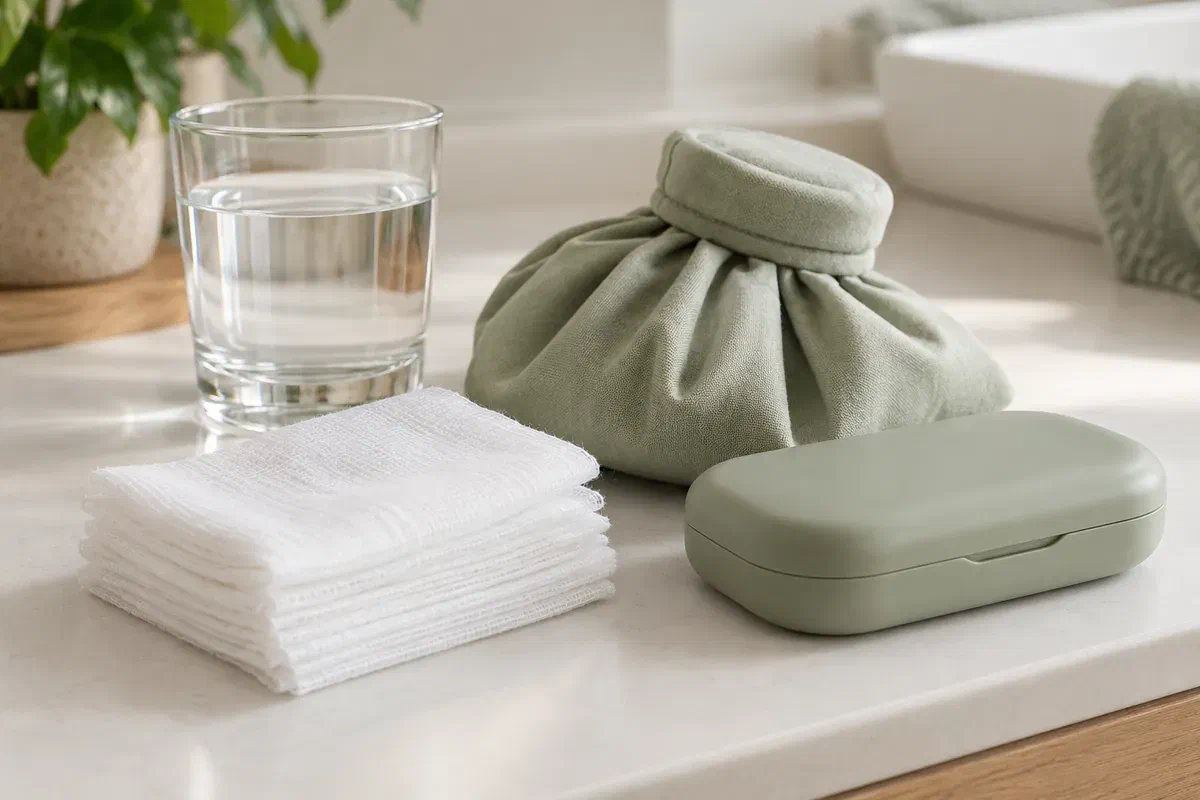
Illustrative clean gauze and a wrapped cold pack prepared for first aid
Details that affect where and how you are assessed

Describe the bleeding, the wound, and what happened around it.

A photograph or a quick look in the mirror cannot show every relevant finding. Explain the mechanism of injury and any symptoms beyond the visible area so the team can advise on an appropriate assessment.

Bleeding or a wound that appears deep or gaping

For a reachable bleeding area, use clean gauze or a clean cloth to apply gentle, steady pressure while arranging help. Do not keep pulling the tissue aside to inspect it. Heavy or uncontrolled bleeding, a deep wound, or difficulty managing blood in the mouth needs urgent assessment rather than an online request.

A broken tooth, missing fragment, or material in the wound

Tell the clinician if a tooth chipped during the injury or if glass, dirt, or another material may be present. A fragment can require further assessment even when it is not easily visible. Do not probe the cut, dig for a piece, or attempt to close the wound yourself.

Other facial or head-injury symptoms

Mention a changed bite, difficulty opening the mouth, significant facial impact, dizziness, vomiting, or loss of consciousness. These findings may require medical care as well as dental treatment. Do not assume the most visible lip or gum injury explains every symptom after a fall or collision.

Call 911 for difficulty breathing, loss of consciousness, or severe uncontrolled bleeding. Serious facial injury or concerning symptoms after a head impact need urgent medical assessment; a routine dental visit should not delay it.

What a careful injury assessment adds

Choose care for the tissues while checking the structures beside them.

A clinician can examine the wound in context and explain whether local care is sufficient or whether another approach is needed. Ask what has been checked and what remains uncertain. The decision to clean, monitor, close, or refer a wound should reflect its features and the patient's needs, rather than simply how dramatic it looks.

The assessment also creates a plan for what happens after the first visit. Tissue healing and the response of an injured tooth do not always follow the same course. Ask whether a dental review is needed even if the cut improves, and what changes should bring you back before that appointment.

Patient information: Alder Hey — assessment and treatment of mouth soft-tissue injuries

Identify contamination and the need for wound care

Explain where the injury occurred and whether the area contacted a dirty surface or an object. The clinician can assess the need for cleaning, further investigation, or medical input, including questions about immunization where relevant. Do not use harsh chemicals or an improvised tool to treat an uncertain wound at home.

Check nearby teeth and the way they meet

Tell the dentist about sensitivity, movement, a sharp edge, or a bite that feels different. An injury to the lip or gum may occur alongside dental trauma. The visible wound improving does not rule out a tooth problem that needs treatment or follow-up.

Explain the care setting and the review plan

Ask whether the wound can appropriately be managed at the dental visit or needs a medical or surgical service. If referral is advised, clarify where to go and the urgency. Knowing the next action is more helpful than assuming every mouth wound can be treated in the same office.

What happens when the injury is reviewed

Understand the impact, examine the area, and agree on the appropriate care.

Tell the team about first aid already given, medicines taken, and any care received elsewhere. Bring available discharge instructions and safe-to-transport tooth fragments without delaying urgent help to collect them.

  1. Establish the history and immediate priorities

    Explain the timing, cause, bleeding, and associated symptoms. The clinician considers whether the injury is appropriate for dental assessment or needs urgent medical attention first. Mention relevant medical conditions, prescribed blood thinners, and allergies; do not stop prescribed medicines independently because the mouth has bled.

  2. Examine the tissues and associated dental findings

    The wound, adjacent teeth, and bite are assessed as appropriate. Tell the clinician about missing pieces or a suspected embedded object. Additional imaging or another provider's assessment may be needed, but not every small cut requires the same tests or the same treatment.

  3. Discuss cleaning, closure, or referral where indicated

    Ask why the proposed care suits the wound and how discomfort will be managed. Some injuries need careful local care, while others require closure or a different treatment setting. The clinician should explain the relevant options and limitations before proceeding with non-emergency treatment.

  4. Confirm home care and the follow-up responsibilities

    Ask how to eat, clean the area, and manage discomfort without disturbing healing. Clarify whether any stitches need review or removal and which provider will do that. If teeth were also injured, confirm their follow-up separately rather than assuming that a healed lip ends the dental care plan.

Caring for the area after assessment

Protect the wound and follow the instructions for the actual injury.

Care varies according to the wound, any closure, and associated tooth damage. Use the instructions given by the treating clinician instead of applying an extraction routine or a product intended for a different problem.

Avoid repeated stretching, biting, or touching

Try not to pull the lip or cheek repeatedly to inspect the wound. Choose foods that are comfortable and avoid biting swollen or numb tissues. If a sharp tooth or appliance continues to catch the area, contact the dentist so the ongoing source of injury can be reviewed.

Clean gently in the way the clinician recommends

Ask which areas can be brushed and whether any rinse is appropriate for the patient's age and injury. Do not scrub the wound, apply household disinfectant, or place aspirin against it. Medicine and mouthwash advice should take account of the individual situation rather than being assumed from a general web page.

Watch the trend and keep the planned review

Seek advice for recurrent bleeding, increasing swelling, worsening pain, discharge, fever, or a wound that is not improving as expected. Report new tooth sensitivity, movement, or colour change too. These observations need assessment; they should not be dismissed because the original injury seemed minor.

Choosing care for an injured mouth

The wound and the associated damage guide the decision.

Ask what the recommended treatment is intended to achieve and what review is needed. A stitch, a dental repair, and a medical assessment address different aspects of an injury and may sometimes be needed together.

When the assessed injury can heal without closure

Local wound care with appropriate monitoring

Some smaller wounds can be managed with suitable cleaning and protection, with review when indicated. Ask what improvement to expect and when to seek help. A decision against stitches should follow assessment rather than a home assumption based only on the apparent length of the cut.

When the wound's features need more involved care

Professional closure or specialist wound assessment

A deep, gaping, contaminated, or otherwise complex injury may need closure or treatment in an appropriate medical or surgical setting. Ask who should provide that care and how quickly it is needed. Do not use household glue or attempt to trim damaged tissue yourself.

When the impact also affected teeth or supporting tissues

Treatment and follow-up for an associated tooth injury

A broken, displaced, or otherwise injured tooth may need its own care plan alongside the wound. Ask what has been found and whether further treatment or monitoring is expected. Healing of the soft tissues does not guarantee that the tooth's internal tissues have recovered.

Patient information: AAE — dental trauma and the importance of follow-up

Questions about a cut or injury in the mouth

Know which details to report and when to ask for another review.

The right advice depends on the actual wound and any associated injury. Call with urgent symptoms rather than waiting for a routine online booking response.

(905) 876-4488
Does every cut inside the lip need stitches?
No. Some small wounds heal without closure, while other injuries need stitches or specialist assessment. Depth, location, bleeding, contamination, and associated damage matter. Have an uncertain wound assessed instead of deciding from its apparent size or trying to close it at home.
Should I mention a missing tooth fragment when my lip was cut in the same accident?
Yes. Tell the clinician that part of the tooth is unaccounted for and where the lip was injured. The wound may need assessment for an embedded fragment. Do not probe it or try to remove a suspected piece yourself.
Can I ignore a gum injury once the bleeding has stopped?
Stopped bleeding is useful information, but it does not rule out damage to nearby teeth or supporting tissues. Describe the injury and any tooth movement, tenderness, or changed bite to the dentist. The appropriate examination and follow-up depend on what happened and what the assessment finds.
What if a broken tooth keeps catching the cheek wound?
Contact the dentist to assess the sharp edge and the injured tissue. Repeated contact can interfere with comfort and healing. Do not file the tooth or alter an appliance yourself; the clinician can discuss an appropriate way to address the source of the repeated injury.
Will stitches used for a mouth injury always dissolve on their own?
Not necessarily. Ask which type was used, whether removal is needed, and who will provide follow-up. Do not pull or cut a loose-looking stitch yourself. Contact the treating team if it is causing difficulty or if the wound appears to reopen.
Should I stop a prescribed blood thinner after a mouth cut?
Do not stop it independently. Tell the treating clinician what you take and describe the bleeding so they can assess the injury and coordinate appropriate advice. Heavy or uncontrolled bleeding needs urgent help; changing a prescribed medicine yourself is not a substitute for that assessment.
Call about a mouth injury in Milton

Tell us how it happened and what you are noticing now.

Call (905) 876-4488 to discuss an injury to the lips, gums, cheek, or tongue and current availability. Mention ongoing bleeding, damaged teeth, or other symptoms. Online enquiries are for non-urgent questions; immediate medical concerns need the appropriate emergency service.

Call before travelling. If immediate care is needed and we cannot be reached, seek another available emergency provider.

Visit Milton Dental Clinic
Unit 1, 342 Bronte St. S, Milton, ON L9T 5B7
Get directions Clinic hours
Monday–Thursday
11am–7pm
Friday–Sunday
By appointment only

How can we help?

Milton Dental Clinic

Have a question about your smile? Choose the option that works best for you.

For urgent dental concerns, please call.
Messages are reviewed during clinic hours.