

Illustrative consultation about an injury to the mouth's soft tissues
Specialized Care

Soft-Tissue Dental Injury Treatment in Acton

Stitches were placed in the lip at a hospital, and now you are wondering who checks them, whether they dissolve, and whether the teeth were looked at. Call our team to talk it through, plan the dental side of the injury, and know when to seek medical care.

Follow-up after a mouth wound in Acton

The stitches are in. What happens now?

Many mouth injuries are first treated somewhere else: an emergency department after a fall on the ice, a walk-in clinic after a sports collision, or a family doctor after a dog jumped up and caught a child’s lip. Once the wound is closed, a second set of questions appears. Who removes the stitches? Were the teeth checked? Is this swelling normal?

Answers depend on the injury. A lip, gum, tongue or cheek wound heals according to its depth, location, contamination and any damage nearby. Some cuts heal with simple care and no stitches at all; others need closure, careful cleaning or ongoing review. If the teeth or bite were affected, they need attention of their own, separate from the soft tissue.

Phone (905) 876-4488 with three things: how the injury happened, where it was treated, and what instructions you were given. Mention any tooth that feels loose, chipped or sore, and anything that has changed since. We can talk about timing and the next step. If there is bleeding you cannot control or another emergency, seek medical care straight away.

Ask about dental follow-up after stitches
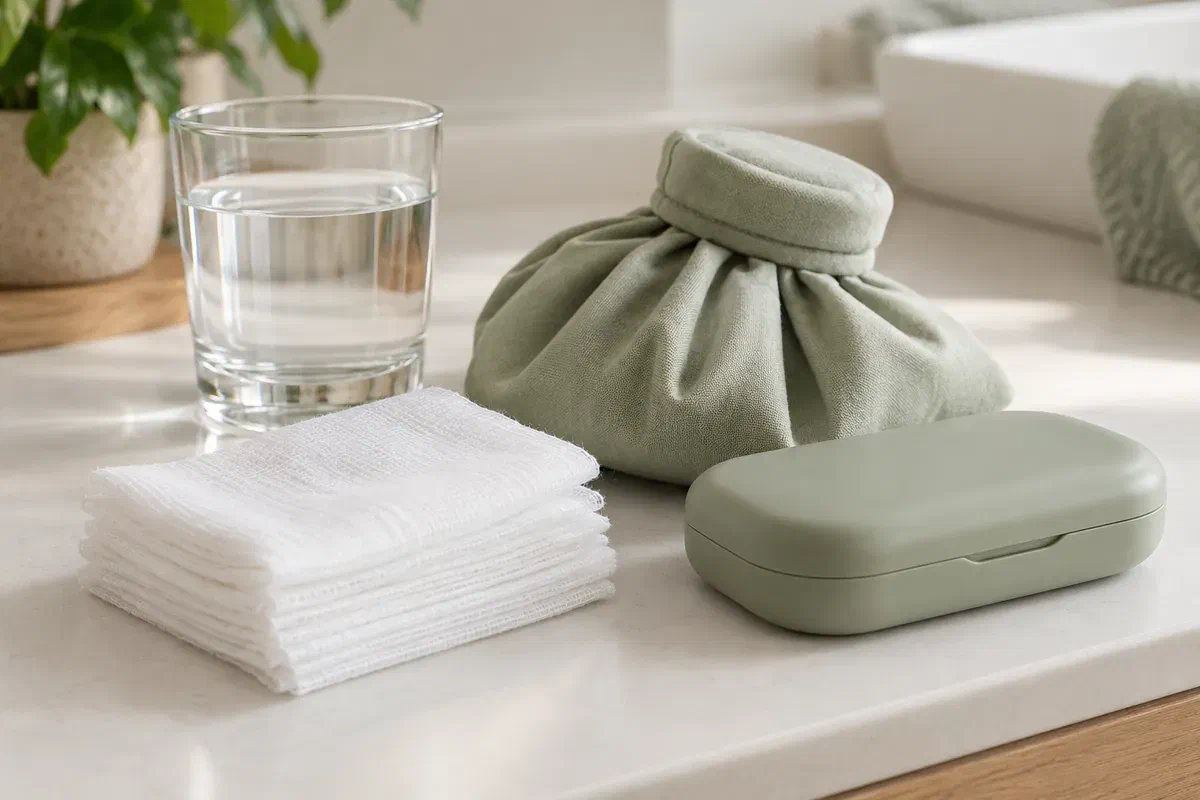
Illustrative clean gauze and a wrapped cold pack prepared for first aid
Before and after the first treatment

Tell us about bleeding, debris and any symptoms elsewhere.

Whether the wound is fresh or already closed, a mirror cannot show everything. Describe the original injury and anything you have noticed since so the team can advise on the right assessment.

Bleeding, or a wound that seems to reopen

If bleeding starts or restarts, lay clean gauze or a clean cloth on the reachable area and keep a soft, steady press on it while arranging help. Avoid lifting the lip to look. Heavy bleeding, bleeding that will not slow, or a wound that has pulled open needs prompt urgent attention.

A broken tooth or something left in the tissue

Let the clinician know if a tooth chipped during the injury, or if glass, dirt or another material may have entered the wound, even if it was already cleaned elsewhere. A piece can remain inside the tissue. Avoid probing, squeezing or trying to remove anything yourself.

Symptoms that may point to a wider injury

Report a bite that has changed, trouble opening the mouth, a significant blow to the face, dizziness, vomiting, or any loss of consciousness. These can need medical assessment as well as dental care, even if the lip has already been stitched.

Call 911 for difficulty breathing, unconsciousness, or bleeding that is severe and does not let up. Worrying symptoms after a facial or head injury need urgent medical assessment; a dental appointment is not a substitute.

What dental follow-up adds

Closing the wound is one job. Checking the teeth is another.

A dental assessment looks at the injured tissue alongside the teeth and bite, and can tell you whether local care is enough or whether something else is needed. Ask what was examined and what is not yet certain. Decisions to clean, monitor, close or refer a wound should be based on its features and your needs, not on its first appearance.

It also fills in the gaps in the follow-up plan. A stitched lip may heal in days, while a tooth knocked in the same moment can take weeks or longer to show how it is doing. Ask whether a dental review is needed regardless of how the wound looks, and what changes should bring you back early.

Patient information: Alder Hey — assessment and treatment of mouth soft-tissue injuries

Review contamination and wound care

Explain where the injury happened and what caused it, including an animal bite or a dirty surface. The clinician can consider whether further cleaning, investigation or medical input is needed, and whether immunization questions were covered. Avoid harsh chemicals or improvised tools at home.

Check the teeth beside the wound

Mention sensitivity, movement, a rough edge or a bite that does not feel right. Soft-tissue injuries often occur together with dental trauma, and the first treating team may have focused only on the wound. A tooth may still need treatment or monitoring.

Sort out who does what

Ask whether any wound care can be handled at the dental visit or needs to stay with the medical team that placed the stitches. If a referral is made, confirm where and how soon. Clear roles prevent important checks from being missed.

What the follow-up visit involves

Catching up on the injury, then checking what was missed.

Bring discharge instructions and any information about the stitches, along with a list of medicines and anything you have taken since. If a tooth fragment was found and can be carried safely, bring that too, but never delay urgent care to look for it.

  1. Go over what happened and what was done

    We ask about the injury, the treatment already received, and any symptoms since. The clinician considers whether dental assessment fits now or medical review should come first. If you take a blood thinner, have allergies or manage a health condition, say so; any change to a prescribed medicine should come from the person who prescribed it.

  2. Look at the wound, the teeth and the bite

    The healing tissue, adjacent teeth and how they close are examined as appropriate. Mention any part of a tooth that was never found or an area that still feels unusual. Imaging or another provider’s input may be needed, though not every case requires it.

  3. Discuss any further care

    Ask why any proposed treatment suits the situation and how comfort will be handled. Some wounds need only monitoring now; others need further cleaning, adjustment or referral. The clinician explains options and limitations before any non-emergency treatment.

  4. Confirm stitch care and tooth follow-up

    Ask how to eat, clean and manage soreness while the wound heals. Confirm whether the stitches dissolve or need removal, and which provider will handle that. Arrange tooth follow-up separately, since a healed lip does not mean the dental side is finished.

Living with stitches for a while

Gentle routines while the wound closes.

Care depends on the wound, the type of stitches and any tooth injury. Lean on the instructions you were given at discharge or at the dental visit, and set aside tips meant for wisdom-tooth removal or products sold for mouth ulcers.

Leave the stitches and the wound alone

Try not to tug the lip to look, poke at the stitches with your tongue, or bite on swollen or numb areas. Choose comfortable foods. If a sharp tooth or appliance keeps rubbing against the stitches, contact the dentist so it can be checked.

Clean as advised

Ask which teeth can be brushed and whether a rinse is appropriate for the person’s age and injury. Do not scrub the stitches, apply household disinfectant or put aspirin on the area. Follow individual advice on medicines and mouthwash.

Watch how healing progresses

Seek advice for bleeding that returns, rising swelling, worsening pain, discharge, fever, or stitches that loosen early while the wound gapes. Report new tooth sensitivity, movement or a colour change as well. These need assessment even if the injury seemed minor.

Next steps for an Acton household

Monitoring, more wound care, or tooth treatment.

Ask what each recommendation is for and how it will be reviewed. Stitch care, dental treatment and a medical assessment each address different parts of an injury and may happen with different providers.

When the wound is healing as expected

Monitoring as the wound heals

Many wounds, stitched or not, need only gentle care and a review when indicated. Ask what normal healing looks like and when to call. Whether a wound needed stitching in the first place is a clinical judgment, and so is deciding it can now be left to finish healing.

When healing is not going to plan

Further wound care or specialist review

A wound that reopens, looks infected, or was complex from the start may need to go back to the hospital team or on to a surgical clinic. Check which service should see it and how quickly. Household glue and home trimming of loose tissue only make matters worse.

When teeth or their supporting tissues were also hurt

Treatment for an injured tooth

A tooth that broke, moved or was struck may need its own care and monitoring. Ask what was found and what follow-up is expected. The lip healing well does not guarantee the tooth’s inner tissues have recovered.

Patient information: AAE — dental trauma and the importance of follow-up

Stitches and follow-up questions from Acton

Practical answers for the healing stage.

Your own discharge instructions come first, since every wound and closure is different. Anything that feels urgent deserves a phone call or a trip to emergency care, not a message left on a website.

(905) 876-4488
How will I know if my mouth stitches are the dissolving kind?
Ask the team that placed them, or check your discharge notes. If you are unsure, call that provider. Do not pull or cut a stitch that seems loose, and seek advice if the wound appears to be opening.
A stitch fell out early. Is that a problem?
It may or may not be. Contact the treating team and describe whether the wound is still closed. If it has opened, is bleeding, or looks infected, seek advice promptly.
Can the dentist remove stitches placed at a hospital?
Sometimes, but it depends on the stitches and the wound. Ask the hospital team what follow-up they recommend, and tell us about the stitches when you call so we can discuss the best plan.
A dog caught my child’s lip. Does the dentist need to see it?
Animal bites need medical assessment because of infection risk and other considerations. Once that is arranged, call us if any teeth were bumped or the bite feels different, so the teeth can be checked.
Was it a mistake not to see a dentist before the hospital?
No. Serious bleeding, deep wounds or head-injury symptoms rightly go to medical care first. A dental check afterward helps make sure nearby teeth were not overlooked.
The stitched area feels lumpy. Should I worry?
Some firmness can occur as a wound heals, but increasing pain, swelling, discharge or fever should be reported. Mention the lump at your follow-up so it can be checked.
Follow-up care for Acton

Bring us up to date, and we will plan the next step.

Our line is (905) 876-4488. Ring to describe a mouth wound that is healing, or one that is not, and to find a time that works. Tell us where the first treatment took place, whether bleeding has come back and whether any teeth were damaged. Online enquiries suit non-urgent questions; urgent concerns need emergency services.

Please call before you travel. If immediate care is needed and we are unavailable, go to another emergency provider.

Visit Milton Dental Clinic
Unit 1, 342 Bronte St. S, Milton, ON L9T 5B7
Get directions Clinic hours
Monday–Thursday
11am–7pm
Friday–Sunday
By appointment only

Areas we serve

  • Milton
  • Oakville
  • Mississauga
  • Georgetown
  • Halton Hills
  • Acton
  • Campbellville
  • Brampton
  • Burlington
  • Puslinch
  • Rockwood
  • Erin
  • Caledon
  • Etobicoke
  • Old Milton
  • Bronte Meadows
  • Timberlea
  • Dorset Park
  • Dempsey
  • Clarke
  • Beaty
  • Coates
  • Harrison
  • Scott
  • Willmott
  • Ford
  • Bowes
  • Cobden
  • Walker
  • Mountain View
  • Milton Heights
  • Hawthorne Village
  • Valley View
  • Fallingbrook
  • Nassagaweya
  • Trafalgar
  • Esquesing
  • Nelson
  • Brookville
  • Moffat
  • Glen Williams
  • Norval
  • Limehouse
  • Stewarttown
  • Ashgrove
  • Hornby
  • Silver Creek
  • Speyside
  • Scotch Block
  • North Oakville
  • River Oaks
  • Glen Abbey
  • West Oak Trails
  • Palermo
  • Bronte Creek
  • College Park
  • Joshua Creek
  • Uptown Core
  • Preserve
  • Iroquois Ridge
  • Lisgar
  • Meadowvale
  • Meadowvale Village
  • Churchill Meadows
  • Erin Mills
  • Central Erin Mills
  • Streetsville
  • East Credit
  • Creditview
  • Heartland
  • Sheridan
  • Mount Pleasant
  • Credit Valley
  • Huttonville
  • Churchville
  • Springbrook
  • Northwest Brampton
  • Bram West
  • Fletcher's Meadow
  • Fletcher's Creek South
  • Alton Village
  • Orchard
  • Millcroft
  • Headon Forest
  • Tansley
  • Brant Hills
  • Tyandaga
  • Kilbride
  • Lowville
  • Aberfoyle
  • Morriston
  • Arkell
  • Hillsburgh
  • Freelton
  • Carlisle
  • Waterdown
  • Flamborough
  • Mountsberg

How can we help?

Milton Dental Clinic

Have a question about your smile? Choose the option that works best for you.

For urgent dental concerns, please call.
Messages are reviewed during clinic hours.