

Illustrative consultation about an injury to the mouth's soft tissues
Specialized Care

Soft-Tissue Dental Injury Treatment in Caledon

A broken tooth with a jagged edge can keep slicing the tongue or cheek every time you talk or chew, long after the original accident. Call our team to describe the sore and the tooth, plan dental care for both, and recognize when a mouth wound needs medical help first.

When the injury keeps happening

A sharp edge that will not leave your tongue alone.

Some soft-tissue injuries happen once, in a fall or collision. Others repeat dozens of times a day. A tooth that cracked on a popcorn kernel, a filling with a rough corner, or a broken denture clasp can rub the tongue, cheek or lip raw. In Caledon, where a dental visit often means planning around a drive, people sometimes put this off longer than they should.

Whether the wound came from an accident or from repeated rubbing, the approach follows the same logic. How deep and where is it? Is it bleeding? Could it be contaminated? What is causing it, and were the teeth or bite affected? A small sore may settle once the cause is fixed. A deeper wound may need cleaning, stitches, or medical care.

Phone (905) 876-4488 and describe the sore and the tooth or appliance you think is causing it, along with when it started. If it followed an accident, tell us how it happened and whether bleeding continues. We can discuss timing and the next step. Anything that needs emergency medical attention should be handled there first.

Get help with a tooth that keeps cutting
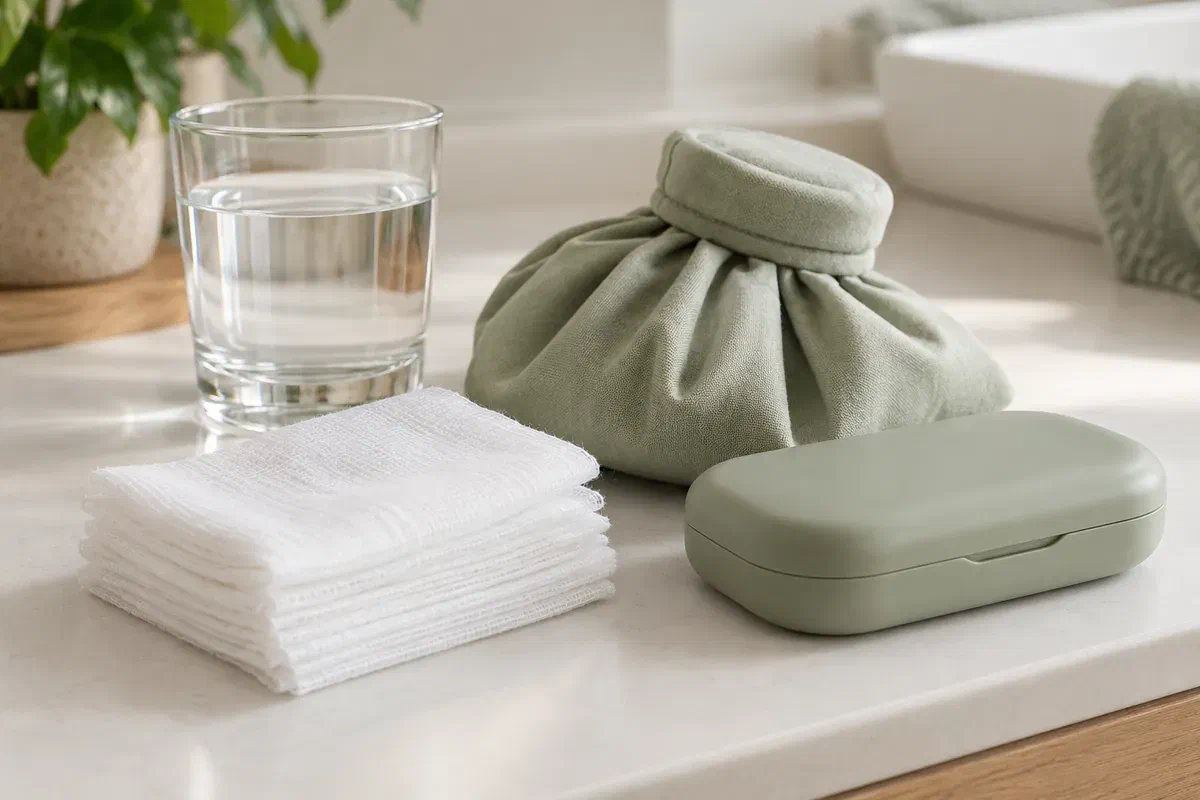
Illustrative clean gauze and a wrapped cold pack prepared for first aid
Details that help us advise you

Tell us about the wound, the source and anything else you feel.

Looking in a mirror at the side of your tongue is awkward at best. Explain what you think is causing the injury and any symptoms beyond it so the team can recommend the right type of assessment.

A wound that bleeds or looks deep

For active bleeding, rest folded gauze or a fresh cloth on the area you can reach and press lightly without stopping while you arrange help. Resist checking it constantly. Bleeding that stays heavy, a wound that looks deep or split open, or blood that is difficult to manage needs urgent assessment.

Something sharp that keeps catching: tooth, filling or appliance

Describe which tooth or appliance is rough and how long it has been rubbing. If a fragment broke off during an accident, say so, and mention any grit or glass that may be in a cut. Do not file the tooth, bend a clasp, or try to close a wound yourself.

Symptoms that suggest a bigger problem

Report a changed bite, difficulty opening the mouth, a significant blow to the face, light-headedness, nausea or vomiting, or any blackout. These may need medical care as well as dental treatment. A sore that has not healed after the cause is removed also needs a professional look.

Call 911 if breathing is difficult, someone has lost consciousness, or heavy bleeding will not ease with pressure. Serious facial injuries and worrying symptoms after a knock to the head need urgent medical care before any dental appointment.

Why treating the source matters

Heal the sore by fixing what keeps causing it.

An examination lets the clinician look at both the wound and its cause, and decide whether local care is enough or whether another approach is needed. Ask what was checked and what remains uncertain. Whether the area is cleaned, watched, closed or referred should depend on what the wound actually shows and on you, not simply on how sore it feels.

It also gives you a plan for healing. Once a sharp edge is smoothed or a tooth is repaired, the tissue often has a chance to recover, but a tooth damaged in an accident may still need its own follow-up. Ask what reviews are recommended, and what signs mean you should come back before then.

Patient information: Alder Hey — assessment and treatment of mouth soft-tissue injuries

Check for contamination and wound-care needs

If the wound came from an accident, say where it happened and what the mouth hit. The clinician can consider cleaning, investigation or medical advice, and whether immunization questions apply. Avoid harsh chemicals or improvised tools on an uncertain wound.

Find and address the sharp tooth or appliance

Mention sensitivity, movement, a rough edge or a change in your bite. The dentist can assess the tooth, filling or denture causing the rubbing and discuss how to address it. Removing the source is often a key part of healing.

Confirm where care should happen

Some mouth wounds are fine to treat in a dental chair, and others are better seen by a doctor, hospital or surgical clinic, so ask which applies to yours. If referral is suggested, confirm where to go and when. Having that settled spares you from guessing.

At your Caledon household’s appointment

Find the cause, check the wound, then fix both.

Tell the team about any home remedies you have tried, medicines taken and care already received. Bring discharge notes and any broken tooth or appliance pieces that can be carried safely, without delaying urgent care to collect them.

  1. Discuss how the injury started

    We ask whether it followed an accident or developed from rubbing, when it began, and how it has changed. The clinician decides whether dental care fits now or medical care should come first. We also need to know about allergies, ongoing conditions and anything that affects bleeding, such as a blood thinner, which should stay as prescribed unless your prescriber advises otherwise.

  2. Examine the wound and the source

    The sore or cut, the nearby teeth, fillings, appliances and bite are examined as appropriate. Mention any missing tooth fragment or anything you suspect is in the wound. X-rays or another provider’s opinion may be recommended in some cases.

  3. Agree on wound care and source repair

    Ask why the recommended treatment fits and how comfort will be managed. A sharp edge may be smoothed or repaired, while the wound may need local care, stitches or another setting. Options and limitations are explained before non-emergency treatment.

  4. Plan home care and the review

    Ask about eating, cleaning and soreness while the area heals. Confirm whether stitches need removal and by whom. Arrange a follow-up to make sure the sore has healed once the cause is fixed, and separate follow-up for any tooth injured in an accident.

Letting the tissue recover

Once the rubbing stops, healing can start.

Aftercare depends on the type of wound, any stitches and the tooth or appliance involved. Follow the treating clinician’s instructions rather than generic extraction advice or a product meant for something else.

Keep the area away from the source

Until the tooth or appliance is fixed, try to chew on the other side and avoid running your tongue over the sharp edge. If your dentist provides a temporary covering or wax, use it as directed. Call if the rubbing continues after treatment.

Clean gently

Ask which areas can be brushed and whether any rinse suits your situation. Avoid scrubbing the sore, using household disinfectant or placing aspirin on it. Medicine and mouthwash choices should reflect your own health and medicines.

Make sure the sore actually heals

Seek advice for bleeding that recurs, swelling or pain that worsens, discharge, fever, or a sore that has not improved within the time your clinician mentioned. A mouth sore that persists after the cause is removed should always be re-examined.

Care options in Caledon

Smooth the edge, heal the tissue, protect the tooth.

Ask what each treatment is designed to do and what review it needs. Repairing a tooth, caring for a wound and checking for other injuries are separate jobs, and more than one may be needed.

When the sore or cut can heal on its own

Local care once the cause is addressed

Many small sores heal once the sharp edge is fixed and the area is kept clean, with a review if indicated. Ask how quickly it should improve and when to call. Deciding a wound does not need stitches should follow examination.

When the wound is deep, contaminated or unusual

Stitches or a specialist referral

A deep or complex wound may need closure in a medical or surgical setting, and a sore that does not heal may need specialist assessment. Ask who will see it and how soon. Never use household glue or trim tissue yourself.

When a broken tooth or filling is the source

Repair or follow-up for the tooth

A cracked tooth, rough filling or broken appliance may need repair, and a tooth injured in an accident may need monitoring. Ask what was found and what follow-up is planned. A healed tongue does not prove the tooth itself is healthy.

Patient information: AAE — dental trauma and the importance of follow-up

Questions about repeated mouth injuries

What to do when the same spot keeps getting hurt.

General answers cannot replace an examination. With urgent symptoms, phone or go to emergency care rather than sending an online request.

(905) 876-4488
How long can I wait to fix a tooth that keeps cutting my tongue?
It is best to call soon. Repeated rubbing can keep a sore from healing and may make it larger. The dentist can assess the tooth and discuss smoothing or repair.
Can I cover a sharp tooth edge myself until the appointment?
Ask the dentist what is suitable. Some people are given dental wax or a temporary option. Do not file the tooth or use household glue.
My tongue sore has lasted weeks even though the tooth was fixed. Is that normal?
A sore that does not heal after the cause has been removed should be re-examined. Contact the dentist so it can be checked.
Could a broken denture clasp be causing the sore on my cheek?
It could. Stop wearing the denture if your dentist advises, and call so both the denture and the sore can be assessed.
Should I plan the drive from Caledon for a sore spot, or wait?
Call first and describe it. A small sore from a sharp tooth may be scheduled, while bleeding, deep wounds or other urgent symptoms may need prompt care closer to home.
Is it normal for a tongue cut to look white while healing?
Healing tissue in the mouth often looks pale for a while. Call if it becomes more painful, swollen or does not improve, or if you notice discharge or fever.
Calling from Caledon

Describe the sore and the tooth, and we will plan the fix.

To talk through a cut or raw patch on your tongue, cheek, lips or gums, and the tooth or appliance behind it, call (905) 876-4488 and we will look at openings. Mention bleeding, damaged teeth or other symptoms. The online form is best kept for questions that are not pressing; emergencies need emergency services.

Please phone before driving in. Should the injury need immediate attention while our line is unanswered, seek out an emergency provider closer to you.

Visit Milton Dental Clinic
Unit 1, 342 Bronte St. S, Milton, ON L9T 5B7
Get directions Clinic hours
Monday–Thursday
11am–7pm
Friday–Sunday
By appointment only

Areas we serve

  • Milton
  • Oakville
  • Mississauga
  • Georgetown
  • Halton Hills
  • Acton
  • Campbellville
  • Brampton
  • Burlington
  • Puslinch
  • Rockwood
  • Erin
  • Caledon
  • Etobicoke
  • Old Milton
  • Bronte Meadows
  • Timberlea
  • Dorset Park
  • Dempsey
  • Clarke
  • Beaty
  • Coates
  • Harrison
  • Scott
  • Willmott
  • Ford
  • Bowes
  • Cobden
  • Walker
  • Mountain View
  • Milton Heights
  • Hawthorne Village
  • Valley View
  • Fallingbrook
  • Nassagaweya
  • Trafalgar
  • Esquesing
  • Nelson
  • Brookville
  • Moffat
  • Glen Williams
  • Norval
  • Limehouse
  • Stewarttown
  • Ashgrove
  • Hornby
  • Silver Creek
  • Speyside
  • Scotch Block
  • North Oakville
  • River Oaks
  • Glen Abbey
  • West Oak Trails
  • Palermo
  • Bronte Creek
  • College Park
  • Joshua Creek
  • Uptown Core
  • Preserve
  • Iroquois Ridge
  • Lisgar
  • Meadowvale
  • Meadowvale Village
  • Churchill Meadows
  • Erin Mills
  • Central Erin Mills
  • Streetsville
  • East Credit
  • Creditview
  • Heartland
  • Sheridan
  • Mount Pleasant
  • Credit Valley
  • Huttonville
  • Churchville
  • Springbrook
  • Northwest Brampton
  • Bram West
  • Fletcher's Meadow
  • Fletcher's Creek South
  • Alton Village
  • Orchard
  • Millcroft
  • Headon Forest
  • Tansley
  • Brant Hills
  • Tyandaga
  • Kilbride
  • Lowville
  • Aberfoyle
  • Morriston
  • Arkell
  • Hillsburgh
  • Freelton
  • Carlisle
  • Waterdown
  • Flamborough
  • Mountsberg

How can we help?

Milton Dental Clinic

Have a question about your smile? Choose the option that works best for you.

For urgent dental concerns, please call.
Messages are reviewed during clinic hours.