

Illustrative consultation about an injury to the mouth's soft tissues
Specialized Care

Soft-Tissue Dental Injury Treatment in Erin

Once the bleeding has eased, the practical questions arrive: what can be eaten, how do you brush, and what should you watch overnight? Call our team about the injured lip, gum, cheek or tongue, plan dental follow-up, and learn when medical care is needed.

Living with a mouth injury for a few days

Dinner, toothbrush, bedtime: what changes now?

For households in Erin and Hillsburgh, a mouth injury often means planning: the drive in, the next school day, and the evening routine at home. A cut lip from a sledding crash, a gum scraped on a fork, or a tongue bitten during a fall each make ordinary things like eating and brushing feel uncertain. The teeth nearby deserve attention too.

What helps depends on the wound. Its depth and location, whether bleeding has truly stopped, whether dirt got in, and whether teeth or the jaw were struck all shape the plan. Many small cuts heal well with careful home care. Others need professional cleaning, stitches, or medical treatment, which is why a quick conversation first is worthwhile.

Ring (905) 876-4488 to describe how and when it happened, whether there is still bleeding, and whether any tooth is chipped, loose or tender. We can talk about home care for tonight, when to come in, and what would change that plan. If the injury needs emergency medical attention, please go there before anything else.

Get home-care advice for a mouth injury
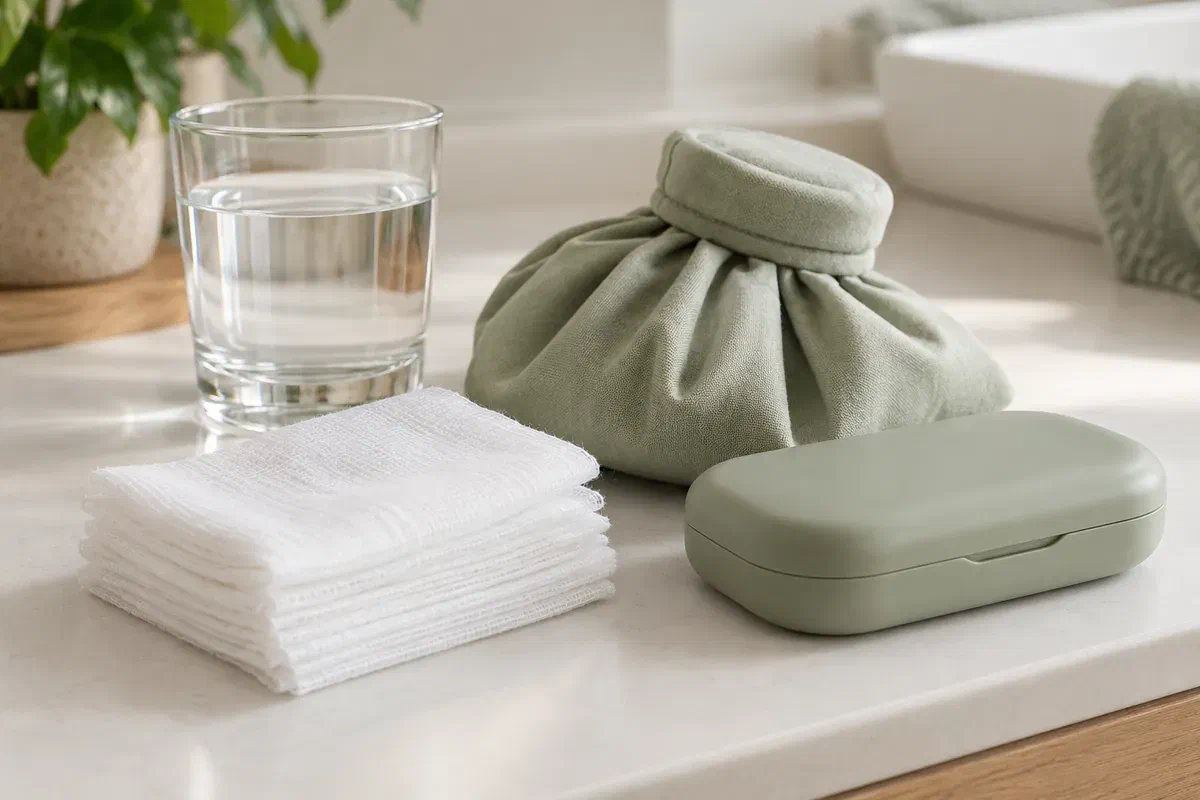
Illustrative clean gauze and a wrapped cold pack prepared for first aid
Before you settle in for the evening

Three questions to answer first.

Home care only makes sense once the urgent possibilities have been ruled out. Tell the team how the injury happened and anything you have noticed beyond the cut so they can recommend the right assessment.

Has the bleeding really stopped?

If it is still oozing, place clean gauze or a clean cloth over the reachable area and keep gentle, continuous pressure while you organize help. Peeking every minute restarts it. A wound that keeps bleeding heavily, gapes open, or leaves more blood in the mouth than you can manage needs urgent care tonight.

Is anything missing or stuck inside?

A chipped tooth with a piece unaccounted for, or a fall onto snow, gravel or glass, can leave material in the lip or cheek. Mention it to the clinician. Avoid probing, picking at the cut or trying to close it at home.

Is anything else wrong besides the cut?

Watch for headache with confusion, sleepiness that seems unusual, being sick more than once, a jaw that is hard to open, teeth that meet differently, or any blackout. These may need medical care as well as dental treatment, and they take priority over home care plans.

Call 911 if breathing becomes hard, someone cannot be woken or has passed out, or heavy bleeding goes on despite pressure. Serious facial injuries or worrying signs after a knock to the head need urgent medical attention before any dental visit.

What a proper look gives you

Confidence in the home routine, and a check of the teeth.

Examining the wound in person lets the clinician tell you whether home care is enough or whether something more is needed. Ask what was assessed and what is still not certain. Choosing to clean, monitor, close or refer a wound should depend on its features and the person, not on how frightening it looked at first.

It also makes the following days clearer. A cut lip may be comfortable within a week, while a tooth bumped in the same fall can take longer to show how it is doing. Ask whether a dental review is planned even if the cut heals well, and which changes would mean coming back early.

Patient information: Alder Hey — assessment and treatment of mouth soft-tissue injuries

Confirm whether the wound needs cleaning

Explain where the injury happened and what the mouth hit. The clinician can decide on cleaning, further checks or medical input, and whether tetanus immunization is worth confirming. Home remedies with strong chemicals or improvised tools do more harm than good.

Check the teeth and the bite

Mention a tooth that is sore when you chew, feels loose, has a sharp new edge or makes the bite feel off. Lip and gum injuries often travel with dental trauma, so a cut that is settling nicely can still sit beside a tooth needing repair or a later look.

Know the right setting for treatment

Ask whether the wound can be cared for at the dental visit or should be seen by a hospital or surgical team. If referred, confirm where and how quickly. That way the drive you make is the right one.

During the appointment

We finish with a home plan you can actually follow.

Let us know what you have done at home, any medicine taken, and whether another clinic or hospital has seen the injury. Bring discharge notes and any tooth piece that can be carried safely, but do not delay urgent care to find it.

  1. Hear what happened and check for urgent issues

    We ask about timing, cause, bleeding and how the person has been since. The clinician decides whether dental care is suitable now or medical care should come first. Mention health conditions, any blood thinner and allergies, and keep taking prescribed medicines unless your prescriber advises a change.

  2. Examine the cut, the teeth and the bite

    The wound, neighbouring teeth and how they close are checked as appropriate. Mention a missing fragment or an area that feels as if something is inside. X-rays or another provider may be suggested, but not every small cut needs them.

  3. Choose wound care, stitches or referral

    Ask why the recommended care suits the wound and how comfort will be managed. Some wounds need only gentle care; others need closure or a different setting. Options and their limits are explained before non-emergency treatment begins.

  4. Write down the home routine

    Ask what to eat and drink, how to brush, how to manage soreness and how to sleep comfortably. Confirm whether stitches dissolve or need removing, and who will see to that. If teeth were hurt, book their follow-up separately.

The home routine in Erin

Simple steps for eating, cleaning and resting.

Your routine should follow the instructions for this specific wound, any stitches and any tooth damage. Advice written for extractions or products meant for other mouth problems may not fit.

Eating and drinking

Choose soft, lukewarm foods and chew on the other side. Very hot, salty, spicy or crunchy foods can sting. Avoid biting down on swollen or numb tissue, and call if a sharp tooth or appliance keeps catching the wound.

Brushing and rinsing

Ask which teeth can be brushed normally and how close to the wound you should go with a soft brush. Check whether a rinse is suitable for the person’s age. Skip scrubbing, household disinfectant and aspirin held against the gum.

Rest and watching

Leave the wound alone rather than pulling the lip to look. Call for advice if bleeding returns, swelling or soreness grows, pus or fever appears, or healing seems stuck. Report a tooth that becomes sensitive, loose or darker.

Possible treatment paths

Home care, closure, or tooth treatment as well.

Ask what each treatment is for and what follow-up it needs. Stitches, dental care and a medical assessment each handle a different part of an injury, and some injuries need more than one.

When a clinician confirms closure is not needed

Home care with a review

Many smaller cuts heal with good cleaning and protection, plus a check if indicated. Ask how the wound should look day by day and what would prompt a call. Leaving a wound unstitched should be decided after examination.

When the wound is deep, contaminated or complicated

Stitches or specialist treatment

A wound that is deep, gaping, dirty or ragged may need stitching, and sometimes a hospital team is better placed to do it. Ask which service you are being referred to and how soon you should go. Never use household glue or cut away damaged tissue.

When the blow also reached the teeth or gums

Care for a tooth injured in the same accident

A tooth that chipped, moved or was struck may need treatment and later checks. Ask what was found and what follow-up is planned. A healed lip does not prove the tooth has recovered inside.

Patient information: AAE — dental trauma and the importance of follow-up

Home-care questions from Erin

Everyday questions while a mouth wound heals.

These answers are general and your own instructions come first. If something feels urgent, phone or go to emergency care rather than sending an online form.

(905) 876-4488
Is it okay to use a straw after a lip injury?
It depends on where the wound is and what your clinician advises. For some injuries, a straw may be more comfortable; for others, the sucking motion may disturb healing or press on a sore spot. Ask the treating clinician, especially if stitches were placed near the lip.
Can I sleep normally with a cut inside my mouth?
Usually, yes. Some people find a slightly raised head more comfortable while swelling settles. Check the wound in the morning, and call if bleeding has restarted or swelling has increased.
How long should I avoid crunchy food?
Until the wound is comfortable and any stitches are healing, or as your clinician advises. Hard foods such as chips, crusty bread or raw vegetables can scrape the area or catch on a damaged tooth. Reintroduce them gradually and stop if the spot becomes sore again.
Should my child stay home from school after a mouth injury?
That depends on how they feel, the size of the wound and any other symptoms. Ask the treating clinician. Signs of a head injury need medical assessment before returning to normal activities.
Can I use a salt-water rinse?
Some clinicians recommend gentle rinses for certain injuries, but ask first. Rinsing too vigorously or too soon may not be appropriate, and young children may not be able to rinse and spit safely. Follow the specific instructions you were given for the wound.
Is it worth the drive if the cut seems small?
Call and describe it. Many small cuts can be managed at home with advice, but a dental check may still be recommended if teeth were struck. We can help you decide whether a visit is needed.
Calling from Erin

Talk to us tonight, and plan the rest from there.

Phone (905) 876-4488 for advice about a cut, bite or bruise in the mouth and to check availability. Tell us about ongoing bleeding, damaged teeth or other symptoms, and how the person is eating and sleeping. Use the website form only for questions that can wait a day or two; anything pressing belongs with emergency services.

Call before making the drive. When you cannot reach us and care cannot wait, contact another emergency provider.

Visit Milton Dental Clinic
Unit 1, 342 Bronte St. S, Milton, ON L9T 5B7
Get directions Clinic hours
Monday–Thursday
11am–7pm
Friday–Sunday
By appointment only

Areas we serve

  • Milton
  • Oakville
  • Mississauga
  • Georgetown
  • Halton Hills
  • Acton
  • Campbellville
  • Brampton
  • Burlington
  • Puslinch
  • Rockwood
  • Erin
  • Caledon
  • Etobicoke
  • Old Milton
  • Bronte Meadows
  • Timberlea
  • Dorset Park
  • Dempsey
  • Clarke
  • Beaty
  • Coates
  • Harrison
  • Scott
  • Willmott
  • Ford
  • Bowes
  • Cobden
  • Walker
  • Mountain View
  • Milton Heights
  • Hawthorne Village
  • Valley View
  • Fallingbrook
  • Nassagaweya
  • Trafalgar
  • Esquesing
  • Nelson
  • Brookville
  • Moffat
  • Glen Williams
  • Norval
  • Limehouse
  • Stewarttown
  • Ashgrove
  • Hornby
  • Silver Creek
  • Speyside
  • Scotch Block
  • North Oakville
  • River Oaks
  • Glen Abbey
  • West Oak Trails
  • Palermo
  • Bronte Creek
  • College Park
  • Joshua Creek
  • Uptown Core
  • Preserve
  • Iroquois Ridge
  • Lisgar
  • Meadowvale
  • Meadowvale Village
  • Churchill Meadows
  • Erin Mills
  • Central Erin Mills
  • Streetsville
  • East Credit
  • Creditview
  • Heartland
  • Sheridan
  • Mount Pleasant
  • Credit Valley
  • Huttonville
  • Churchville
  • Springbrook
  • Northwest Brampton
  • Bram West
  • Fletcher's Meadow
  • Fletcher's Creek South
  • Alton Village
  • Orchard
  • Millcroft
  • Headon Forest
  • Tansley
  • Brant Hills
  • Tyandaga
  • Kilbride
  • Lowville
  • Aberfoyle
  • Morriston
  • Arkell
  • Hillsburgh
  • Freelton
  • Carlisle
  • Waterdown
  • Flamborough
  • Mountsberg

How can we help?

Milton Dental Clinic

Have a question about your smile? Choose the option that works best for you.

For urgent dental concerns, please call.
Messages are reviewed during clinic hours.