
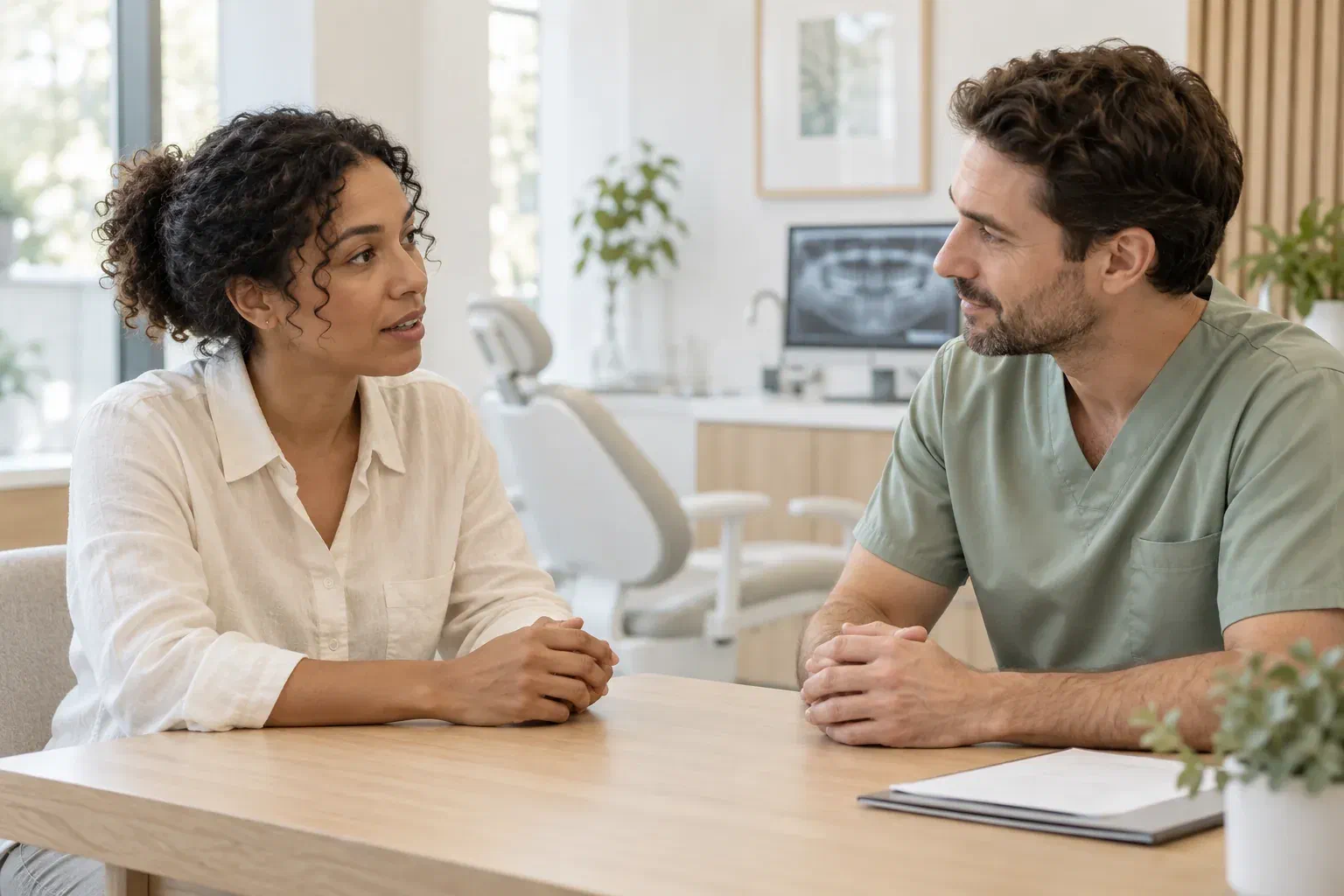
Illustrative consultation about an injury to the mouth's soft tissues
Specialized Care

Soft-Tissue Dental Injury Treatment in Oakville

An elbow at soccer practice or a stick at the rink can split a lip in a second, and the next question is where to go. Call our team to describe the injury, sort out the dental side, and recognize when a hospital or urgent medical service should see it first.

Mouth injuries after a game, a fall or a bite

Dental office, emergency department, or both?

That is usually the first thing people want answered when a mouth is bleeding. Soft-tissue injuries involve the lips, gums, tongue or cheek lining, and they come from collisions, falls, a mistimed bite, or a broken tooth or brace pressing into the tissue. The answer depends on more than the cut: teeth, jaw movement and the rest of the face are part of the picture.

Several features steer the decision. How deep is the wound and where is it? Is it still bleeding? Did dirt or a foreign object get in? Was anything else hurt? Some shallow cuts heal with sensible care, while others need professional cleaning, stitches, or treatment somewhere other than a dental chair. You can call before you have the answer.

Reach us at (905) 876-4488. Tell us when and how it happened, whether bleeding continues, and whether any tooth is chipped or the teeth now meet differently. We will discuss availability and what makes sense next. If emergency medical care is needed, go there now; a dental appointment can follow.

Ask about a lip, gum or tongue injury
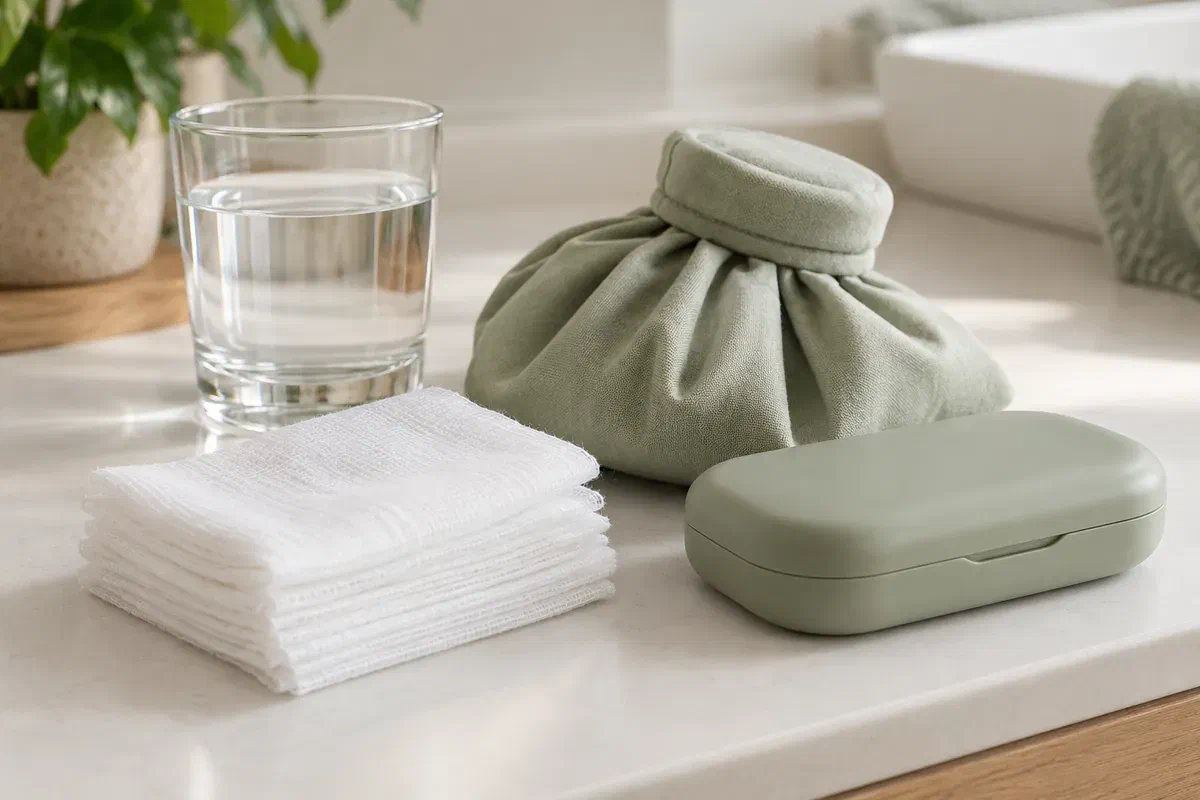
Illustrative clean gauze and a wrapped cold pack prepared for first aid
Before you decide where to go from Oakville

Three details that change the plan.

Quick checks at the sideline or in a bathroom mirror miss what is under the surface. Share how the injury happened and any symptoms outside the visible wound so the team can point you toward the right assessment.

Steady bleeding, or a cut that looks deep or open

Hold clean gauze or a clean cloth on the reachable bleeding point with light, constant pressure while someone arranges help. Keep the pressure on rather than lifting it to peek. If bleeding is heavy or will not stop, the wound looks deep, or blood is hard to manage in the mouth, seek urgent care instead of sending an online message.

Tooth chips, a lost fragment, or debris in the wound

If a tooth cracked in the collision, say so, along with any chance that turf, glass or another material went into the cut. A piece of tooth can lodge inside the lip without being obvious. Leave the wound alone: no probing, no digging for fragments, and no attempts to close it.

Signs of a head or jaw injury

Report a bite that has changed, difficulty opening wide, a heavy hit to the face, dizziness, vomiting, or any period of being knocked out. These may need medical attention alongside dental care. In contact sports especially, the bleeding lip can draw attention away from a more important injury.

Call 911 for breathing difficulty, loss of consciousness, or severe bleeding that cannot be controlled. Serious facial trauma or concerning symptoms after a blow to the head need urgent medical assessment, which should never wait for a dental booking.

The value of having it examined

One assessment, with the wound and the teeth both in view.

Seeing the injury in person lets the clinician decide whether local care is enough or whether you need something else. It is reasonable to ask what was checked and what remains uncertain. Cleaning, monitoring, closing or referring a wound should come down to its real characteristics and the patient’s needs, and not to how much it bled at the field.

You also leave with a plan for later. An injured lip and an injured tooth can heal on very different schedules. Ask whether a dental review is wise once the cut has settled, and which changes mean you should call before then.

Patient information: Alder Hey — assessment and treatment of mouth soft-tissue injuries

Assess dirt, debris and wound-care needs

Explain where the injury happened and what made contact, whether turf, ice, a stick or a ball. The clinician can then decide on cleaning, further investigation or medical input, which may include immunization questions. Skip harsh chemicals and improvised tools on a wound you are not sure about.

Check the teeth beside the wound and the bite

Mention sensitivity, a tooth that wiggles, a sharp new edge, or teeth that close differently. A lip or gum injury often comes with dental trauma, particularly in sports. Even as the visible wound improves, a tooth may still need treatment or review.

Know where care belongs and what comes next

Ask whether the wound can be treated at the dental visit or needs a medical or surgical service. If referral is recommended, confirm the destination and the urgency. A specific next step is more useful than assuming one clinic handles every mouth injury.

Inside the injury appointment

Four steps from the first question to the follow-up plan.

Let us know about any first aid given at the scene, medicines taken since, and any care received elsewhere, such as at a walk-in clinic. Bring discharge paperwork and tooth pieces that can travel safely, without delaying urgent help to look for them.

  1. Take the history and set priorities

    The clinician asks about timing, cause, bleeding and other symptoms, then decides whether dental assessment fits or whether medical care should come first. Share medical conditions, any prescribed blood thinner and allergies. Keep taking prescribed medicines unless the prescriber advises otherwise, even if the mouth bled.

  2. Examine the soft tissue, nearby teeth and bite

    The wound, the adjacent teeth and the way they meet are assessed as appropriate. Mention a missing fragment or anything you think is embedded. Imaging or another provider’s assessment may be needed, though small cuts do not all require identical tests or treatment.

  3. Discuss cleaning, closure or a referral

    Ask why the recommended care suits this particular wound and how discomfort will be handled. Some injuries need careful local care; others need stitches or a different setting. The clinician should explain the options and their limits before any non-emergency treatment.

  4. Confirm home care, return to sport and follow-up

    Ask which foods are easiest, how to brush near the cut, what helps with soreness, and when contact sport is sensible again. Clarify whether stitches need review or removal and who will do it. Book separate follow-up for any injured teeth instead of treating a healed lip as the end of the story.

Recovery at home in Oakville

Protect the area and use the advice given for this wound.

A stitched cut, an open graze and a lip beside a cracked tooth each need slightly different handling. Follow your treating clinician’s instructions rather than a routine from an extraction or a product designed for a different issue.

Limit stretching, chewing on it, and touching

Checking the cut by pulling the lip outward again and again can set healing back. Stick to comfortable foods and chew away from puffy or numb areas. A brace, mouthguard edge or broken tooth that keeps scraping the same place is worth a call, because the rubbing will not stop by itself.

Clean it gently as advised

Ask which areas to brush and whether a rinse is suitable for the patient’s age and injury. Do not scrub, apply household disinfectant, or press aspirin onto the wound. Medicine and mouthwash advice should be tailored to the person rather than taken from a general website.

Watch the trend, and keep the review

Ask for advice about bleeding that comes back, growing swelling, worsening pain, discharge, fever, or a wound that is not improving. Tell the dentist about new tooth sensitivity, looseness or a colour change. Treat those signs seriously, even if the injury seemed small.

Treatment choices for an injured mouth

The findings decide which kind of care fits.

Ask what the recommended care is meant to achieve and what review it needs. Sewing a cut, fixing a chipped tooth and checking for a head injury are separate jobs, and one accident can call for all three.

When the examined wound can heal without closure

Local care with monitoring

Some smaller wounds heal with suitable cleaning, protection and a review when indicated. Ask what improvement looks like and when to get in touch. Deciding against stitches should follow an examination rather than a guess based on the cut’s length.

When the wound is deep, dirty or complex

Professional closure or specialist assessment

Deep, gaping, contaminated or otherwise complicated injuries may be better closed or treated by a hospital or surgical team. Check which service you are being sent to and how soon you should go. Never use household glue or cut away damaged tissue yourself.

When teeth or their supporting tissues were also affected

Care for a tooth injured in the same impact

A tooth that broke, was pushed out of position or simply took the hit may need a separate plan. Find out what the dentist saw and whether repair, monitoring or both lie ahead. Soft-tissue healing does not guarantee the tooth’s inner tissues have recovered.

Patient information: AAE — dental trauma and the importance of follow-up

Oakville questions about mouth injuries

Clear answers for the moments after a hit.

Every collision is different, so treat these as a starting point. If symptoms feel urgent, phone or seek emergency care rather than sending a booking request.

(905) 876-4488
Can my teenager go back to hockey with a healing lip cut?
Ask the clinician who treated the wound. Timing depends on the depth of the cut, any stitches, and whether a tooth was hurt too. A well-fitted mouthguard helps protect the mouth in contact sports, but it does not replace clearance from the treating team.
Did the mouthguard fail if my child still cut their lip?
Not necessarily. A mouthguard mainly helps protect the teeth and can reduce some injuries, but lips and cheeks can still be cut. Have the guard checked for damage or poor fit, and have the injury assessed if it is deep, bleeding or affected the teeth.
Should a lip cut from a sports collision go to the hospital or the dentist?
It depends on the injury. Heavy bleeding, a deep or gaping wound, or signs of a head injury need urgent medical care. Call us to describe a less severe wound and we can advise on dental assessment and timing.
How do I stop a cut on the gum from bleeding?
Press clean gauze or a clean cloth gently and steadily on the spot and avoid repeatedly checking it. Sitting upright can make it easier to manage. If bleeding is heavy or will not slow, seek urgent help.
A tooth chipped and the piece is missing. Could it be inside the cut?
It is possible. Tell the clinician where the lip was cut and that part of the tooth was not found. The wound may need checking for an embedded fragment, so do not try to find or remove it yourself.
Who checks the stitches if they were placed at a hospital?
Ask the hospital team before you leave whether the stitches dissolve or need removal and where follow-up should happen. Let the dentist know about the stitches too, especially if a tooth was also injured, so dental follow-up can be planned.
Mouth injury follow-up for Oakville

Call, describe the injury, and we will help you plan.

Ring (905) 876-4488 and tell us which part of the mouth was hurt, how it happened and how it looks now, and we will check when you can come in. Say whether bleeding continues, teeth are damaged, or other symptoms are present. Online requests are for non-urgent questions only; immediate concerns need emergency services.

Call ahead before driving in. If immediate care is needed and we cannot be reached, use another available emergency provider.

Visit Milton Dental Clinic
Unit 1, 342 Bronte St. S, Milton, ON L9T 5B7
Get directions Clinic hours
Monday–Thursday
11am–7pm
Friday–Sunday
By appointment only

Areas we serve

  • Milton
  • Oakville
  • Mississauga
  • Georgetown
  • Halton Hills
  • Acton
  • Campbellville
  • Brampton
  • Burlington
  • Puslinch
  • Rockwood
  • Erin
  • Caledon
  • Etobicoke
  • Old Milton
  • Bronte Meadows
  • Timberlea
  • Dorset Park
  • Dempsey
  • Clarke
  • Beaty
  • Coates
  • Harrison
  • Scott
  • Willmott
  • Ford
  • Bowes
  • Cobden
  • Walker
  • Mountain View
  • Milton Heights
  • Hawthorne Village
  • Valley View
  • Fallingbrook
  • Nassagaweya
  • Trafalgar
  • Esquesing
  • Nelson
  • Brookville
  • Moffat
  • Glen Williams
  • Norval
  • Limehouse
  • Stewarttown
  • Ashgrove
  • Hornby
  • Silver Creek
  • Speyside
  • Scotch Block
  • North Oakville
  • River Oaks
  • Glen Abbey
  • West Oak Trails
  • Palermo
  • Bronte Creek
  • College Park
  • Joshua Creek
  • Uptown Core
  • Preserve
  • Iroquois Ridge
  • Lisgar
  • Meadowvale
  • Meadowvale Village
  • Churchill Meadows
  • Erin Mills
  • Central Erin Mills
  • Streetsville
  • East Credit
  • Creditview
  • Heartland
  • Sheridan
  • Mount Pleasant
  • Credit Valley
  • Huttonville
  • Churchville
  • Springbrook
  • Northwest Brampton
  • Bram West
  • Fletcher's Meadow
  • Fletcher's Creek South
  • Alton Village
  • Orchard
  • Millcroft
  • Headon Forest
  • Tansley
  • Brant Hills
  • Tyandaga
  • Kilbride
  • Lowville
  • Aberfoyle
  • Morriston
  • Arkell
  • Hillsburgh
  • Freelton
  • Carlisle
  • Waterdown
  • Flamborough
  • Mountsberg

How can we help?

Milton Dental Clinic

Have a question about your smile? Choose the option that works best for you.

For urgent dental concerns, please call.
Messages are reviewed during clinic hours.