Illustrative consultation about an injury to the mouth's soft tissues
Specialized Care

Soft-Tissue Dental Injury Treatment in Old Milton

A slip on the front steps, a denture edge that catches the cheek, or a cut lip while taking a blood thinner can leave you unsure what to do. Call our nearby Bronte Street practice to talk it through and learn when medical care should come first.

Lip, gum and cheek injuries in Milton’s historic downtown

A fall at any age can reach further than the lip.

Plenty of mouth injuries start with something ordinary: an uneven step, a loose rug, a grandchild’s elbow, or a partial denture that has started to rub. The soft tissues of the mouth include the lips, gums, tongue and the lining of the cheeks. When they are cut or bruised, the teeth behind them and the way the jaw closes deserve a look too.

No single treatment fits every wound. Depth, position, how much it bleeds, whether dirt got in, and what else was hurt all count. A shallow nick may heal with simple care, while a deeper or contaminated wound can need cleaning, stitches, or a medical service. Nobody expects you to know which applies before you call.

Phone us at (905) 876-4488 with the basics: how and when it happened, whether it is still bleeding, and whether a tooth, denture or the bite seems different. We can talk about when you can be seen and what to do meanwhile. When the situation needs emergency medical care, please go there first.


Talk to us about a mouth injury
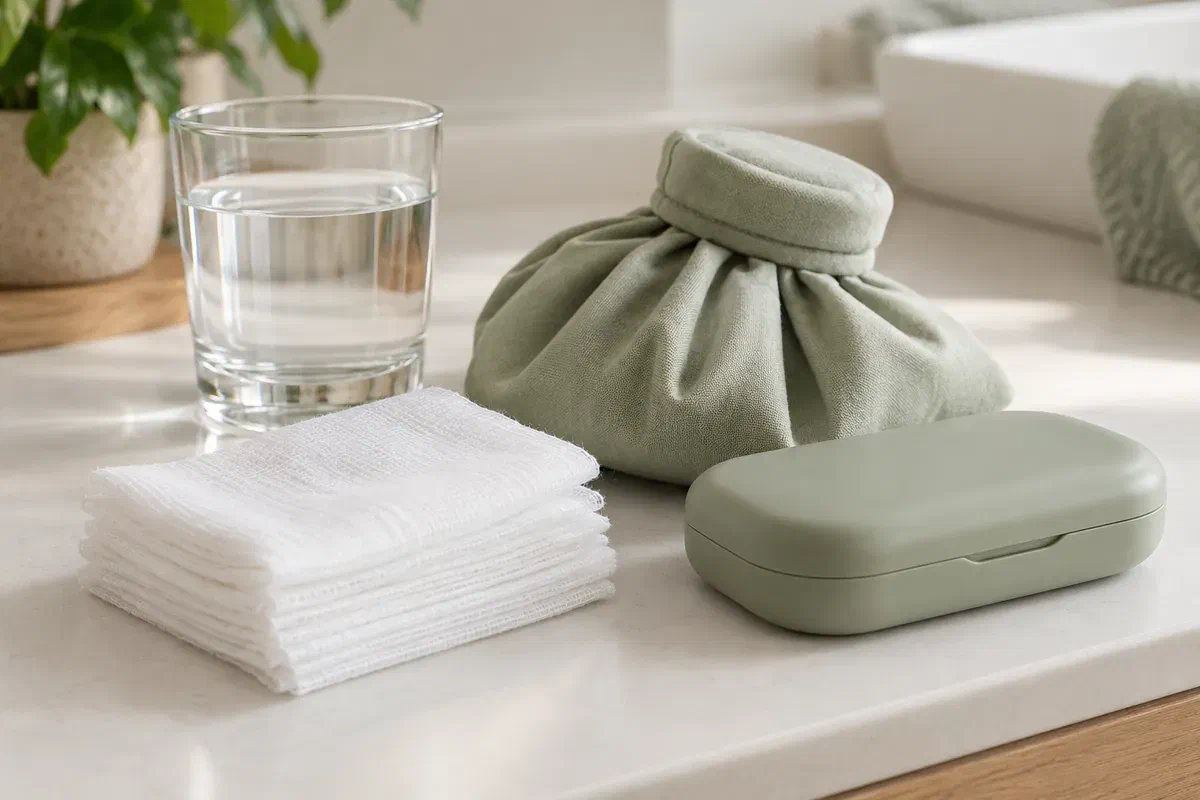
Illustrative clean gauze and a wrapped cold pack prepared for first aid
Clues worth mentioning

Bleeding, debris and the rest of the face: tell us about all three.

Looking in a mirror shows the outside of a wound but rarely its depth. Describe the accident and any symptoms away from the cut so the team can recommend the right kind of examination.

A wound that is deep, gaping or still bleeding

Press clean gauze or a folded clean cloth gently and steadily on any bleeding spot you can reach while you organize help. Try not to peel the lip back over and over to inspect it. Bleeding that will not ease, a cut that looks deep, or blood you cannot keep up with needs urgent attention.

Broken tooth, chipped denture or grit in the cut

Let the clinician know if a natural tooth or a denture broke, and whether glass, soil or another material could be in the wound. A small piece can sit unseen inside the lip or cheek. Avoid probing the area, hunting for fragments, or trying to close the cut yourself.

Dizziness, a changed bite or a hard knock to the head

Report trouble opening the mouth, teeth that meet oddly, a heavy blow to the face, dizziness, vomiting, or blacking out, even briefly. These can signal injuries that need medical care as well. After a fall, the cut lip may simply be the most obvious problem, not the only one.

Call 911 for breathing difficulty, loss of consciousness, or severe bleeding that will not stop. A serious facial injury or worrying signs after a head impact need urgent medical assessment, and a routine dental appointment should never stand in the way.

What you gain from an in-person assessment

Treat the wound with the teeth, the bite and your health in view.

An examination lets the clinician see the wound in context and say whether local care will do or whether a different approach is wiser. Feel free to ask what was checked and what is not yet known. Cleaning, watching, closing or referring should be decided by the wound’s actual features and your circumstances, including your medicines, rather than by first impressions.

It also gives you a plan beyond the first appointment. Soft tissue and an injured tooth can recover on different timelines. Ask whether a dental review is still worthwhile once the cut settles, and what signs should bring you in before that date.

Patient information: Alder Hey — assessment and treatment of mouth soft-tissue injuries

Spot contamination and plan the wound care

Describe where you fell and what the mouth struck, such as a step, a sidewalk or a garden edge. The clinician can then judge whether cleaning, further checks or medical input is needed, including immunization questions where relevant. Please avoid harsh chemicals or makeshift tools on an uncertain wound.

Check the teeth, dentures and how they close

Mention tenderness, a tooth that moves, a rough new edge, a denture that no longer seats, or a bite that feels unfamiliar. Lip and gum injuries frequently come with dental damage. A wound that looks better does not rule out a tooth problem needing care or monitoring.

Clarify the right setting and the follow-up

Ask whether the wound can be handled at the dental visit or should go to a medical or surgical service. If you are referred, confirm where and how soon. Knowing the next step beats assuming one office can manage every mouth injury.

Step by step for Old Milton visitors

Hear the story, examine carefully, decide together.

Tell the team about any first aid, medicines taken since the injury, and care already received elsewhere. Bring discharge notes and any tooth or denture pieces you can carry safely, but do not delay urgent care to gather them.

  1. Start with the history and the priorities

    Timing, cause, bleeding and other symptoms come first. The clinician considers whether dental assessment is appropriate now or whether medical care should take priority. Share your health conditions, any prescribed blood thinner and allergies, and do not stop a prescribed medicine on your own because the mouth bled.

  2. Look closely at the tissue, teeth and bite

    The wound, neighbouring teeth, any denture and the bite are examined as needed. Mention a missing piece or anything you suspect is embedded. Imaging or another provider’s input may be suggested, although a minor cut does not call for every test.

  3. Weigh cleaning, closure or a referral

    Ask why the proposed approach suits this wound and how discomfort will be kept manageable. Some injuries need careful local care; others need stitches or another treatment setting. The options and their limits should be explained before non-emergency treatment starts.

  4. Settle the home routine and the review

    Ask how to eat, clean the area and manage soreness without disrupting healing, and whether a denture should stay out for a while. Find out if stitches need checking or removal and by whom. Any injured teeth need their own follow-up, separate from the lip.

Looking after the area at home

Gentle habits, and instructions that fit the injury you actually have.

Every wound is different, and so is the care after closure or a tooth repair. Follow the treating clinician’s advice instead of an extraction routine or a product meant for another problem.

Give the tissue a break from stretching and rubbing

Repeatedly lifting the lip to look at the cut slows things down. Choose comfortable foods and be careful not to bite swollen or numb tissue. If a denture, sharp tooth or appliance keeps catching the spot, call so the cause can be looked at.

Clean softly, the way you were shown

Ask which areas can be brushed, how to clean a denture meanwhile, and whether any rinse is suitable. Do not scrub the wound, apply household disinfectant, or tuck aspirin against it. Medicine and mouthwash advice should reflect your own situation, not a general web page.

Track the direction of healing

Ask for advice if bleeding returns or swelling, pain, discharge or fever increases, or if the wound simply is not improving. Report a tooth that becomes sensitive, loose or darker. Those signs need checking even when the injury first seemed minor.

Care options for Old Milton mouth injuries

Three paths, chosen by what the examination shows.

Ask what each recommendation is meant to do and what review comes with it. Stitches, a tooth or denture repair, and a medical assessment handle different parts of an injury and are sometimes combined.

When the examined wound can heal without closure

Wound care at home with planned checks

Some smaller cuts heal well with appropriate cleaning and protection, and a review when needed. Ask what progress should look like and when to call. Skipping stitches should be a decision made after examination, not based on how short the cut seems at home.

When the wound needs more involved treatment

Stitches or a specialist wound assessment

Deep, gaping, contaminated or complicated wounds may need closure or care in a medical or surgical setting. Ask who should provide it and how quickly. Do not reach for household glue or try to trim damaged tissue.

When teeth or their supporting tissues were also hit

Treatment for a tooth damaged at the same time

A tooth that cracked, moved or took a blow may need a plan of its own alongside the wound. Ask what was found and whether further treatment or monitoring is expected. A healed lip does not mean the tooth’s inner tissues are fine.

Patient information: AAE — dental trauma and the importance of follow-up

Mouth-wound questions from Old Milton households

Practical answers for the days after an injury.

The right advice always depends on the real wound and anything else that was hurt. With urgent symptoms, call or seek emergency care rather than waiting for a routine booking reply.

(905) 876-4488
My denture has been rubbing a sore spot. Is that a soft-tissue injury?
It can be. A sore that keeps getting rubbed may not heal well, so call to have the denture and the tissue checked. Do not file or bend the denture yourself. A sore that lasts or changes should be examined even when it seems minor.
I take a blood thinner and my lip keeps oozing. Should I skip a dose?
Please do not change a prescribed medicine on your own. Apply gentle, steady pressure, tell the treating clinician what you take, and describe the bleeding so advice can be coordinated with your prescriber. Bleeding that will not stop needs urgent help.
How soon after a fall should a cut lip be looked at?
Call as soon as you can to describe it. Urgency depends on bleeding, depth, contamination and other symptoms such as dizziness or a changed bite. Signs of a serious head or facial injury need emergency medical care straight away.
Should I wear my partial denture while the gum heals?
Ask the clinician. Whether it should stay in or come out for a while depends on where the wound is and how the denture fits against it. Mention any crack or loose clasp so the appliance can be checked too.
Is a bruise inside the cheek something to worry about?
Many bruises settle, but mention it if the area is swelling, very painful, bleeding, or if the bite feels different. Also report a tooth that became tender after the same impact. An examination can sort out what needs care and what needs watching.
My cut is healing but a front tooth looks greyer. Is that related?
It might be. A tooth that was knocked can change colour weeks after the lip has recovered. Contact the dentist so the tooth can be assessed, and mention when the injury happened and any sensitivity you have noticed.
Calling from Old Milton

Describe the injury, and we will help with what comes next.

Call (905) 876-4488 about an injury to your lips, gums, cheek or tongue and to check availability. Mention continued bleeding, damaged teeth or dentures, and any other symptoms. Online enquiries are for non-urgent matters; urgent medical concerns need emergency services.

Please phone before heading over. If you need immediate care and cannot reach us, go to another available emergency provider.

Visit Milton Dental Clinic
Unit 1, 342 Bronte St. S, Milton, ON L9T 5B7
Get directions Clinic hours
Monday–Thursday
11am–7pm
Friday–Sunday
By appointment only

Areas we serve

  • Milton
  • Oakville
  • Mississauga
  • Georgetown
  • Halton Hills
  • Acton
  • Campbellville
  • Brampton
  • Burlington
  • Puslinch
  • Rockwood
  • Erin
  • Caledon
  • Etobicoke
  • Old Milton
  • Bronte Meadows
  • Timberlea
  • Dorset Park
  • Dempsey
  • Clarke
  • Beaty
  • Coates
  • Harrison
  • Scott
  • Willmott
  • Ford
  • Bowes
  • Cobden
  • Walker
  • Mountain View
  • Milton Heights
  • Hawthorne Village
  • Valley View
  • Fallingbrook
  • Nassagaweya
  • Trafalgar
  • Esquesing
  • Nelson
  • Brookville
  • Moffat
  • Glen Williams
  • Norval
  • Limehouse
  • Stewarttown
  • Ashgrove
  • Hornby
  • Silver Creek
  • Speyside
  • Scotch Block
  • North Oakville
  • River Oaks
  • Glen Abbey
  • West Oak Trails
  • Palermo
  • Bronte Creek
  • College Park
  • Joshua Creek
  • Uptown Core
  • Preserve
  • Iroquois Ridge
  • Lisgar
  • Meadowvale
  • Meadowvale Village
  • Churchill Meadows
  • Erin Mills
  • Central Erin Mills
  • Streetsville
  • East Credit
  • Creditview
  • Heartland
  • Sheridan
  • Mount Pleasant
  • Credit Valley
  • Huttonville
  • Churchville
  • Springbrook
  • Northwest Brampton
  • Bram West
  • Fletcher's Meadow
  • Fletcher's Creek South
  • Alton Village
  • Orchard
  • Millcroft
  • Headon Forest
  • Tansley
  • Brant Hills
  • Tyandaga
  • Kilbride
  • Lowville
  • Aberfoyle
  • Morriston
  • Arkell
  • Hillsburgh
  • Freelton
  • Carlisle
  • Waterdown
  • Flamborough
  • Mountsberg

How can we help?

Milton Dental Clinic

Have a question about your smile? Choose the option that works best for you.

For urgent dental concerns, please call.
Messages are reviewed during clinic hours.