
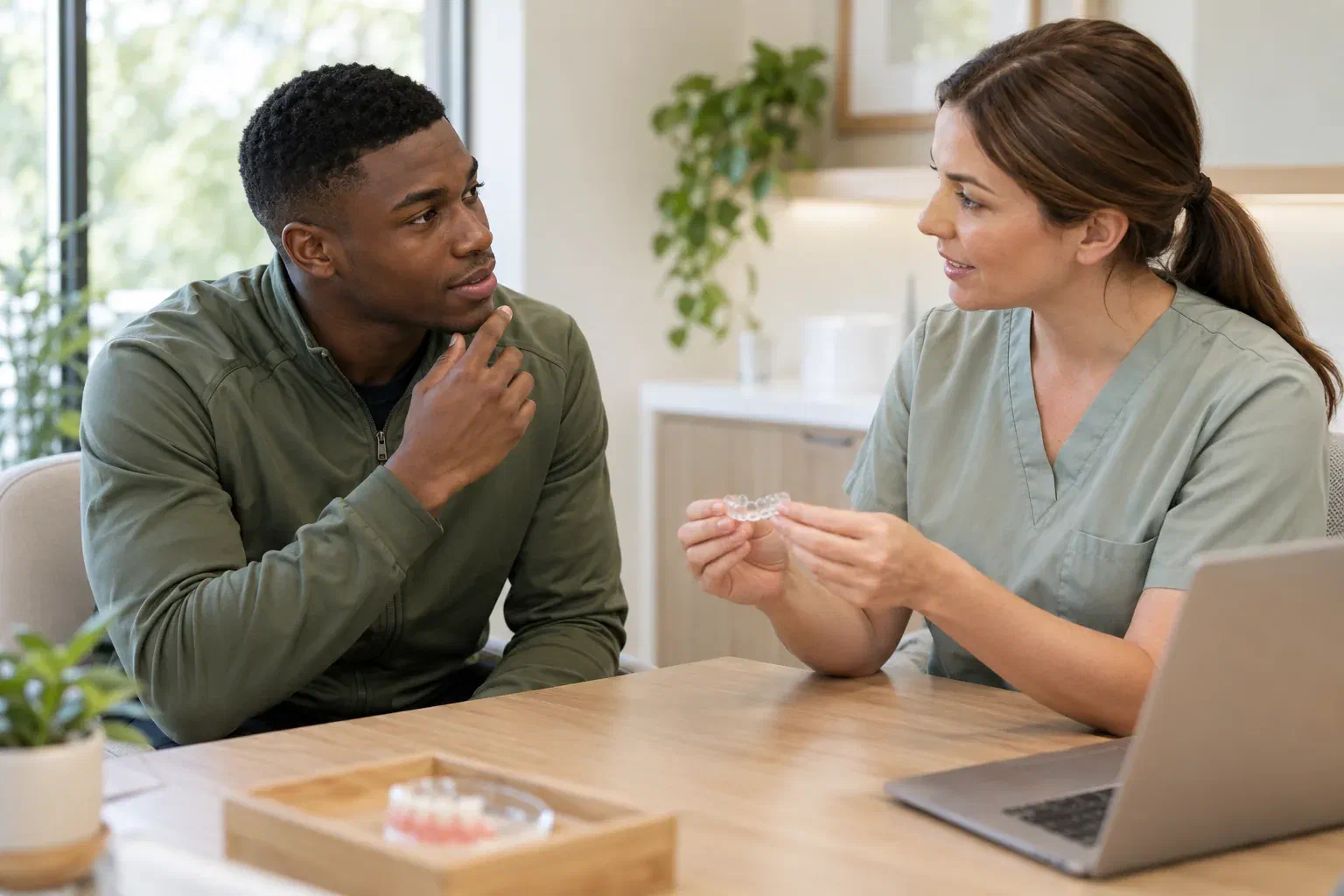
Illustrative consultation with an adult athlete about a dental injury
Specialized Care

Sports-Related Dental Injury Treatment in Campbellville

Not every sports injury happens in a league game. A spill from a mountain bike, a fall from a horse or a slip on a trail run can chip, loosen or knock out a tooth with nobody else around. From Campbellville, call us once you are safe to talk through first aid and assessment.

Solo sports, rural roads

No coach, no bench, just you and a sore mouth

Out on a ride or a trail, there is no trainer to jog over after a crash. You may be the only one who can judge how badly you are hurt, so start there. A fall onto handlebars, a rock or the ground can injure the lips, jaw and head as well as the teeth. Stop, sit down, and ask yourself honestly whether you feel clear-headed before worrying about the tooth or the rest of the route.

If you can think straight and move safely, look at the damage, but do not trust the mirror on your phone too much. A tooth can be loosened, cracked under the gum or knocked slightly out of line with very little to see. A dental assessment works out what happened and what it needs. Reviews over the following weeks then pick up changes that a first look cannot.

When you are somewhere safe, phone (905) 876-4488 and tell us when the fall happened. A tooth that came out or moved, bleeding that continues, or any dizziness, confusion or nausea should be mentioned first. We can explain availability and the next step. If you have a head injury or other serious injury, get medical help before any dental visit, and do not drive yourself if you feel unwell.

Talk to us after a fall or crash
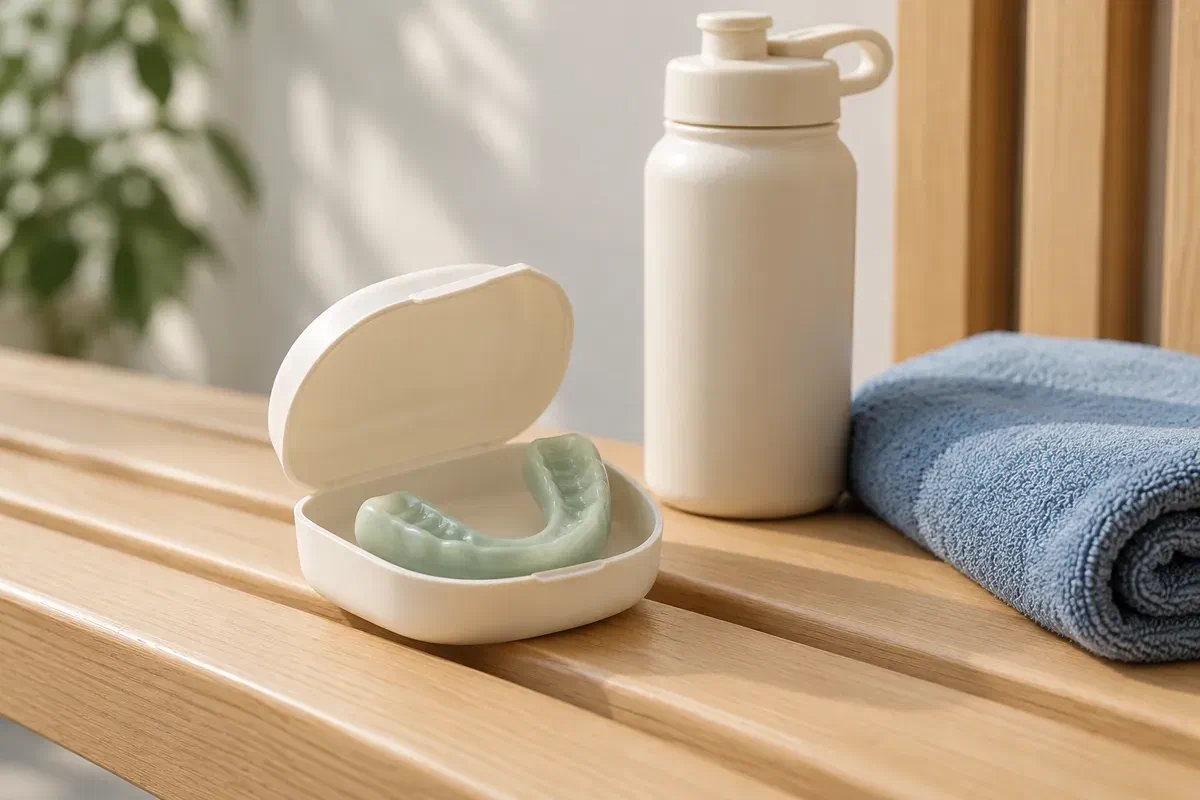
Illustrative sports mouthguard in a protective case beside a water bottle and towel
On the trail or the roadside

What matters most when you are on your own

Where possible, call a friend or family member to come and get you rather than riding or driving while shaken. Leave a loose tooth alone, avoid biting down to check it, and do not depend on a message reply for anything urgent.

A permanent tooth has come out

Treat this as urgent. Find it if you can do so quickly, and hold it by the crown, not the root. If it is muddy, rinse it briefly in milk or saline if available, without scrubbing. If you are alert and it goes back in easily, reposition it gently and bite softly on clean fabric; otherwise keep it moist, ideally in milk, and get to care quickly.

A tooth is cracked, pushed out of line or the bite is off

Arrange a prompt assessment, even if it does not hurt much yet. Do not push a displaced tooth around or chew on it. A broken piece that is easy to recover can come with you in milk, but do not spend time hunting through grass or gravel. Tell the dentist about anything still missing.

You hit your head or face hard

Blacking out, confusion, nausea or vomiting, unusual sleepiness or a worsening headache after a fall need medical assessment, and someone else should drive. A jaw that will not open fully or teeth that suddenly do not meet properly may point to a wider facial injury. A helmet that looks intact is not proof that you are fine.

Call 911 for unconsciousness, a seizure, trouble breathing or bleeding you cannot control, or if you are unable to get yourself to safety. For a child’s knocked-out tooth where you cannot tell if it is a baby tooth, do not put it back; keep it in milk and get professional advice right away.

Why come in after a solo accident

Someone else needs to look, because you cannot see it all.

An examination separates what needs treatment today from what needs time or a specialist. Ask which teeth and tissues were involved and whether each step is temporary, definitive or part of a longer series. You deserve a frank explanation of the injury, not a promise that every damaged tooth will recover.

Reviews show how the inner nerve and the tissues holding the tooth are responding as the weeks pass. Some decisions cannot be made earlier. Keep those appointments even when chewing feels normal, and call about anything new rather than assuming you got off lightly because the outside of the tooth looks fine.

Patient information: AAE — assessment and continuing care after traumatic dental injuries

A careful look at everything the fall touched

The dentist may check nearby teeth, lip and gum tissue, how your teeth come together and the supporting bone. Describe how you landed, if you remember. X-rays or tooth tests may be used, and notes from this visit give later ones a starting point.

Clean up and steady the area

Falls outdoors often add grit and cuts to the picture. Early care may include cleaning and treating a wound, covering a broken surface, or repositioning and splinting a tooth. Ask what each step is for and what you should avoid afterwards.

Plan your next ride or run

Discuss further treatment, review dates and when you can get back to your activity. Ask whether a mouthguard makes sense for your sport. If you hit your head, a medical return-to-activity plan applies separately from the dental one.

At your appointment

From the crash to a clear plan

Bring the tooth or any piece you found, a note about the first aid you managed, and anything a doctor has already told you. Getting to care matters more than bringing your bike gear, insurance papers or a precise timeline.

  1. Tell us about the fall

    Explain when it happened, what you were doing, how you landed and how you have felt since, including any blackout or memory gap. If a tooth was out, say how long and how it was kept. The clinician considers whether you need medical care first or at the same time.

  2. Examine and clean the area

    The dentist checks the teeth, soft tissues and bite, and may clean debris from wounds. Point out any tooth that feels wrong even if it looks fine. Some test results only become meaningful when compared with later ones, so not every question is answered at the first visit.

  3. Explain the immediate options

    The approach depends on the injury, tooth development and condition, and time since the fall. Ask about the plan, comfort, alternatives and referral. The first treatment may protect or stabilize the area while a longer restorative or specialist plan is organised.

  4. Arrange follow-up and next steps

    Agree on the next visit, foods and activities to avoid, and who to call about a loose splint or new symptom. Ask about medical clearance if you hit your head. Keep the written instructions handy so whoever helps you at home knows the plan.

Recovering at home

Let it heal before you head back out.

Aftercare depends on what was done: a small repair, a repositioned tooth, a replanted tooth, or a cleaned and closed wound. Follow the instructions for your injury, and ask before returning to an activity where another fall could happen.

Gentle eating and careful cleaning

Ask how to keep the area clean, especially if there was a cut, and which foods to avoid for now. Leave the tooth alone instead of testing it, and do not chew on a splint. If the routine is hard to manage, call us rather than guessing.

Signs to watch

Phone about increasing pain, swelling, signs of a wound not healing, new looseness, darkening, a bite change or a damaged splint. Some problems show up after the first few days. The response depends on examination, not on one fixed rule.

Protection for next time

Ask whether a mouthguard is sensible for your activity, and bring an existing one for a fit check after a repair or splint. Never force it over a healing area. Follow dental limits and any medical return-to-activity plan before you ride or run again.

Patient information: NHS — medical assessment after head injury and concussion

Types of treatment

Fall injuries come in three broad shapes.

Ask why a treatment matches what was found and what may come later. How the tooth looks does not, on its own, decide the outlook or the plan.

When a fracture can be considered for restoration

Repairing a chipped or broken tooth

Care may involve covering the exposed area, bonding a recovered fragment back on, or another restoration. Deeper fractures need more assessment. Ask whether the repair is temporary and how the tooth will be monitored, since a restored shape does not settle every effect of the fall.

When a tooth has moved or been knocked out

Repositioning, splinting and follow-up

These injuries need prompt assessment and a plan for the specific injury, which may include a splint and further treatment with reviews over time. Root maturity, storage, time out of the mouth and damage around the root all matter, and not every tooth can be kept.

When the injury goes beyond the teeth

Specialist or medical care

Facial cuts, a suspected jaw fracture or a complex dental injury may need a specialist or urgent medical care. Ask what is behind the referral and how soon to go. A referral is part of good care and should not delay anything urgent.

Questions from Campbellville riders and runners

Dental injuries away from the playing field

If the injury is urgent, call and tell us when it happened. These answers cover situations that do not fit the usual team-sport picture.

(905) 876-4488
I was alone when I fell and knocked a tooth out. What do I do first?
Check yourself for head-injury signs and get somewhere safe. If you are alert, pick up the tooth by the crown, keep it moist, ideally in milk, and call for help getting to care. Do not drive if you feel dizzy or confused.
Can I keep a knocked-out tooth in my mouth until I get help?
For an alert adult with no other storage, holding it inside the cheek can keep it moist, as long as there is no risk of swallowing it. Milk is preferable when available. This is not suitable for young children.
My helmet took the hit but my tooth is sore. Is that normal?
A helmet protects the head but not always the face or teeth. A sore tooth after a fall should be assessed, and a helmet that took an impact may need replacing according to the manufacturer’s guidance.
Should I wear a mouthguard for cycling or horseback riding?
It depends on the activity and your risk. Ask the dentist whether a guard is practical for what you do. Some riders and cyclists find one worthwhile, especially for higher-risk riding.
There was dirt in the cut on my lip. Does that matter?
Yes. Contaminated wounds need proper cleaning and may need medical assessment, including advice about tetanus protection. Mention it when you call, and seek medical care for deep or dirty wounds.
How do I plan reviews if I live outside town in Campbellville?
Ask at your first visit when reviews are likely to fall, and book them alongside other errands if that helps. Call between visits if a new symptom appears.
From Campbellville

Get safe, then get on the phone.

Phone (905) 876-4488 before you travel so we can discuss what happened and current availability. Tell us right away about a knocked-out or displaced tooth and any head-injury symptoms. Online booking is for routine follow-up, not an injury that needs prompt care.

No answer and the injury will not wait? Head to the nearest emergency provider that is open.

Visit Milton Dental Clinic
Unit 1, 342 Bronte St. S, Milton, ON L9T 5B7
Get directions Clinic hours
Monday–Thursday
11am–7pm
Friday–Sunday
By appointment only

Areas we serve

  • Milton
  • Oakville
  • Mississauga
  • Georgetown
  • Halton Hills
  • Acton
  • Campbellville
  • Brampton
  • Burlington
  • Puslinch
  • Rockwood
  • Erin
  • Caledon
  • Etobicoke
  • Old Milton
  • Bronte Meadows
  • Timberlea
  • Dorset Park
  • Dempsey
  • Clarke
  • Beaty
  • Coates
  • Harrison
  • Scott
  • Willmott
  • Ford
  • Bowes
  • Cobden
  • Walker
  • Mountain View
  • Milton Heights
  • Hawthorne Village
  • Valley View
  • Fallingbrook
  • Nassagaweya
  • Trafalgar
  • Esquesing
  • Nelson
  • Brookville
  • Moffat
  • Glen Williams
  • Norval
  • Limehouse
  • Stewarttown
  • Ashgrove
  • Hornby
  • Silver Creek
  • Speyside
  • Scotch Block
  • North Oakville
  • River Oaks
  • Glen Abbey
  • West Oak Trails
  • Palermo
  • Bronte Creek
  • College Park
  • Joshua Creek
  • Uptown Core
  • Preserve
  • Iroquois Ridge
  • Lisgar
  • Meadowvale
  • Meadowvale Village
  • Churchill Meadows
  • Erin Mills
  • Central Erin Mills
  • Streetsville
  • East Credit
  • Creditview
  • Heartland
  • Sheridan
  • Mount Pleasant
  • Credit Valley
  • Huttonville
  • Churchville
  • Springbrook
  • Northwest Brampton
  • Bram West
  • Fletcher's Meadow
  • Fletcher's Creek South
  • Alton Village
  • Orchard
  • Millcroft
  • Headon Forest
  • Tansley
  • Brant Hills
  • Tyandaga
  • Kilbride
  • Lowville
  • Aberfoyle
  • Morriston
  • Arkell
  • Hillsburgh
  • Freelton
  • Carlisle
  • Waterdown
  • Flamborough
  • Mountsberg

How can we help?

Milton Dental Clinic

Have a question about your smile? Choose the option that works best for you.

For urgent dental concerns, please call.
Messages are reviewed during clinic hours.