
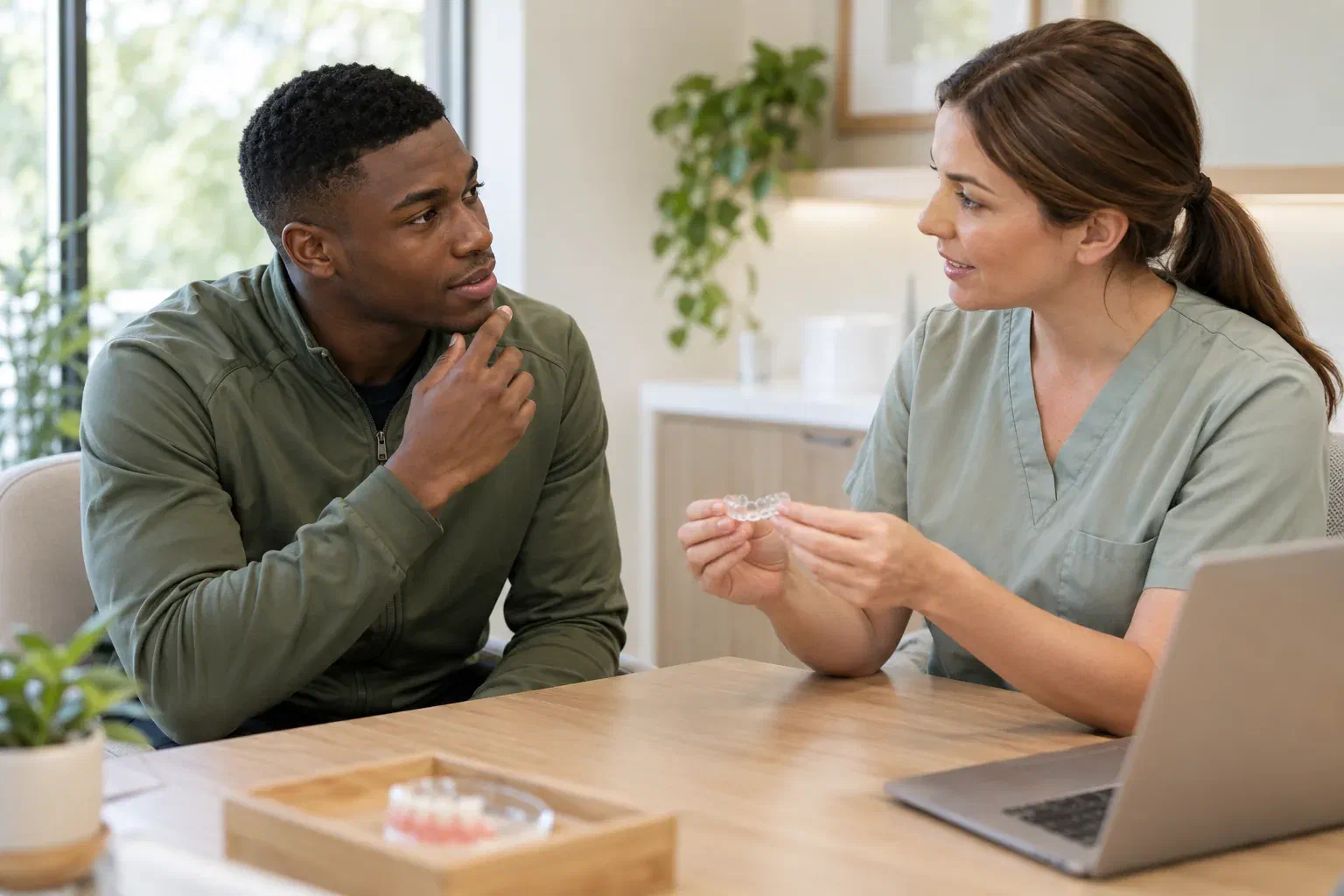
Illustrative consultation with an adult athlete about a dental injury
Specialized Care

Sports-Related Dental Injury Treatment in Etobicoke

After a sports injury to the teeth, the first decision is where to go. Coming from Etobicoke, call before you drive: we can tell you about availability, help you judge whether closer urgent care makes more sense, and plan well-organised follow-up visits if you choose us.

Choosing where to be seen

Decide where to go before you start the car.

From Etobicoke, in Toronto’s west end, reaching our Bronte Street practice is a longer trip than it is for most of the people we see, and with a dental injury that trip is worth thinking about. A knocked-out adult tooth cannot wait for a drive across the region if we are fully booked. A chipped edge with no other symptoms usually can. The first job, before any of that, is making sure the injured person is safe and off the field.

Teeth often look less damaged than they are. A tooth can be loosened, pushed slightly out of line or cracked below the gum, and the ones beside it may have taken some force. A dental assessment works out which injury you have and what it needs, and later reviews pick up changes that cannot be seen at first. Both matter, so it helps to plan them in a way you can realistically keep.

Call (905) 876-4488, tell us the time of the injury and describe what happened. Say up front if a tooth is out, has moved, or is bleeding steadily, or if there are signs of a head injury. We will be honest about availability. If we cannot see you soon enough for a time-sensitive injury, the right move is closer urgent care, and medical problems always come first.

Call to plan care after a sports injury
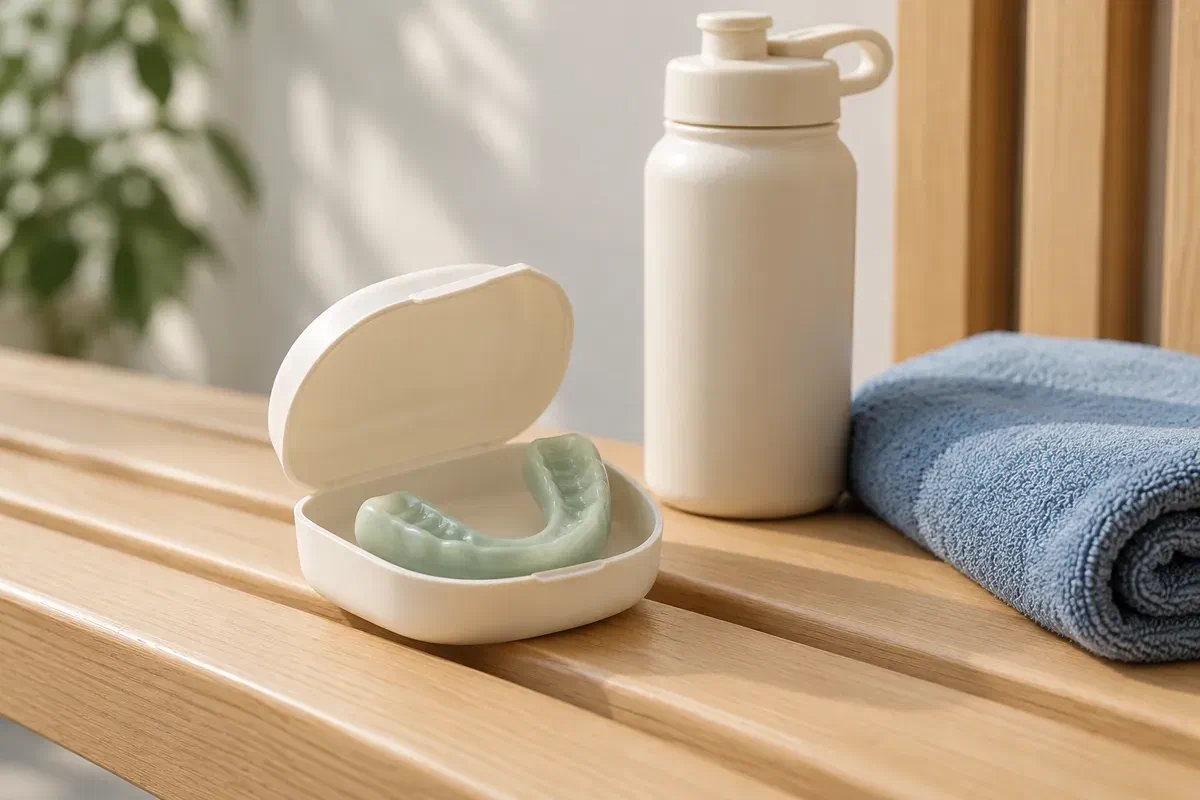
Illustrative sports mouthguard in a protective case beside a water bottle and towel
Which injuries cannot wait for the drive

Some injuries need the nearest open door.

Let someone else drive or make the calls if you can. Do not keep moving a loose tooth or biting down to test it, and never wait on an emailed reply when the injury is time-sensitive.

Knocked-out permanent tooth

This needs dental care immediately, so the closest available emergency provider may be the better choice. Hold the tooth by the crown and keep off the root. If it is dirty, rinse it quickly in milk or saline without rubbing. A calm, alert person may be able to slip it gently back into place; if that is not easy, keep it in milk. Do not replant a baby tooth.

Tooth broken, displaced or biting wrong

Arrange a prompt assessment even if discomfort is mild, and ask us how soon you need to be seen. Leave a displaced tooth alone and do not chew on it. A fragment that is easy to find can come along in milk, but searching should not delay care. Mention any missing piece.

Possible head or facial injury

Loss of consciousness, confusion, unusual drowsiness, vomiting or other worrying signs after a blow to the head need medical attention, and that is a reason to stay close to home. A sudden change in the bite or trouble opening the mouth can suggest a wider injury. Settled pain is not a reason to return to play.

Call 911 for unconsciousness, seizure, breathing difficulty or bleeding that will not stop. If you cannot tell whether a lost tooth is a first tooth, do not try to reinsert it; store it in milk and get immediate professional advice nearby.

Why a planned approach helps

Good first care, then reviews you can actually get to

At the first visit, wherever it happens, the dentist separates what can be treated now from what has to be monitored or referred. Ask which teeth and tissues were affected and whether a treatment is temporary, definitive or the first of several stages. If you were seen elsewhere for the emergency, bring those notes; they help anyone providing follow-up.

Reviews are when the clinician checks how the nerve and the ligament around the root are coping. Some decisions can only be made after a few weeks or months. When travel is longer, ask for the review dates in advance and keep them even if eating feels normal. Call about new symptoms rather than assuming the tooth has fully recovered.

Patient information: AAE — assessment and continuing care after traumatic dental injuries

A wide look at the injury

Teeth on either side, the lips and gums, the bite and the bone may all be checked, depending on the findings. Tell the dentist how the blow landed. Imaging and tooth tests may be used, and recording them now makes later comparisons possible, whether here or at another clinic.

Stabilizing when it is needed

Some injuries call for a protective layer over exposed dentine, a tooth eased back and bonded to its neighbours for a while, or care for a torn lip. Ask what each measure achieves and what it means for the drive home and the week ahead. Splints are not always needed; when they are, removal and checks add visits to plan.

Fewer trips, better organised

Ask whether reviews and any further dental work can be grouped sensibly, and what would justify an unplanned visit. Check whether your guard still fits after treatment. Medical return-to-sport advice after a head injury runs separately from the dental plan.

If you decide to come to us

How we use the visit you made the trip for

Bring any recovered tooth or fragment, a summary of first aid, and records from any urgent-care visit you already had. If something is missing, come anyway; urgent care should not wait on paperwork or gear.

  1. Hear the full account

    We ask about timing, the sport, the mechanism and any symptoms since, including blacking out. A tooth that was out raises two more questions: for how many minutes, and kept in what? We also ask whether you have been assessed elsewhere, so care is not duplicated and nothing is missed.

  2. Examine and test

    The dentist checks the teeth, gums and bite and chooses investigations based on what they find. Mention any tooth that feels different, even if it looks normal. Some tests need repeating later, so the first examination may not give a final answer for every tooth.

  3. Treat what makes sense today

    The approach depends on the injury, the tooth’s development and condition, and how long ago the impact happened. Ask about the proposed care, comfort, alternatives and referral. Where possible, we explain what can be done in this visit and what must wait for healing.

  4. Plan reviews around the distance

    Agree on review dates before you leave, along with foods and activities to avoid and who to call about a loose splint or new symptom. Ask which changes would mean seeking care closer to home. Keep written instructions handy for coaches, family or another dentist.

Between visits

Protect the tooth at home and know when to call.

You will be managing most of the healing on your own, so make sure the instructions match the injury: a bonded chip, a repositioned or replanted tooth and a lip wound all differ. Ask before going back to anything that could bring another knock.

Keep to the home routine

Stick with the diet and brushing guidance on your sheet. Leave the tooth alone instead of testing it, and keep teeth off any splint. If part of the routine is not working, a phone call can often sort it out without a trip, and it beats improvising with tips meant for other treatment.

Know what is worth a phone call

Increasing pain, swelling, new looseness, darkening, a bite change or a broken splint are all reasons to get in touch. Some symptoms need prompt care nearby; others can wait for your planned review. We can help you decide, and the outcome always depends on examination.

Fit-check protection before you play again

Bring your guard to a review if asked, particularly after a repair, splint or tooth movement, so you are not making a separate trip later. Never force it over the healing area. Follow both the dental limits and any medical return plan before getting back in the game.

Patient information: NHS — medical assessment after head injury and concussion

What treatment can look like

Chipped, moved or more serious

For each option, ask how many visits it usually involves and what could change the plan. Two injuries that look alike can heal very differently.

When a fracture can be assessed for repair

Restoring a broken tooth

Bonding back a saved fragment, sealing the exposed part or rebuilding the edge are all possibilities. Fractures near the nerve need more investigation. Ask whether the result is meant to last or is a placeholder, and when it will be rechecked, because a tooth that looks fixed may still be reacting inside.

When a tooth was pushed out of line or knocked out

Repositioning and splinting

Quick treatment matters, often followed by a splint for a period and checks over months, sometimes with root canal treatment later. Root development, storage, dry time and damage around the root all affect the outlook. Some teeth are lost even with good early care.

When the injury extends past the teeth

Specialist or hospital involvement

An endodontist, oral surgeon or hospital team may be needed for complex injuries. Ask what prompted the referral, how quickly to act, and whether a provider closer to home would make sense. Arranging a referral should never leave an urgent problem untreated.

Etobicoke travel and timing questions

Planning dental injury care across the region

Call first for urgent injuries, and tell us when the hit happened. We would rather help you find faster care nearby than have you drive while time runs out.

(905) 876-4488
When should I go to a closer emergency provider instead of driving to Milton?
If a permanent tooth is knocked out and we cannot see you right away, or if there is any concern about a head injury, heavy bleeding or a broken jaw, seek the nearest appropriate care. Call us later for follow-up if that suits you.
Can I have the emergency care elsewhere and the follow-up with you?
Yes, that is often sensible. Bring any records, X-ray reports or written instructions from the first visit. Knowing what was done and when helps the dentist plan reviews and spot changes.
How can I keep the number of trips down?
Ask at the first visit for the expected review timetable and whether checks can be combined with other planned dental care. Bring your mouthguard to reviews so fit checks do not need their own appointment.
What symptoms between reviews mean I should not wait?
Rising pain, facial swelling, fever, a tooth that becomes loose again or a broken splint usually warrant a prompt call. Any new or worsening head-injury symptom needs medical care right away.
Is it safe to travel with a splint in place?
Generally yes, but avoid chewing on it and follow the instructions you were given. If it loosens while you are away, call for advice rather than trying to fix it yourself.
Does an injured tooth need treatment from one dentist all the way through?
Not necessarily, but continuity helps, because reviews compare findings over time. If you switch providers, share all previous records so the new clinician has a baseline.
Calling from Etobicoke

Ring first. Then decide together where to go.

Phone (905) 876-4488 before setting out. We will ask what happened, tell you honestly what openings we have, and help you weigh the trip against closer care. Use online booking only for planned reviews; an injured tooth that cannot wait needs a conversation.

If you need urgent care and cannot reach us, go to another available emergency provider near you.

Visit Milton Dental Clinic
Unit 1, 342 Bronte St. S, Milton, ON L9T 5B7
Get directions Clinic hours
Monday–Thursday
11am–7pm
Friday–Sunday
By appointment only

Areas we serve

  • Milton
  • Oakville
  • Mississauga
  • Georgetown
  • Halton Hills
  • Acton
  • Campbellville
  • Brampton
  • Burlington
  • Puslinch
  • Rockwood
  • Erin
  • Caledon
  • Etobicoke
  • Old Milton
  • Bronte Meadows
  • Timberlea
  • Dorset Park
  • Dempsey
  • Clarke
  • Beaty
  • Coates
  • Harrison
  • Scott
  • Willmott
  • Ford
  • Bowes
  • Cobden
  • Walker
  • Mountain View
  • Milton Heights
  • Hawthorne Village
  • Valley View
  • Fallingbrook
  • Nassagaweya
  • Trafalgar
  • Esquesing
  • Nelson
  • Brookville
  • Moffat
  • Glen Williams
  • Norval
  • Limehouse
  • Stewarttown
  • Ashgrove
  • Hornby
  • Silver Creek
  • Speyside
  • Scotch Block
  • North Oakville
  • River Oaks
  • Glen Abbey
  • West Oak Trails
  • Palermo
  • Bronte Creek
  • College Park
  • Joshua Creek
  • Uptown Core
  • Preserve
  • Iroquois Ridge
  • Lisgar
  • Meadowvale
  • Meadowvale Village
  • Churchill Meadows
  • Erin Mills
  • Central Erin Mills
  • Streetsville
  • East Credit
  • Creditview
  • Heartland
  • Sheridan
  • Mount Pleasant
  • Credit Valley
  • Huttonville
  • Churchville
  • Springbrook
  • Northwest Brampton
  • Bram West
  • Fletcher's Meadow
  • Fletcher's Creek South
  • Alton Village
  • Orchard
  • Millcroft
  • Headon Forest
  • Tansley
  • Brant Hills
  • Tyandaga
  • Kilbride
  • Lowville
  • Aberfoyle
  • Morriston
  • Arkell
  • Hillsburgh
  • Freelton
  • Carlisle
  • Waterdown
  • Flamborough
  • Mountsberg

How can we help?

Milton Dental Clinic

Have a question about your smile? Choose the option that works best for you.

For urgent dental concerns, please call.
Messages are reviewed during clinic hours.