

Illustrative consultation with an adult athlete about a dental injury
Specialized Care

Sports-Related Dental Injury Treatment in Mississauga

A tooth knocked out during a game is one of the few dental problems where minutes really count. Keep it moist, handle it by the crown and phone us from Mississauga straight away, so we can talk through what to do on the way and the assessment that should follow.

Tooth out, game over

The clock starts the moment the tooth comes out.

A rogue cricket ball, a header gone wrong, a hard landing on an indoor court: sometimes a whole tooth ends up on the ground. In those first moments, two things matter at once. The person who was hit needs checking for injuries to the head, jaw and lips, and the tooth needs to be kept from drying out. Nobody should go back into the game while that is being sorted.

Even when a tooth stays in its socket, an impact can crack it, push it sideways or drive it up into the gum, and the teeth next to it may be hurt as well. A dental assessment sorts out which of these has happened and what care fits. Follow-up appointments matter too, because a tooth that seems settled can change later.

Call (905) 876-4488 as soon as you can and tell us when it happened. If a tooth is out, out of position or still bleeding heavily, or if there are signs of a head injury, say so first. We can explain availability and the most sensible next step. If a medical emergency is unfolding, deal with that before anything dental.

Get urgent advice about a knocked-out tooth
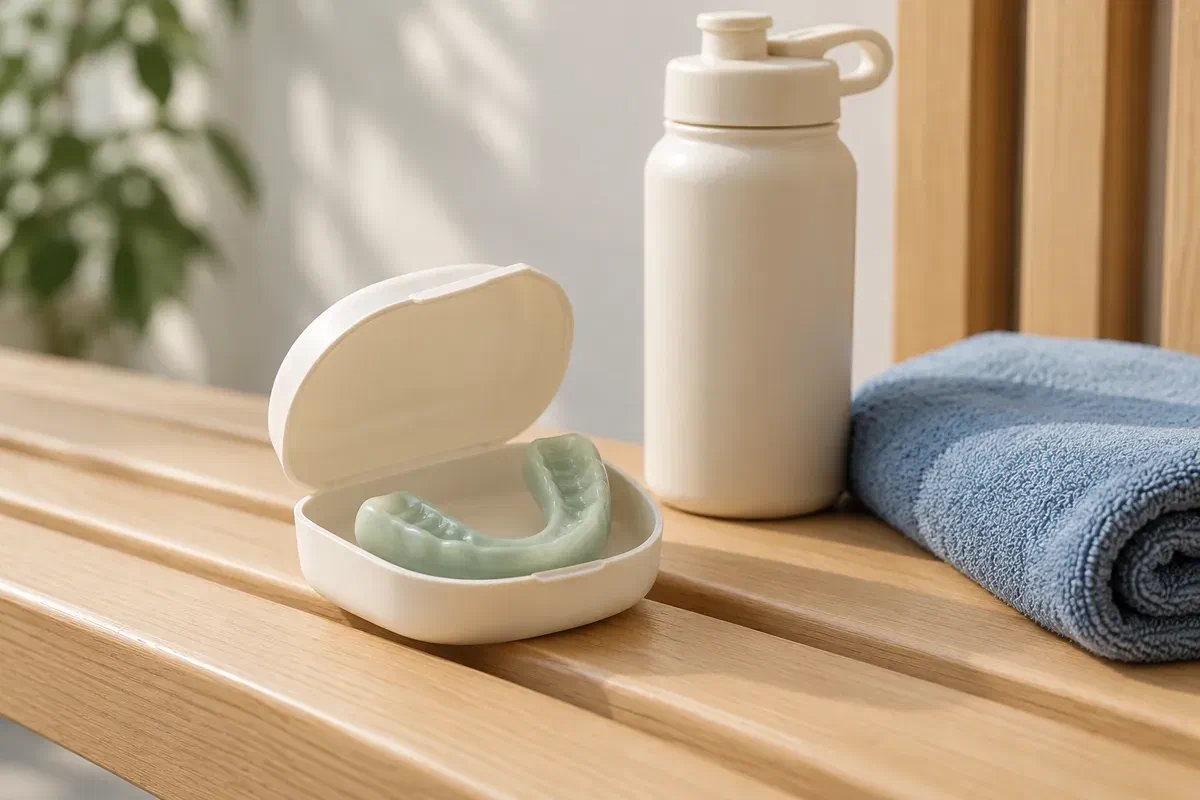
Illustrative sports mouthguard in a protective case beside a water bottle and towel
Deciding what to do first

An empty socket, a crooked tooth, a dazed player: three different priorities

Let someone else make calls or drive while you look after the injured person. Avoid poking at a loose tooth, forcing the jaw closed, or relying on email or an online request when the problem is urgent.

Saving a knocked-out adult tooth

This needs dental care at once. Pick the tooth up by the part that shows when you smile, never by the root. If it has dirt on it, a brief rinse in milk or saline is enough; do not wipe or scrub. A calm, alert person may be able to push it gently back into the socket if it slides in easily. Otherwise drop it in milk and go. Never replant a baby tooth.

A tooth that is cracked, crooked or hitting differently

Arrange a quick assessment even if it does not hurt much. Leave a displaced tooth where it is, and do not chew on it to see whether it shifts. A broken piece that is easy to find can travel in milk, but do not let a search slow you down. Tell the dentist about any fragment still missing.

Signs the injury reached the head or jaw

Someone who was knocked out, even briefly, or who seems foggy, sleepy, sick to their stomach or not quite themselves after the hit needs to be seen medically. Teeth that suddenly meet in a new way, or a jaw that will not open fully, may point beyond the tooth. Feeling a little better is no signal to play on.

Call 911 for unconsciousness, a seizure, breathing difficulty or bleeding that cannot be stopped. In a child of mixed-dentition age where nobody can tell what kind of tooth it was, do not replant it; keep it in milk and get expert advice right away.

Why speed and follow-up go together

Fast first care, patient long-term watching

The first visit sorts the injury into what can be done today and what has to be watched or passed to a specialist. Good questions to ask: which teeth and tissues are involved, and is this treatment a temporary fix, the final repair, or one step of several? A clear description of the injury is worth more than a promise that every tooth will make it.

Afterwards, review visits show how the nerve and the tissues anchoring the root are holding up. Some choices can only be made once there has been time to see the response. Keep those visits even after eating feels normal, and report any new symptom instead of assuming the injury is behind you.

Patient information: AAE — assessment and continuing care after traumatic dental injuries

Look past the most obvious damage

A replanted tooth draws the eye, yet its neighbours, the socket wall, the lip and the bite all deserve a look. Tell the dentist how the tooth came out, if you saw it happen. X-rays and simple tooth tests may be done, and the notes made now are what later visits are measured against.

Secure the area when it needs it

A replanted or shifted tooth is often held for a while with a thin splint bonded to its neighbours; a broken edge may be sealed and a torn lip treated. Ask the reason for each measure and the limits it brings. A splint is a support during healing, not the end of the story.

Plan what happens next, including sport

Leave the visit knowing what treatment might still be ahead, when the next check falls and how long to stay off the field. Find out if the old guard will still sit over a splinted tooth. If the head was struck, a doctor’s return-to-play plan applies on top of the dental one.

What to expect at the visit

Four parts, one aim: a plan you understand

Bring the tooth or any fragment if you have them, plus a note on the first aid and any medical assessment so far. Urgent care should never wait while someone tracks down equipment, insurance details or the exact minute of the play.

  1. Go over the incident and immediate risks

    Explain the timing, the sport, how the injury happened and the symptoms since, including any blackout or missing tooth. For a tooth that was out of the mouth, give the time out and what it was stored in. The clinician then judges whether medical care should come first or alongside.

  2. Examine the area around the injury

    The dentist examines the teeth, gums and bite, picking tests that match what they see. Point out any tooth that feels unusual even if it looks normal. First readings sometimes need to be repeated, so one examination may not give a final verdict on every tooth.

  3. Explain the first treatment honestly

    For a knocked-out tooth, the minutes it spent dry, its storage and whether the root had finished forming all shape what is possible. Ask what the dentist proposes, how comfort will be managed, what else could be done and whether a specialist should be involved. Today’s step may be holding the tooth in place while a longer plan is built.

  4. Set review dates and activity rules

    Before leaving, note the next check-up date, the foods and movements to steer clear of, and the number to ring if the splint loosens or something new crops up. Ask about better mouth protection for the future and whether a doctor must clear the player first. A printed copy helps coaches and family stay aligned.

Healing after a tooth is treated or replanted

Patience now protects the tooth later.

Aftercare for a replanted tooth differs from aftercare for a small repair, a repositioned tooth or a cut. Follow the instructions written for your injury, and ask before going back to anything that could bring another impact.

Keep to the food and cleaning plan

Soft foods and gentle brushing around a splinted tooth are common instructions, but confirm the details for your case. Leave the tooth alone rather than checking it with your tongue, and keep teeth off the splint. If something in the routine is unworkable, phone us instead of borrowing tips from a different kind of dental visit.

Report anything that changes

Swelling, throbbing that gets worse, a tooth that loosens again, darkening, a bite that feels off or a splint that breaks are all reasons to phone. A replanted tooth can need more treatment weeks after it first seems fine. Only an examination shows what a change means; a grey tint, for example, does not have one fixed answer.

Get the mouthguard checked before playing

A guard made before the injury may not fit once a tooth has been replanted, splinted or repaired, so bring it along if asked. Never press it down over a healing tooth. Wait for both the dental all-clear and any medical return plan; gear cannot make up for an injury that was not fully checked.

Patient information: NHS — medical assessment after head injury and concussion

Treatment depends on the injury

Repair, reposition or refer

A sound plan comes with reasons and a sense of what may follow. Teeth that look equally battered can have very different futures, so the size of the gap or chip is only part of the picture.

When a fractured tooth can be considered for restoration

Fixing or protecting a broken tooth

A saved fragment can sometimes be bonded back; otherwise the exposed surface may be sealed or the edge rebuilt in tooth-coloured material. Fractures that reach deep into the tooth need more work-up. Check whether the repair is a stopgap and when it will be rechecked, since a tooth can be reacting inside even after it looks whole.

When a tooth has been knocked out or moved

Replanting, repositioning and splinting

Act quickly here; the plan is built around the exact injury. Splinting and later treatment, sometimes root canal care, may be recommended, with healing checked over months. Root development, dry time, storage and gum and bone damage all weigh on the choices, and some teeth are lost despite good early care.

When findings extend past a simple dental repair

Specialist or hospital care for bigger injuries

A broken jaw, a deep facial cut or a complicated root injury may call for an oral surgeon, an endodontist or a hospital team. Ask what prompted the referral and how quickly to go. Sending you onward is about matching the injury to the right expertise, and urgent care should continue meanwhile.

Mississauga knocked-out tooth questions

What people ask while holding a tooth in a cup

Short answers for a stressful few minutes. If a tooth is out right now, stop reading and phone us.

(905) 876-4488
What can I store a knocked-out tooth in if there is no milk nearby?
Milk or saline are common recommendations. If neither is available, do not let the tooth dry out, and get urgent advice on the way. Avoid storing it in tap water, scrubbing it or wrapping it in a dry tissue.
How long can a knocked-out adult tooth be out of the mouth?
There is no safe waiting period. The sooner it is replanted or professionally assessed, the better its chances, and drying out harms the root surface. Phone right away rather than finishing the game or stopping for anything else.
Should the player hold the tooth in their mouth?
Avoid this for young children, who could swallow or inhale it. Milk is a safer option. If you are unsure what to do, call for advice while heading to care.
Can a replanted tooth be expected to last?
Some replanted teeth do well for many years; others need further treatment or cannot be kept. The outcome depends on the tooth, how long it was out, how it was stored and how the tissues heal. Reviews help catch problems.
Do I need to find the tooth if it got lost on the field?
A quick look is fine, but do not delay care searching. Tell the dentist it is missing, because they may need to confirm it was not pushed into the gum, swallowed or inhaled.
We are coming from western Mississauga. Should we head straight over?
Call first so we can discuss the injury and current availability. If we cannot see you soon enough for a time-sensitive injury, or cannot be reached, go to another available emergency provider instead of waiting.
Calling from Mississauga

Phone first, then travel with the tooth in milk.

A quick call to (905) 876-4488 lets us hear what happened and tell you what openings we have. Open with the important part: a tooth out or out of place, or a medical worry. Please keep online requests for routine follow-ups, since nobody may see them in time for a knocked-out tooth.

If urgent care is needed and you cannot reach us, look for another available emergency provider.

Visit Milton Dental Clinic
Unit 1, 342 Bronte St. S, Milton, ON L9T 5B7
Get directions Clinic hours
Monday–Thursday
11am–7pm
Friday–Sunday
By appointment only

Areas we serve

  • Milton
  • Oakville
  • Mississauga
  • Georgetown
  • Halton Hills
  • Acton
  • Campbellville
  • Brampton
  • Burlington
  • Puslinch
  • Rockwood
  • Erin
  • Caledon
  • Etobicoke
  • Old Milton
  • Bronte Meadows
  • Timberlea
  • Dorset Park
  • Dempsey
  • Clarke
  • Beaty
  • Coates
  • Harrison
  • Scott
  • Willmott
  • Ford
  • Bowes
  • Cobden
  • Walker
  • Mountain View
  • Milton Heights
  • Hawthorne Village
  • Valley View
  • Fallingbrook
  • Nassagaweya
  • Trafalgar
  • Esquesing
  • Nelson
  • Brookville
  • Moffat
  • Glen Williams
  • Norval
  • Limehouse
  • Stewarttown
  • Ashgrove
  • Hornby
  • Silver Creek
  • Speyside
  • Scotch Block
  • North Oakville
  • River Oaks
  • Glen Abbey
  • West Oak Trails
  • Palermo
  • Bronte Creek
  • College Park
  • Joshua Creek
  • Uptown Core
  • Preserve
  • Iroquois Ridge
  • Lisgar
  • Meadowvale
  • Meadowvale Village
  • Churchill Meadows
  • Erin Mills
  • Central Erin Mills
  • Streetsville
  • East Credit
  • Creditview
  • Heartland
  • Sheridan
  • Mount Pleasant
  • Credit Valley
  • Huttonville
  • Churchville
  • Springbrook
  • Northwest Brampton
  • Bram West
  • Fletcher's Meadow
  • Fletcher's Creek South
  • Alton Village
  • Orchard
  • Millcroft
  • Headon Forest
  • Tansley
  • Brant Hills
  • Tyandaga
  • Kilbride
  • Lowville
  • Aberfoyle
  • Morriston
  • Arkell
  • Hillsburgh
  • Freelton
  • Carlisle
  • Waterdown
  • Flamborough
  • Mountsberg

How can we help?

Milton Dental Clinic

Have a question about your smile? Choose the option that works best for you.

For urgent dental concerns, please call.
Messages are reviewed during clinic hours.