
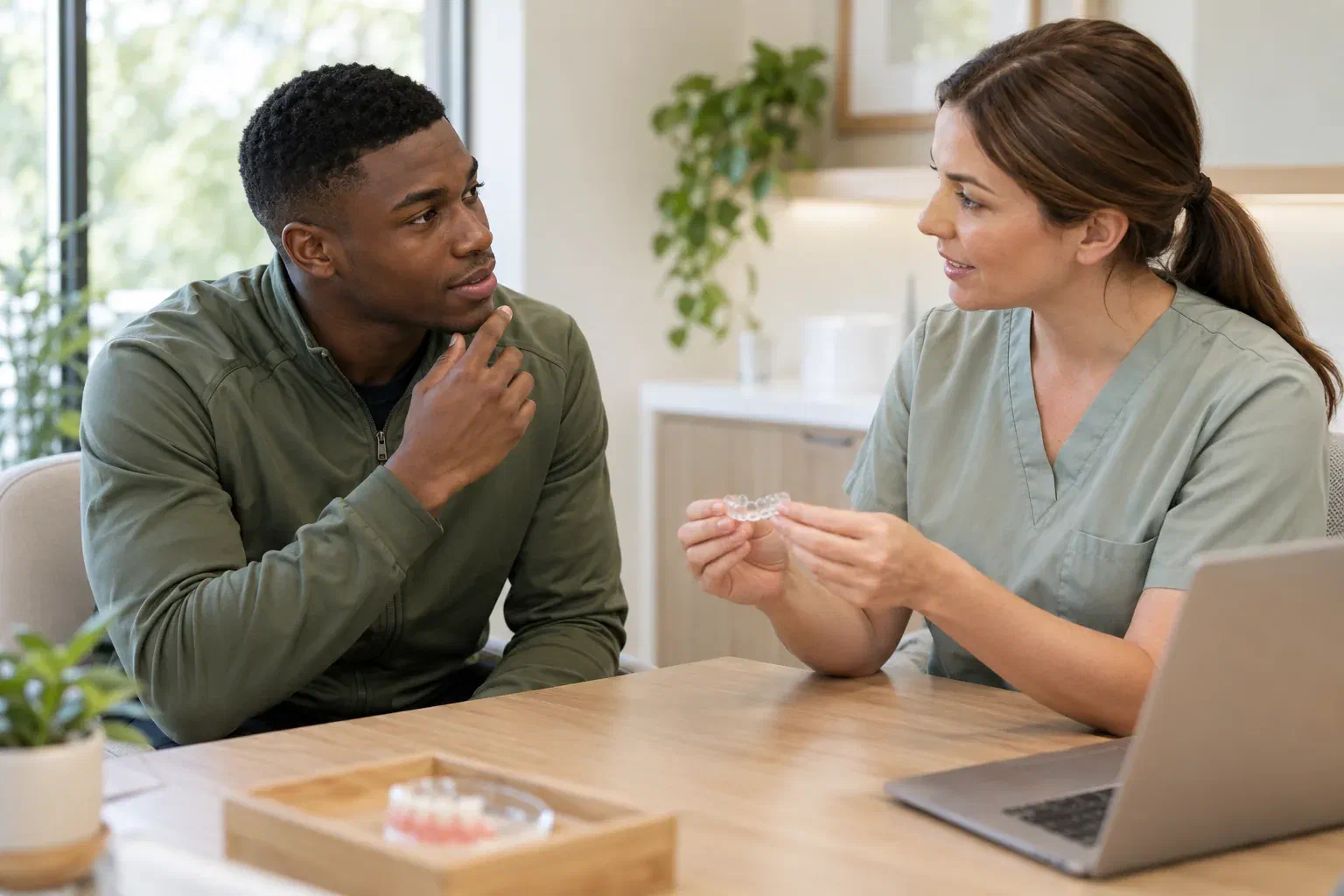
Illustrative consultation with an adult athlete about a dental injury
Specialized Care

Sports-Related Dental Injury Treatment in Old Milton

Adult rec leagues are fun until a softball takes a bad hop or a pickup game gets physical. If a tooth is chipped, loose or gone, phone our practice near Old Milton, explain how and when it happened, and we will help you decide what needs attention first.

For grown-up athletes who tend to shrug it off

“It’s only a chip” is a guess, not a diagnosis.

Adults are often the quickest to wave off a mouth injury. Someone in a weeknight league catches a stray elbow, spits out a bit of tooth, and wants to finish the inning. Stepping off is the better choice. A blow strong enough to break enamel can also bruise the lips and gums, strain the jaw or jar the head, and none of that shows up in the bathroom mirror.

Older teeth bring their own questions. A tooth with a large filling, a crown or earlier root canal treatment may react differently to a knock, and the damage is not always where the eye goes first. A careful dental examination identifies what kind of injury you are dealing with. A follow-up schedule then catches changes that only appear once the first few days have passed.

Call (905) 876-4488 and tell us the time of the injury, what broke or moved, and any dental work already in those teeth. Speak up right away about a tooth knocked out of its socket, bleeding that keeps going, or a headache, dizziness or confusion after the hit. From Old Milton, our Bronte Street practice is close by, and we can explain availability and the next move. Medical emergencies come before dental appointments.

Ask about care after an adult sports injury
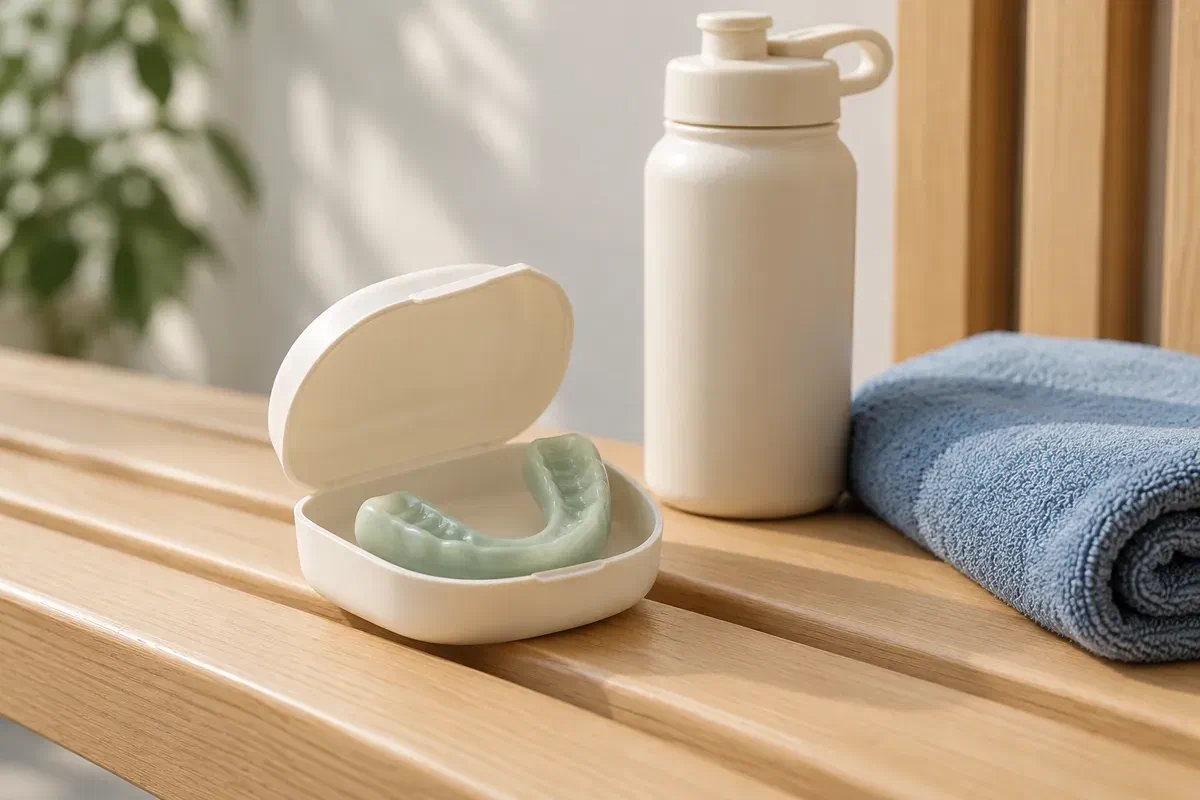
Illustrative sports mouthguard in a protective case beside a water bottle and towel
Three situations, three levels of urgency

A missing tooth, a moved tooth and a possible head injury each set their own clock.

Get a friend or teammate to drive or make calls if that helps. Resist the urge to rock a wobbly tooth with your tongue, bite down hard to check alignment, or fill in a web form when the situation calls for a phone call.

An adult tooth is out of its socket

This calls for emergency dental care straight away. Hold the tooth by its chewing end rather than the root. Rinse off dirt with a quick dip in milk or saline, with no scrubbing. A calm, alert adult may be able to slide it gently back into the socket; if that is not easy, keep it in milk and head for care at once. A baby tooth is never replanted.

A broken edge, a shifted tooth or a bite that no longer lines up

Get it looked at promptly even when it barely aches. Keep your fingers off a tooth that has moved and avoid chewing on that side to test it. A piece of tooth you can find easily can travel in milk, but care should not wait while you search the field. Let the dentist know if part of a crown or filling is also missing.

The blow may have reached the jaw or head

Losing consciousness, feeling confused or unusually drowsy, vomiting or other troubling signs after a hit to the head need a medical assessment. A jaw that will not open fully or teeth that suddenly meet in a new way may also mean a larger injury. Feeling better, or being able to put a guard back in, does not mean you are cleared to play.

For unconsciousness, a seizure, breathing problems or severe bleeding you cannot control, call 911. If you cannot tell whether a lost tooth is a baby or permanent tooth, store it in milk and seek professional advice right away rather than trying to reinsert it.

What an assessment and follow-up offer

Short-term repair, long-term watching.

An early visit tells you what can be fixed right now and what needs to be observed or seen by a specialist. Useful questions include which teeth, gums or bone were involved, and whether a given treatment is a stopgap, a finished repair or one stage in a series. Expect a straight explanation of the injury, not an assurance that every damaged tooth can be kept.

Later appointments let the clinician check how the nerve and the ligament around the root are coping. Certain decisions cannot be made on day one. Keep those visits even when meals feel normal again, and report new symptoms instead of deciding everything is fine because the broken corner has been rebuilt.

Patient information: AAE — assessment and continuing care after traumatic dental injuries

A wider look than the obvious tooth

The dentist may check the teeth on either side, the soft tissues, your bite and the supporting bone, as the findings suggest. Mention the angle and strength of the blow if you remember it. Imaging or other tests can be part of the visit, and the notes give later appointments a baseline to compare against.

Protection or support where needed

First steps can include sealing a fractured surface, moving a tooth back into line and holding it steady, or managing a cut. Ask what each step accomplishes and what limits come with it. A splint is not always required, and wearing one never replaces checking how the tooth heals.

A plan for the rest of the season

Go over any further treatment, the review timetable and when the area can safely face activity again. Ask whether your existing guard still fits once the tooth has been treated. Dental guidance and medical return-to-play guidance are separate, and one does not cover the other.

Inside the appointment

How we move from what happened to what comes next

Bring along the tooth or fragment if you have it, a note on any first aid, and what a doctor or urgent care has already told you. Never put off urgent care to collect gear, insurance papers or a polished account of the play.

  1. Start with the play and any warning signs

    Describe the timing, the sport, what struck you and what you felt afterwards, including any blackout or missing tooth. If a tooth was out of the mouth, say for how long and where it was kept. The clinician decides whether you need medical care before dental treatment or at the same time.

  2. Check the injured tooth, its neighbours and the bite

    Teeth, gums and the way your teeth meet are examined, with tests chosen to suit what turns up. Mention any tooth that feels odd even if it looks normal, and any older filling or crown nearby. Early findings sometimes need a later comparison, so a single examination may leave a few questions open.

  3. Weigh the first treatment and its limits

    What is possible depends on the injury, the tooth's condition and maturity, and how much time has gone by. Ask about the proposed care, comfort, other options and possible referral. Initial treatment may simply protect or stabilize things until a longer restorative or specialist plan is in place.

  4. Agree on reviews and on when to play

    Confirm your next visit, what to avoid eating or doing, and who to contact about a loosened splint or new symptom. Talk about future mouth protection and any medical clearance needed after a head knock. Keep the written instructions so your teammates or family know the plan too.

Healing at home

Go easy on the treated tooth and keep every follow-up.

A rebuilt edge, a tooth eased back into place, a replanted tooth and a healing cut all have different instructions. Stick to the advice for your specific injury and check before returning to anything that risks another blow.

Follow the food and hygiene guidance you were given

Ask how to clean around the area and which foods or bites to avoid for now. Do not keep poking or pressing the tooth, and never chew on a splint. If the routine is hard to follow, get in touch with the team instead of borrowing advice meant for a different procedure.

Watch for signs that need another look

Contact the dentist about pain that builds, swelling, a tooth that starts to move, a darker shade, a change in your bite or a broken splint. Teeth can need further care after early symptoms ease. The response depends on what an examination shows, not on assuming every colour change leads to one fixed treatment.

Check your guard before you lace up again

When advised, bring your mouthguard to have its fit checked, particularly after a repair, splint or shift in tooth position. Do not push it over the treated area. Respect the dental limits and any separate medical return-to-play plan; a guard cannot make an unassessed injury safe.

Patient information: NHS — medical assessment after head injury and concussion

Treatment paths after a hit

Why a chipped edge and a dislodged tooth are not handled alike

Ask why a particular treatment suits what was found and what may follow later. The amount of visible damage does not on its own set the outlook or the full plan.

When a fractured tooth may be restored

Rebuilding or sealing a broken tooth

Based on the type of break, care could mean covering an exposed area, bonding a usable fragment back on, or another kind of restoration. A break that goes deep needs more investigation. Ask whether the repair is interim and how the tooth will be monitored, since a restored outline does not resolve everything the impact may have done.

When a tooth was pushed out of place or knocked out

Repositioning, splinting and trauma monitoring

These injuries need quick assessment and a plan specific to them. A splint or further care may be advised, with healing reviewed over time. Whether it is a baby or adult tooth, how developed it is, how it was stored and any damage to the surrounding tissue all affect the decisions, and not every tooth can be saved.

When the problem reaches past a simple dental repair

Referral for a more extensive injury

The clinician may suggest a dental specialist, an assessment of the jaw or face, or urgent medical care. Ask what is behind the referral and how soon it needs to happen. Being referred is part of getting the right care, never a reason to leave an urgent problem untreated.

Old Milton adult athletes ask

Straight answers for rec-league players and weekend athletes

Phone about urgent injuries and give us the time they happened. The team can talk through suitable assessment without assuming a small chip is the whole story.

(905) 876-4488
I already have a crown on the tooth that got hit. Does that change anything?
It can affect what the dentist looks for. A crown, large filling or earlier root canal treatment may be damaged along with the tooth or hide changes underneath. Mention all previous work when you call so the assessment can account for it.
Can I just wait until my next regular checkup to mention a chipped tooth?
Not if the tooth is loose, out of position, painful, bleeding or knocked out, or if the hit affected your head. Even a small chip after a sports impact is worth a call, because damage below the surface is not always visible.
Is it all right to take a pain reliever before I come in?
Many people use an over-the-counter pain reliever as directed on the label. Mention what you took and when. Reduced pain does not mean the injury is minor, so keep the assessment even if the medication helps.
Should I go back into the game if my tooth stops hurting after a few minutes?
No. Pain settling quickly is not a reliable sign that a tooth, the jaw or the head is fine. Sit out, check for head-injury symptoms, and arrange a dental assessment if a tooth was chipped, moved or knocked out.
Do adult athletes really need a mouthguard for casual games?
Any sport with balls, sticks, falls or contact between players can injure teeth, and that includes informal leagues. A well-fitted guard is protective equipment worth discussing, though it does not prevent every dental or head injury.
How do follow-up visits work if I live in Old Milton and work out of town?
Ask at your first appointment when reviews are likely to be due, so you can plan around work. Hours run Monday to Thursday, 11 a.m. to 7 p.m., with Friday to Sunday by appointment. Keeping reviews matters even once the tooth feels normal.
Old Milton sports injuries

Call first, and tell us exactly what happened.

Ring (905) 876-4488 before you set out so we can talk through the injury and current availability. A tooth that has come out or shifted, and any medical worry, should be mentioned at the start of the call. Online booking suits non-urgent follow-up only, never an injury where timing matters.

When urgent care is needed and you cannot reach us, contact another available emergency provider.

Visit Milton Dental Clinic
Unit 1, 342 Bronte St. S, Milton, ON L9T 5B7
Get directions Clinic hours
Monday–Thursday
11am–7pm
Friday–Sunday
By appointment only

Areas we serve

  • Milton
  • Oakville
  • Mississauga
  • Georgetown
  • Halton Hills
  • Acton
  • Campbellville
  • Brampton
  • Burlington
  • Puslinch
  • Rockwood
  • Erin
  • Caledon
  • Etobicoke
  • Old Milton
  • Bronte Meadows
  • Timberlea
  • Dorset Park
  • Dempsey
  • Clarke
  • Beaty
  • Coates
  • Harrison
  • Scott
  • Willmott
  • Ford
  • Bowes
  • Cobden
  • Walker
  • Mountain View
  • Milton Heights
  • Hawthorne Village
  • Valley View
  • Fallingbrook
  • Nassagaweya
  • Trafalgar
  • Esquesing
  • Nelson
  • Brookville
  • Moffat
  • Glen Williams
  • Norval
  • Limehouse
  • Stewarttown
  • Ashgrove
  • Hornby
  • Silver Creek
  • Speyside
  • Scotch Block
  • North Oakville
  • River Oaks
  • Glen Abbey
  • West Oak Trails
  • Palermo
  • Bronte Creek
  • College Park
  • Joshua Creek
  • Uptown Core
  • Preserve
  • Iroquois Ridge
  • Lisgar
  • Meadowvale
  • Meadowvale Village
  • Churchill Meadows
  • Erin Mills
  • Central Erin Mills
  • Streetsville
  • East Credit
  • Creditview
  • Heartland
  • Sheridan
  • Mount Pleasant
  • Credit Valley
  • Huttonville
  • Churchville
  • Springbrook
  • Northwest Brampton
  • Bram West
  • Fletcher's Meadow
  • Fletcher's Creek South
  • Alton Village
  • Orchard
  • Millcroft
  • Headon Forest
  • Tansley
  • Brant Hills
  • Tyandaga
  • Kilbride
  • Lowville
  • Aberfoyle
  • Morriston
  • Arkell
  • Hillsburgh
  • Freelton
  • Carlisle
  • Waterdown
  • Flamborough
  • Mountsberg

How can we help?

Milton Dental Clinic

Have a question about your smile? Choose the option that works best for you.

For urgent dental concerns, please call.
Messages are reviewed during clinic hours.