

Illustrative discussion of a planned surgical tooth extraction
Specialized Care

Surgical Tooth Extractions in Campbellville

Out in Campbellville, a surgical extraction has to work around chores, animals, outdoor jobs and other trips into town. We can help you plan it sensibly: why removal is advised, what extra access involves, how to rest when work does not stop, and who to call after hours.

When the work at home cannot wait

Surgery on a weekday, chores the next morning?

On a rural property, rest can be hard to arrange. Animals need feeding, fences need fixing and heavy lifting is part of the day. That is worth raising before booking, because recovery advice depends on how involved the procedure is. A surgical extraction is used when a tooth or root cannot appropriately be removed in a simple way. The clinician may lift a small flap of gum, remove a little bone, or divide the tooth so it comes out in pieces.

Practical planning should never replace the clinical question, though. Does the tooth actually need to come out? Is there a realistic way to keep it? What would each option mean for you over the coming years? The surgical part is about method. You should also understand the reason, explained using your own findings.

Campbellville sits within Milton’s boundaries, northwest of the town centre, so our Bronte Street practice is a familiar trip for many. We can review the findings, explain a suitable pathway, and refer you if the anatomy or your care needs are better met elsewhere. Tell us about your health, your medicines, how past dental visits have gone and the physical demands of your days, so the plan fits real life.

Plan an extraction around your week
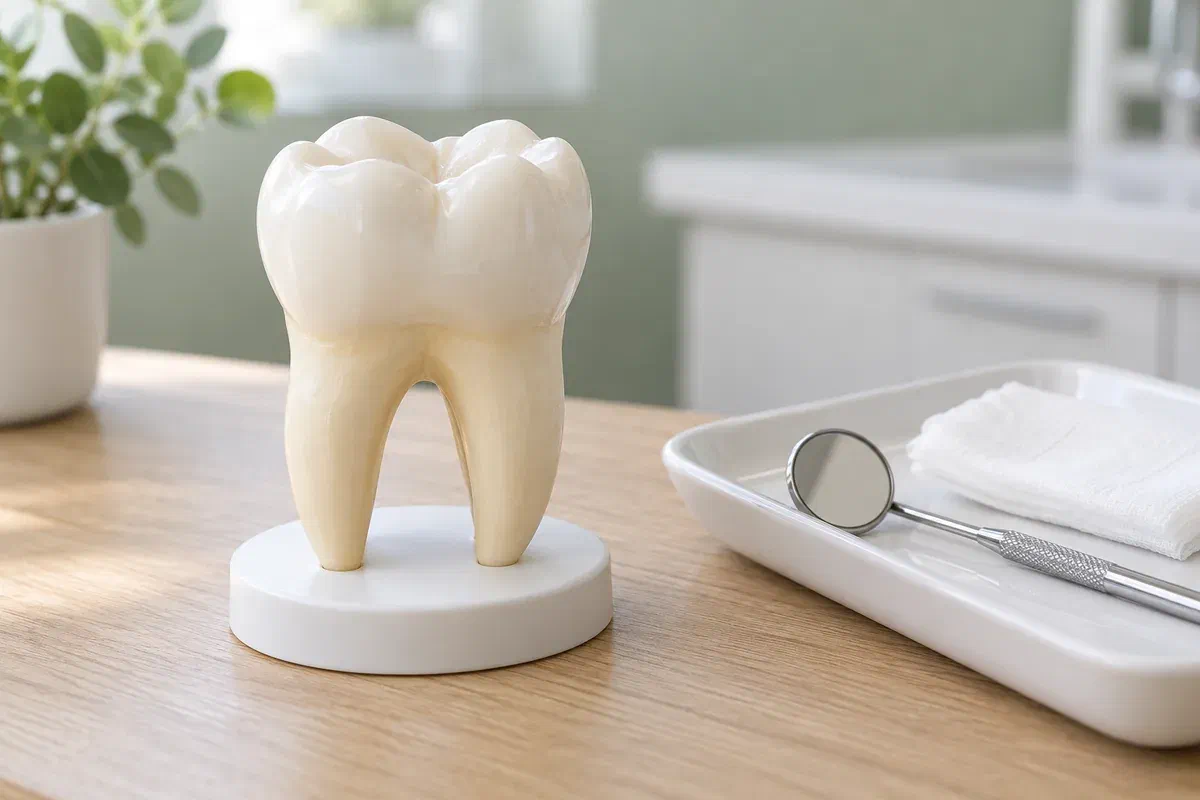
Illustrative two-root molar teaching model beside a dental mirror and gauze
Why a simple extraction may not be enough

Buried, broken, or close to something delicate.

The clinician’s examination, supported by suitable imaging, explains the case for extra access. Ask how the findings apply to your tooth, since no two surgical extractions share exactly the same steps or risks.

Gum or bone covers part of the tooth

Some teeth never fully emerge, and some break off below the gum, leaving only a root. The clinician considers the position and the reason for removing it before deciding how to gain access. Difficult access does not, on its own, decide whether the tooth must go.

The tooth is weak or the roots are awkward

Advanced decay, a fracture or curved roots may rule out removal in one piece. Sectioning the tooth is often planned from the start. Ask which steps are likely and how the approach might change if the clinician finds something different once treatment is under way.

Surrounding structures and your general health

Nerves, the upper sinus, neighbouring teeth and the jawbone can all affect the risk discussion and whether referral is wise. Medical conditions and medicines may also change preparation and recovery. Give a full history so the clinician can tell you which points truly apply.

Do not skip or stop a blood thinner or other prescribed medicine on your own before treatment. Any adjustment should be arranged by your treating clinician together with the medical provider who prescribes it.

Why it pays to plan ahead

One well-organised trip is better than three hurried ones.

Working out the method, the setting and the support beforehand helps you arrange help at home and avoid unnecessary visits. Ask what the examination showed and why this approach suits the tooth. Any risks you hear about should relate to your situation, so you can weigh them properly, rather than sounding equally likely across the board.

Ask about the space as well. An extraction can be one step in a restorative or orthodontic plan, or it can simply remove a tooth that cannot be kept. Find out whether a replacement or monitoring will follow, and whether other dental care for you or your household could be scheduled around the same time.

Patient information: Liverpool University Dental Hospital — surgical removal of teeth or roots

Be sure of the reason

Ask what the extraction will fix and why the alternatives are less appropriate. The clinician should explain the expected benefit and what waiting or declining might mean. A permanent choice should rest on the real findings, not general assumptions.

Sort out comfort and getting home

Discuss local anaesthetic, nervousness and past experiences, and whether more support would help. A surgical approach does not automatically mean being put to sleep. If a different approach or provider is involved, ask whether you will need a driver, an escort or particular preparation.

Plan for physical work afterwards

Ask about eating, lifting, outdoor work, medicines and who to call. Recovery depends on the procedure and on you. A practical plan tells you when heavier tasks are reasonable, and which symptoms should be checked rather than worked through.

Step by step

A clear sequence makes the trips count.

Bring questions to the assessment so the procedure day stays focused, and agree on a hand signal for a pause. Any preparation instructions come from the treating provider and should reflect the planned anaesthetic and your medical needs.

  1. Assessment with images and history

    The clinician examines the tooth, considers suitable imaging and reviews why removal is proposed, taking your health into account. Ask about the likely method, specific risks and whether referral may be needed. Check what else must be done before the procedure, so you are not called back unexpectedly.

  2. Consent and a comfort plan

    You hear about the planned treatment and the reasonable alternatives before agreeing. Local anaesthetic and any other arrangements assessed as suitable are explained. Use your signal if the area is not numb enough or you need to stop. Sharp pain should always be mentioned.

  3. Reaching and removing the tooth

    Following the plan and the findings, gum may be lifted, some bone removed or the tooth sectioned. Pressure, pushing or vibration may still be felt with numbing in place. The clinician manages the site before finishing and decides whether sutures are appropriate.

  4. Home care and follow-up arrangements

    You leave with instructions for bleeding, cleaning, eating, discomfort and activity, including heavier work. Ask whether sutures need removing and whether a review is planned, and try to book it before you go. Confirm the contact route and what your next dental stage will be.

Back at home

Easy on the lifting, careful with the socket.

Your own instructions always come first. How much was done, your health and anything unusual about the site will shape them, which is why a generic checklist cannot stand in for the plan you were given.

Keep the clot and numb areas safe

Avoid poking at the site with your tongue or fingers. Early advice often includes not rinsing or spitting on day one, with gentle cleaning beginning later. Be cautious with hot drinks and food, and avoid biting your cheek or lip before feeling returns.

Pace your work and follow medicine advice

Heavy lifting and strenuous outdoor work may need to wait, according to the advice you receive. Choose comfortable foods and avoid smoking as directed. Use pain relief only as recommended and within its directions, and do not take leftover antibiotics or change prescriptions yourself.

Call sooner rather than later

Get in touch about bleeding that will not stop, pain that is severe or getting worse, increasing swelling, fever, or concerns about numbness. Describe when the problem began and what is different from your instructions. Not every sore socket is infected, but worsening symptoms deserve attention.

Patient information: UCLH — protecting the site and following extraction aftercare

Making the right call

Three ways forward, depending on your tooth.

Your diagnosis and the realistic future of that tooth decide which path makes sense. Ask what each one involves, what it cannot do, and what would happen if the problem were left.

When retention is a fair possibility

Saving the tooth if it is realistic

Restorative work, root canal treatment, gum care or other options may suit some problems. Ask about the outlook and how many visits would be involved. Not every tooth can be kept, but you should hear clearly why yours can or cannot.

When removal is advised and access is restricted

A surgical extraction, planned in advance

The clinician explains the method and how to prepare. Ask which stages to expect and how recovery and later dental needs will be managed. Planning should fit the tooth and your circumstances, without a promised duration or a recovery identical to anyone else’s.

When anatomy, risk or health needs call for other expertise

Referral or a change of plan

A specialist may be suggested for difficult anatomy, particular risks or care requirements beyond the planned setting. Find out what they will assess and whether interim care is needed. Sometimes the balance of risks reshapes the plan for removal, which needs individual judgement.

Practical questions from rural households

Planning surgery when home life is physical and busy.

Think about the week ahead before your visit and bring questions about work, travel and recovery as well as the procedure. Your clinician can explain what applies to you.

(905) 876-4488
When can I go back to lifting and heavy outdoor work?
It depends on the extent of the procedure and your health. Strenuous activity soon after surgery can increase bleeding or discomfort for some people. Ask the treating provider for guidance that reflects the work you actually do.
Can my family’s checkups be booked on the same trip?
Often it is possible to arrange other household appointments around the same time. Mention it when booking, and the team will see what can be coordinated.
What should I have at home before the procedure?
Ask the clinician what they recommend for you. Many people find it helpful to have soft foods ready, any pain relief that has been advised, clean gauze if supplied, and the clinic’s contact details written down.
Is it all right to work in dusty or dirty conditions afterwards?
Keeping the mouth and the site clean as instructed matters. Ask whether you should avoid particular environments or tasks for a period, and how to protect the area if work cannot be postponed.
What if something goes wrong late at night out in Campbellville?
Know the after-hours contact route before you leave the appointment. For breathing or swallowing difficulty, rapidly spreading swelling or bleeding that will not stop, call 911 or go to the nearest emergency department.
Do stitches always need a return visit?
Not necessarily. Some sutures dissolve on their own, while others need removing. Ask which kind is planned so you can arrange any return trip in advance.
From Campbellville to our chair

Let us help you fit surgery into a busy rural week.

Phone Milton Dental Clinic to arrange an extraction assessment or to talk over a recommendation you have received. Bring any images you have, and let us know about symptoms, your health, your work and any concerns.

The approach and treating provider are confirmed through your own assessment. For urgent symptoms, please call right away.

Visit Milton Dental Clinic
Unit 1, 342 Bronte St. S, Milton, ON L9T 5B7
Get directions Clinic hours
Monday–Thursday
11am–7pm
Friday–Sunday
By appointment only

Areas we serve

  • Milton
  • Oakville
  • Mississauga
  • Georgetown
  • Halton Hills
  • Acton
  • Campbellville
  • Brampton
  • Burlington
  • Puslinch
  • Rockwood
  • Erin
  • Caledon
  • Etobicoke
  • Old Milton
  • Bronte Meadows
  • Timberlea
  • Dorset Park
  • Dempsey
  • Clarke
  • Beaty
  • Coates
  • Harrison
  • Scott
  • Willmott
  • Ford
  • Bowes
  • Cobden
  • Walker
  • Mountain View
  • Milton Heights
  • Hawthorne Village
  • Valley View
  • Fallingbrook
  • Nassagaweya
  • Trafalgar
  • Esquesing
  • Nelson
  • Brookville
  • Moffat
  • Glen Williams
  • Norval
  • Limehouse
  • Stewarttown
  • Ashgrove
  • Hornby
  • Silver Creek
  • Speyside
  • Scotch Block
  • North Oakville
  • River Oaks
  • Glen Abbey
  • West Oak Trails
  • Palermo
  • Bronte Creek
  • College Park
  • Joshua Creek
  • Uptown Core
  • Preserve
  • Iroquois Ridge
  • Lisgar
  • Meadowvale
  • Meadowvale Village
  • Churchill Meadows
  • Erin Mills
  • Central Erin Mills
  • Streetsville
  • East Credit
  • Creditview
  • Heartland
  • Sheridan
  • Mount Pleasant
  • Credit Valley
  • Huttonville
  • Churchville
  • Springbrook
  • Northwest Brampton
  • Bram West
  • Fletcher's Meadow
  • Fletcher's Creek South
  • Alton Village
  • Orchard
  • Millcroft
  • Headon Forest
  • Tansley
  • Brant Hills
  • Tyandaga
  • Kilbride
  • Lowville
  • Aberfoyle
  • Morriston
  • Arkell
  • Hillsburgh
  • Freelton
  • Carlisle
  • Waterdown
  • Flamborough
  • Mountsberg

How can we help?

Milton Dental Clinic

Have a question about your smile? Choose the option that works best for you.

For urgent dental concerns, please call.
Messages are reviewed during clinic hours.