

Illustrative discussion of a planned surgical tooth extraction
Specialized Care

Surgical Tooth Extractions in Georgetown

Removing a tooth is rarely the end of the story. From Georgetown, we can help you see the whole picture: why surgical removal is being proposed, what extra access involves, how the space might be managed afterwards, and how comfort and healing will be supported.

Thinking beyond the extraction

What happens to the space once the tooth is gone?

It is a question worth asking early, because the answer can shape the plan. For a back tooth, a front tooth, or a tooth that anchors a bridge, the gap may matter in different ways. Then there is the removal itself. A surgical extraction is used when a tooth or root cannot sensibly be lifted out with a simple technique, so the clinician may move gum aside, remove some bone or divide the tooth to take it out in parts.

Of course, the space is only a concern if the tooth truly needs to go. Ask what the diagnosis is, whether treatment that keeps the tooth is realistic, and how each choice would affect chewing, appearance and neighbouring teeth over time. “Surgical” tells you about method. The reasoning behind removal deserves its own clear explanation.

For people in Georgetown, a planning visit is a chance to look at both the extraction and what follows. We review the findings, discuss an appropriate pathway, and refer you when the complexity or your care needs suit another provider. Tell us about your health, your medicines, earlier dental work and your hopes for the long term, so the plan covers preparation, comfort, healing and next steps.

Plan an extraction with the next steps in view
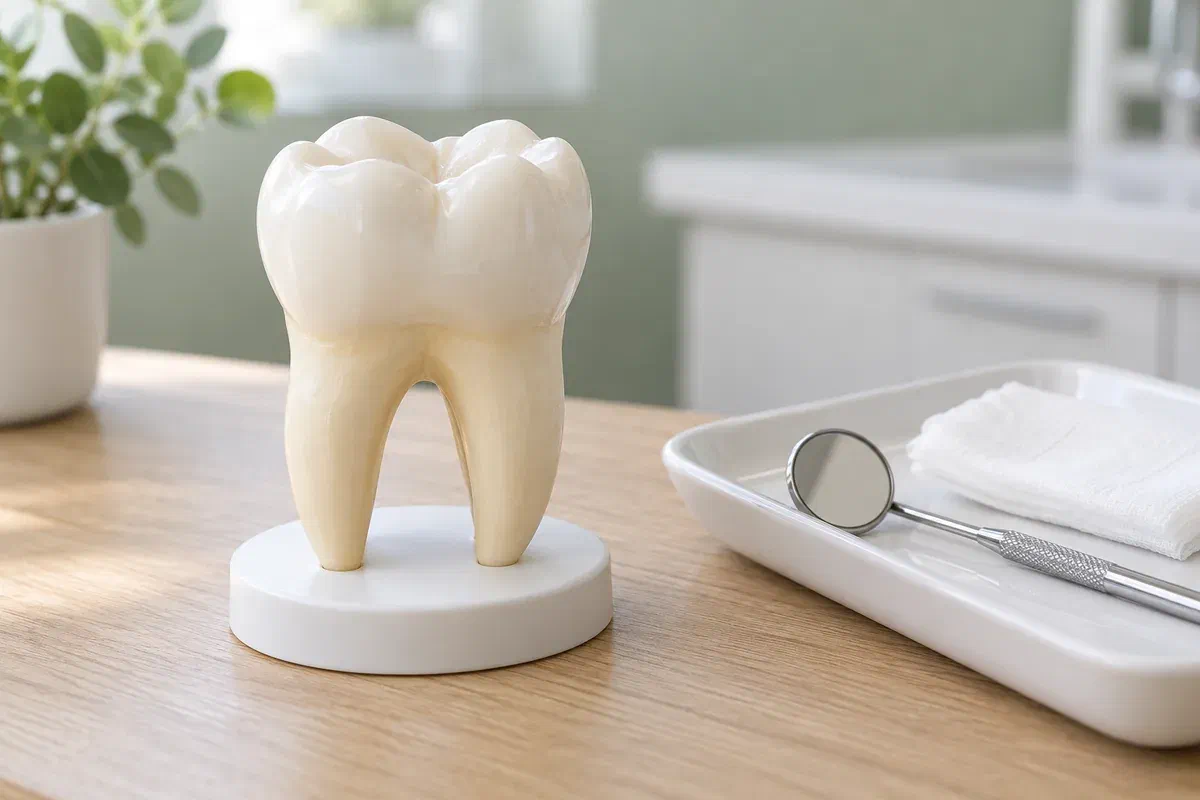
Illustrative two-root molar teaching model beside a dental mirror and gauze
When extraction needs extra access

Clues the clinician looks for on the images.

Examination and appropriate imaging explain why a surgical approach is suggested. Ask your clinician to show you what they see and relate it to your tooth, since methods and risks vary from one extraction to the next.

Only part of the tooth is visible

A tooth may lie partly within gum or bone, or a root may remain after the crown breaks. The clinician considers position and the reason for removal together when deciding how to reach it. Being out of view does not, by itself, mean a tooth has to come out.

Weak structure or roots that resist removal

Extensive decay, fractures and curved or diverging roots can change the technique. Dividing the tooth into sections may be planned in advance. Ask what the clinician expects, and how they would adjust if things look different once the area is exposed.

Anatomy and health considerations

Nerves, the sinus above the upper back teeth, adjacent teeth and the bone around the socket may influence the risks, any referral and even later replacement options. Health conditions and medicines can affect both surgery and healing, so give a full history.

Never stop a blood thinner or other prescription on your own initiative before an extraction. The treating clinician reviews your history and, if instructions need to change, arranges this with your prescribing physician.

Why a joined-up plan helps

Removal and restoration, considered as one journey.

Settling the method, setting and support in advance avoids rushed decisions on the day. Ask your clinician what the assessment showed and why the proposed approach makes sense for this tooth. Risk explanations should be specific to you, giving you something to weigh, rather than a list in which every rare complication seems equally likely.

Planning also covers the space. Sometimes the extraction is one step in a restorative or orthodontic plan; sometimes it simply removes a tooth with no realistic future. Ask whether a replacement such as a bridge, denture or implant might be considered later, whether monitoring is enough, and whether anything should happen before the tooth is removed.

Patient information: Liverpool University Dental Hospital — surgical removal of teeth or roots

Know what the extraction should achieve

Ask what problem removal is meant to solve and why other treatments are less suitable. The clinician should explain the expected benefit and what waiting or declining might lead to. A step that cannot be reversed deserves a discussion based on your real findings.

Arrange comfort that suits you

Talk about local anaesthetic, anxiety, past treatment and whether additional support might help. A surgical approach does not automatically mean general anaesthesia. If a different method or provider is involved, find out about assessment, transport, an escort or special preparation.

Leave with a recovery and restoration timeline

Ask about food, work, activity, medicines and who to contact. Healing varies between procedures and people, and later treatment usually waits until the area has settled. A good plan sets expectations, gives you a contact route and names symptoms that need checking.

How the plan comes together

From the first look to the next stage of care.

Have your questions ready before treatment day, and agree on a signal you can use to stop. Preparation instructions should come from the treating provider and fit both the anaesthetic and your medical needs.

  1. Examine, image and discuss alternatives

    The clinician looks at the tooth, considers suitable imaging and reviews the reason for removal with your health details. Ask about the expected method, notable risks, referral, and whether replacement planning should start now. Confirm what records or treatment are needed first.

  2. Consent and comfort arrangements

    Before you agree, the provider describes the proposed treatment and reasonable alternatives. Local anaesthetic is explained, with any further arrangements assessed as suitable. Let the team know if numbness feels incomplete or you need a break, because sharp pain is a reason to pause.

  3. Access and removal

    The plan and the findings determine whether gum is lifted, bone removed or the tooth sectioned. Pressure, movement and vibration may still be felt with good numbing. The clinician then manages the socket, which may include placing sutures.

  4. Aftercare, review and future planning

    You go home with guidance on bleeding, cleaning, eating, soreness and activity. Ask whether sutures need removing and when the site will be reviewed. Confirm how to reach the team, and when it would be sensible to revisit replacement or other restorative options.

The healing phase

A settled socket is the foundation for whatever comes next.

Your own clinician’s instructions take priority. The extent of surgery, medical history and any special measures may change the advice, so a generic list should not override it.

Leave the socket undisturbed

Avoid touching the area with fingers or tongue. Typical early guidance includes not rinsing or spitting on the first day, then cleaning gently as advised. Be careful with hot food and drinks, and do not bite your cheek or lip while numb.

Follow your guidance on food, activity and medicines

Choose comfortable foods and keep to the advice about exercise, smoking and the site. Use pain relief only as you were advised, within the labelled directions and with your other medicines in mind. Do not use leftover antibiotics or change prescribed medication yourself.

Get in touch if healing is not progressing

Ask for advice about bleeding that persists, worsening or severe pain, swelling that increases, fever or altered sensation. Describe the timing and how it compares with your instructions. A painful socket is not always infected, and increasing symptoms are not automatically expected.

Patient information: UCLH — protecting the site and following extraction aftercare

Looking at the bigger picture

Keeping the tooth, removing it, or bringing in a specialist.

The right choice rests on the diagnosis and the tooth’s realistic prospects. Ask about what each route involves, its limitations, and what leaving the problem alone could mean for the teeth around it.

When retention is a reasonable possibility

Preserving the tooth

Depending on the problem, restorative work, root canal treatment or gum care may be worth considering. Ask about the long-term outlook and what each treatment requires. Not every tooth can be kept, but you should understand why yours can or cannot.

When extraction is advised and the tooth is difficult to reach

Surgical removal as part of a plan

The clinician explains the method, the preparation and how the space will be considered afterwards. Ask what steps to expect and how healing and future treatment fit together. No responsible plan promises a fixed duration or an identical recovery for everyone.

When anatomy, complexity or health needs require more expertise

Referral or a modified approach

Difficult anatomy, specific risks or needs beyond the planned setting may make specialist care appropriate. Find out what the specialist will review and whether interim care is needed. Occasionally the risks alter the removal plan itself, which needs individual assessment.

Questions about life after the extraction

What Georgetown adults ask about the gap and beyond.

Think about how you use that tooth day to day, and bring questions about the space as well as the procedure. Your clinician can explain what is realistic for your mouth.

(905) 876-4488
Do I have to replace a tooth after it is surgically removed?
Not always. Whether replacement is advisable depends on the tooth’s position, how you chew, the neighbouring teeth and your preferences. Some gaps are left and monitored. Ask the clinician what is likely to happen if the space is left.
What replacement options might be discussed later?
Common options include a bridge, a removable partial denture or a dental implant, each with its own requirements and limitations. Suitability depends on your health, bone, gums and neighbouring teeth. These are usually considered once the site has healed.
Can the bone be preserved for a future implant?
In some cases, measures to support the socket may be discussed at the time of extraction. Whether they are appropriate depends on the site and your plans. Ask before the procedure if a future implant is something you are considering.
Will the teeth next to the gap move over time?
Neighbouring and opposing teeth can shift when a space is left, though this varies widely. The clinician can explain how likely it is in your situation and whether monitoring or a replacement would be sensible.
How long should I wait before planning a replacement?
Timing depends on the procedure, your healing and the type of replacement being considered. Ask at your review when it would be reasonable to reassess the site and begin planning.
Is a specialist more likely if I want an implant afterwards?
Not necessarily, but complex anatomy or treatment needs may lead to a referral for the extraction, the implant or both. Ask what the referral would address and how care would be coordinated.
Plan from Georgetown

Talk to us about the extraction and the road after it.

Reach out to Milton Dental Clinic for an extraction assessment or a discussion of a recommendation you already have. Past X-rays are helpful, and so is hearing about your symptoms, medical history and what you would like for the space afterwards.

The approach and the treating provider depend on your own assessment. If symptoms are urgent, please phone without delay.

Visit Milton Dental Clinic
Unit 1, 342 Bronte St. S, Milton, ON L9T 5B7
Get directions Clinic hours
Monday–Thursday
11am–7pm
Friday–Sunday
By appointment only

Areas we serve

  • Milton
  • Oakville
  • Mississauga
  • Georgetown
  • Halton Hills
  • Acton
  • Campbellville
  • Brampton
  • Burlington
  • Puslinch
  • Rockwood
  • Erin
  • Caledon
  • Etobicoke
  • Old Milton
  • Bronte Meadows
  • Timberlea
  • Dorset Park
  • Dempsey
  • Clarke
  • Beaty
  • Coates
  • Harrison
  • Scott
  • Willmott
  • Ford
  • Bowes
  • Cobden
  • Walker
  • Mountain View
  • Milton Heights
  • Hawthorne Village
  • Valley View
  • Fallingbrook
  • Nassagaweya
  • Trafalgar
  • Esquesing
  • Nelson
  • Brookville
  • Moffat
  • Glen Williams
  • Norval
  • Limehouse
  • Stewarttown
  • Ashgrove
  • Hornby
  • Silver Creek
  • Speyside
  • Scotch Block
  • North Oakville
  • River Oaks
  • Glen Abbey
  • West Oak Trails
  • Palermo
  • Bronte Creek
  • College Park
  • Joshua Creek
  • Uptown Core
  • Preserve
  • Iroquois Ridge
  • Lisgar
  • Meadowvale
  • Meadowvale Village
  • Churchill Meadows
  • Erin Mills
  • Central Erin Mills
  • Streetsville
  • East Credit
  • Creditview
  • Heartland
  • Sheridan
  • Mount Pleasant
  • Credit Valley
  • Huttonville
  • Churchville
  • Springbrook
  • Northwest Brampton
  • Bram West
  • Fletcher's Meadow
  • Fletcher's Creek South
  • Alton Village
  • Orchard
  • Millcroft
  • Headon Forest
  • Tansley
  • Brant Hills
  • Tyandaga
  • Kilbride
  • Lowville
  • Aberfoyle
  • Morriston
  • Arkell
  • Hillsburgh
  • Freelton
  • Carlisle
  • Waterdown
  • Flamborough
  • Mountsberg

How can we help?

Milton Dental Clinic

Have a question about your smile? Choose the option that works best for you.

For urgent dental concerns, please call.
Messages are reviewed during clinic hours.