

Illustrative discussion of a planned surgical tooth extraction
Specialized Care

Surgical Tooth Extractions in Puslinch

Not every surgical extraction is best done in a general dental setting, and knowing which ones are is part of good care. From Puslinch, we can assess your tooth, explain why removal is proposed, and tell you honestly whether we can treat it or a specialist referral makes more sense.

Who should do the extraction?

Sometimes the most useful answer is a referral.

People are sometimes surprised to be sent elsewhere after an assessment, as if it means something is seriously wrong. Usually it means the case has been matched to the right setting. A surgical extraction is any removal that needs more than a simple lift: perhaps raising a little gum, removing some surrounding bone, or dividing the tooth into parts. Many can be done in a general practice; some are better handled by an oral surgeon.

Whoever ends up treating you, the earlier question stays the same. Why is the tooth coming out, and could it be kept? Ask what the examination found, what the alternatives are and what each one would mean for you. A referral letter should carry that reasoning with it, rather than replacing the explanation you are owed.

For people in the township of Puslinch, west of Milton, we can provide that first assessment, look at your images and history, and either plan the extraction here or arrange a referral that suits your situation. Tell us about your health, medicines, previous dental experiences and any worries, so wherever treatment happens, you know how preparation, comfort and recovery will be covered.

Book an assessment and find the right setting
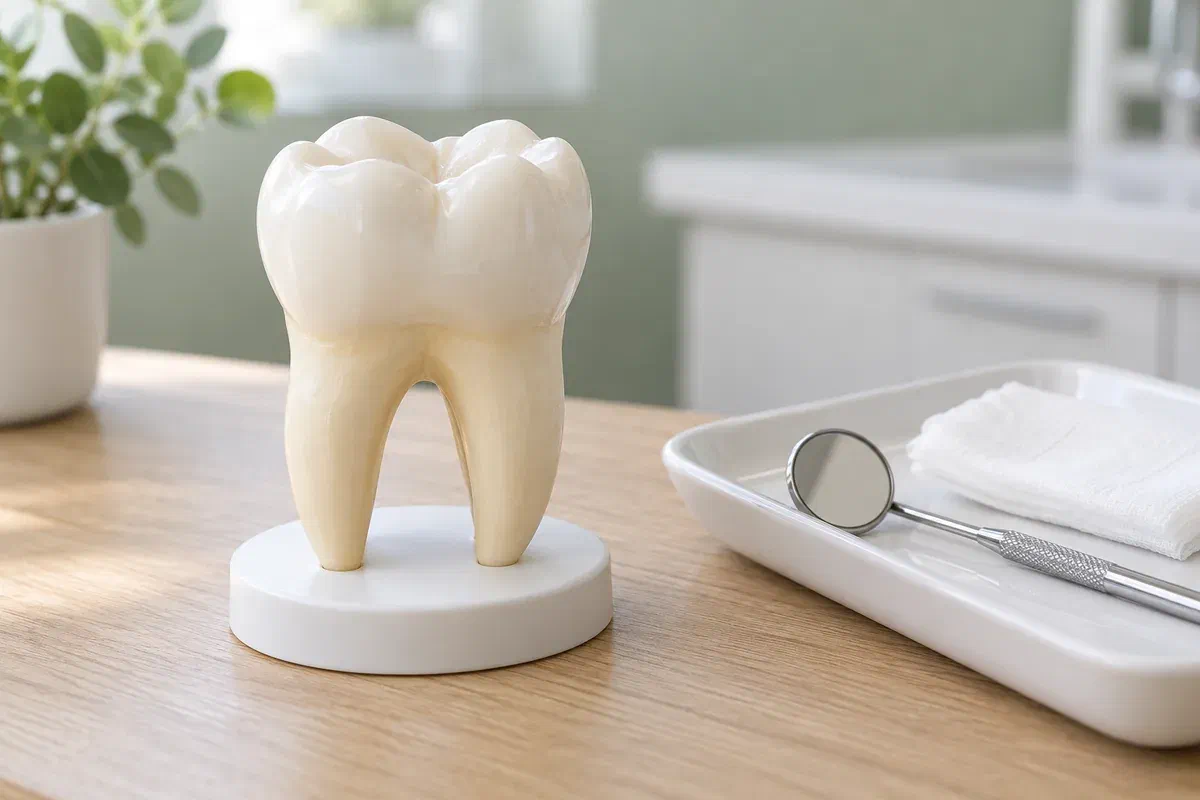
Illustrative two-root molar teaching model beside a dental mirror and gauze
What can tip a case towards a specialist

Complexity is about the tooth, the anatomy and you.

Examination and appropriate imaging show how involved removal is likely to be. Ask the clinician which findings matter most and why, since every surgical extraction has its own sequence and its own set of risks.

Deep position or difficult access

A tooth largely enclosed in bone, or a root sitting well below the gum, may need more extensive access. Where it sits and why it needs removing are considered together. Limited access does not, on its own, prove that extraction is required.

Fragile structure or complicated roots

Heavy breakdown, fracture, or roots that curve, spread or fuse can affect the method. Dividing the tooth is often anticipated. Ask what steps the clinician expects and whether they foresee any chance of the approach changing during treatment.

Proximity to nerves or sinus, or medical needs

A tooth close to a nerve canal or the upper sinus, or alongside particular medical conditions and medicines, may lead to referral. Some comfort needs are also better met in a setting with additional support. Ask which factors are guiding the recommendation in your case.

Please do not stop a blood thinner or other prescribed medicine yourself before seeing a dentist or specialist. Whoever treats you should review your history and coordinate any change with your prescriber.

The value of matching care to complexity

The right hands, the right setting, the right support.

When the technique, setting and support are chosen to fit the case, the procedure is more likely to go as planned. You can ask why a general practice approach is or is not appropriate, and what the referral would add. Risk information should help you decide, and it should reflect your situation rather than presenting every possible complication as equally likely.

The plan should also say what follows. Some extractions belong to a broader restorative or orthodontic treatment plan, while others simply remove a tooth without a future. Ask who will handle any replacement or monitoring, and how information will be shared between the specialist and your regular dental team.

Patient information: Liverpool University Dental Hospital — surgical removal of teeth or roots

Understand why the tooth needs removing

Ask what the extraction is meant to solve and why other options are not suitable or are less appropriate. You should hear about the expected benefit and what delay or refusal might mean. That explanation matters whether the procedure happens here or elsewhere.

Know what each setting can offer for comfort

Discuss local anaesthetic, anxiety and past experiences. A surgical extraction does not automatically mean general anaesthesia, though some specialist settings offer other assessed options. Ask about any separate consultation, transport, escort or preparation requirements before assuming they match a routine visit.

Keep aftercare and follow-up connected

Ask about eating, work, activity, medicines and who to contact after the procedure, especially if a different office is involved. Recovery varies by procedure and by person. You should know which symptoms to report, and to whom, rather than waiting for a scheduled date.

How the pathway works

Assessment, decision on setting, procedure, then shared follow-up.

Ask questions at the assessment and again before the procedure, and agree on a signal to pause. Preparation instructions come from whoever is carrying out the treatment and depend on the anaesthetic and your medical needs.

  1. An assessment that looks at the whole case

    The clinician examines the tooth, considers appropriate imaging and reviews your medical history and the reason for removal. Ask about the expected method, significant risks and whether the case suits this setting. If referral is advised, ask what records will be sent and what to expect next.

  2. Consent with the setting agreed

    Before you consent, the provider explains the planned treatment and reasonable alternatives, including where it will take place. Local anaesthetic and any additional arrangements assessed as suitable are described. Tell the team if you feel sharp pain or need to stop; you should not endure it.

  3. The procedure, here or with a specialist

    Depending on the plan and findings, access may involve raising gum, removing bone or sectioning the tooth. Pressure and vibration can be felt even when you are numb. The site is cared for at the end, and the treating clinician decides on sutures.

  4. Aftercare and communication between offices

    You receive instructions covering bleeding, cleaning, eating, discomfort and activity. Ask about suture removal and whether a review is booked, and where. Confirm who to call with concerns, and how your regular dental team will be updated about the next stage of care.

Recovery wherever you were treated

Follow the plan from the provider who treated you.

Procedure-specific instructions from your treating clinician come first. The extent of surgery, your history and any special measures can change the advice, so a generic sheet should not override what you were told.

Protect the socket in the early hours

Keep your tongue and fingers away from the area. Initial advice commonly asks you not to rinse or spit during the first day, with gentle cleaning starting later. Take care with hot drinks and meals, and avoid biting a lip or cheek that is still numb.

Eat, rest and take medicines as advised

Choose comfortable foods and follow the guidance about exercise, smoking and the site. Take only the pain relief recommended for you, within its directions and with your other medicines in mind. Do not use leftover antibiotics or alter prescribed medication without advice.

Know who to contact with concerns

Seek advice for persistent bleeding, severe or increasing pain, worsening swelling, fever or worries about sensation. If a specialist treated you, they are usually the first call about the surgical site. Explain the timing and what has changed, rather than assuming it is infection or normal healing.

Patient information: UCLH — protecting the site and following extraction aftercare

Which route suits your tooth

Keep it, remove it here, or see a specialist.

The choice depends on the diagnosis, the realistic outlook for the tooth and the complexity involved. Ask what each option means in practice, its limits, and what leaving the problem would lead to.

When keeping the tooth is worth assessing

Treatment that preserves the tooth

Restorative work, root canal treatment, periodontal care or other options may apply, depending on the cause. Ask about the outlook and what treatment would involve. Not every tooth can be saved, but the reasons should be explained before removal is agreed.

When removal is indicated and the case suits this setting

Surgical extraction in a general practice

The clinician sets out the method and preparation required. Ask which steps you can expect and how recovery and any future dental work will be handled. Planning should reflect the tooth and the person, without promising a set duration or a standard recovery.

When anatomy, complexity or health needs call for more expertise

Referral to an oral surgeon or other specialist

Specialist care may be recommended for challenging anatomy, higher risks or needs beyond what a general setting can provide. Ask what the specialist will assess, how long referral may take, and whether you need interim care. Occasionally the overall risks change the removal plan itself.

Questions about referral

What to ask if a specialist is mentioned.

Ask why a referral is or is not being suggested, as well as about access, anaesthetic and recovery. The clinician can explain what applies in your situation.

(905) 876-4488
Does being referred mean my extraction is dangerous?
Not necessarily. Referral usually reflects the expected complexity, the anatomy involved, your medical needs or comfort requirements. It aims to match the procedure with the right expertise and support. Ask what specifically led to the recommendation.
What is the difference between a general dentist and an oral surgeon for extractions?
General dentists carry out many extractions, including some surgical ones. Oral and maxillofacial surgeons have additional specialist training and may offer other settings and anaesthetic options. Which is appropriate depends on the case.
Will my records be sent to the specialist?
With your consent, the referring office usually sends relevant images, notes and medical information. Ask what will be shared and whether you should bring anything else to the specialist appointment.
What should I do while waiting for a specialist appointment?
Ask whether any interim care or pain management is recommended. If symptoms worsen, such as increasing pain or swelling, contact the referring office or seek urgent care rather than waiting for the scheduled date.
Can I choose to have the extraction done here instead of being referred?
You can discuss your preferences, but the recommendation reflects what the clinician judges to be the appropriate setting for your case. Ask about the reasons, and what the risks of proceeding in a different setting would be.
Who handles my follow-up from Puslinch after a specialist extraction?
Usually the specialist manages the surgical site, while your regular dental team handles ongoing care and any replacement planning. Ask both offices how they will communicate and who to call first.
Planning from Puslinch

Find out where your extraction is best done.

Call Milton Dental Clinic to book an assessment or to discuss a recommendation you have already been given. Bring images if you have them, and tell us about current symptoms, medical conditions and anything that concerns you about treatment.

Setting, approach and treating provider are decided by individual assessment. Call promptly about urgent symptoms.

Visit Milton Dental Clinic
Unit 1, 342 Bronte St. S, Milton, ON L9T 5B7
Get directions Clinic hours
Monday–Thursday
11am–7pm
Friday–Sunday
By appointment only

Areas we serve

  • Milton
  • Oakville
  • Mississauga
  • Georgetown
  • Halton Hills
  • Acton
  • Campbellville
  • Brampton
  • Burlington
  • Puslinch
  • Rockwood
  • Erin
  • Caledon
  • Etobicoke
  • Old Milton
  • Bronte Meadows
  • Timberlea
  • Dorset Park
  • Dempsey
  • Clarke
  • Beaty
  • Coates
  • Harrison
  • Scott
  • Willmott
  • Ford
  • Bowes
  • Cobden
  • Walker
  • Mountain View
  • Milton Heights
  • Hawthorne Village
  • Valley View
  • Fallingbrook
  • Nassagaweya
  • Trafalgar
  • Esquesing
  • Nelson
  • Brookville
  • Moffat
  • Glen Williams
  • Norval
  • Limehouse
  • Stewarttown
  • Ashgrove
  • Hornby
  • Silver Creek
  • Speyside
  • Scotch Block
  • North Oakville
  • River Oaks
  • Glen Abbey
  • West Oak Trails
  • Palermo
  • Bronte Creek
  • College Park
  • Joshua Creek
  • Uptown Core
  • Preserve
  • Iroquois Ridge
  • Lisgar
  • Meadowvale
  • Meadowvale Village
  • Churchill Meadows
  • Erin Mills
  • Central Erin Mills
  • Streetsville
  • East Credit
  • Creditview
  • Heartland
  • Sheridan
  • Mount Pleasant
  • Credit Valley
  • Huttonville
  • Churchville
  • Springbrook
  • Northwest Brampton
  • Bram West
  • Fletcher's Meadow
  • Fletcher's Creek South
  • Alton Village
  • Orchard
  • Millcroft
  • Headon Forest
  • Tansley
  • Brant Hills
  • Tyandaga
  • Kilbride
  • Lowville
  • Aberfoyle
  • Morriston
  • Arkell
  • Hillsburgh
  • Freelton
  • Carlisle
  • Waterdown
  • Flamborough
  • Mountsberg

How can we help?

Milton Dental Clinic

Have a question about your smile? Choose the option that works best for you.

For urgent dental concerns, please call.
Messages are reviewed during clinic hours.