
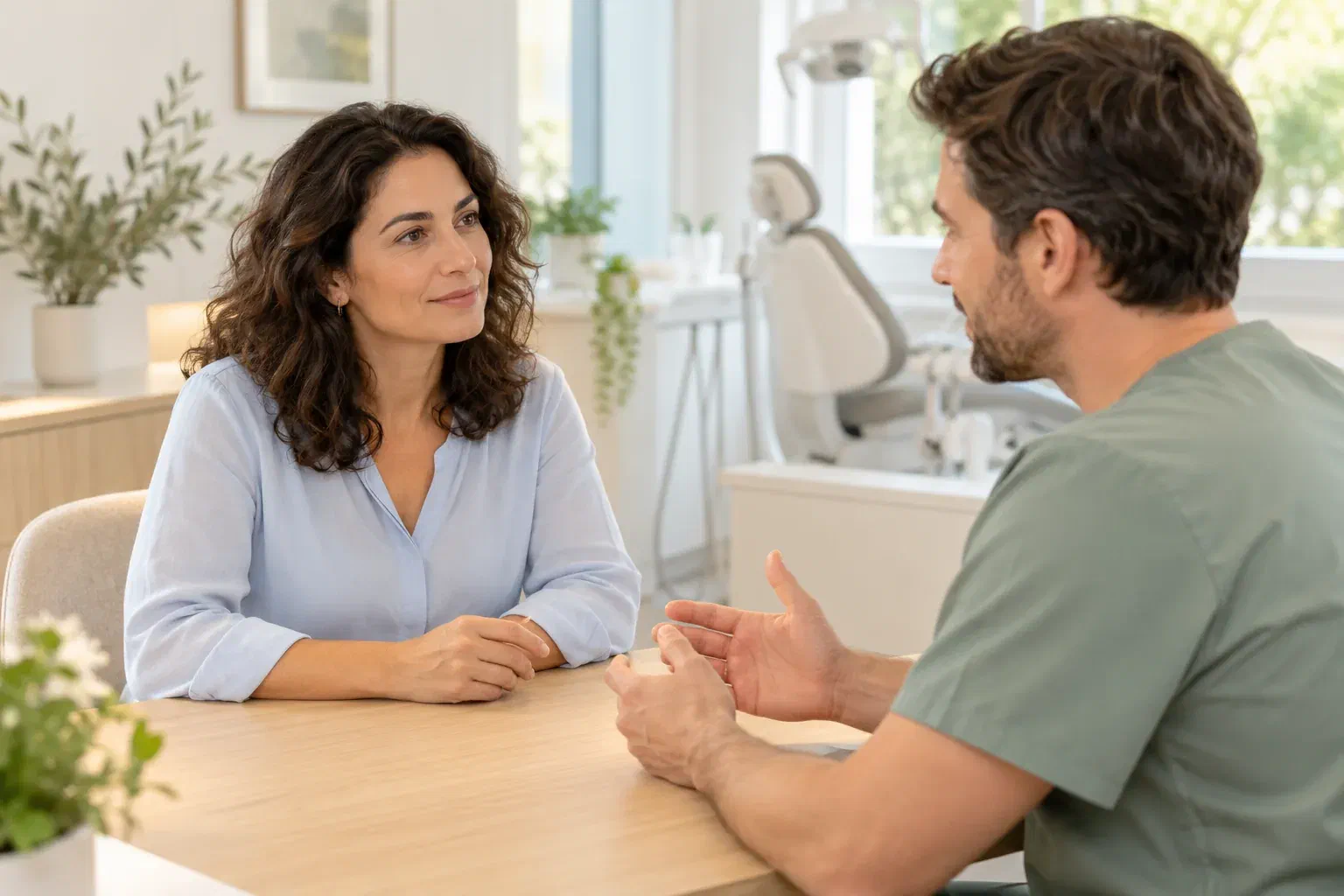

Illustrative discussion about daytime jaw tension and teeth clenching
Specialized Care

Teeth-Clenching Treatment in Georgetown

Gum at your desk, a pen between your teeth, a jaw that tightens on a long call: small habits can sit alongside clenching and make a tired jaw feel worse. From Georgetown, talk with us about what aggravates yours and what an exam shows.

Everyday habits and a clenching jaw

Sometimes the clue is in what you chew.

It's common to work a piece of gum for hours, chew a pen cap in meetings or bite your nails during a tense show, and then wonder why the jaw is sore by evening. Habits like these can keep the chewing muscles busy on top of clenching itself. Clenching is the act of holding the teeth tightly together, typically without grinding's side-to-side motion. It can happen while you're awake or asleep, and a lot of it passes without notice.

Even so, a sore jaw has several possible causes. Tooth trouble, a jaw-joint disorder and overworked muscles can feel remarkably similar, so it's sensible to be examined before changing much. We'll look at your pattern, check for damage or another condition that needs separate attention, and suggest realistic ways to take load off your teeth and protect them where that's warranted.

Mention the habits you're aware of, even ones that feel trivial. Bring any guard you have, plus a list of medicines, sleep concerns and earlier advice. You may not need an appliance, and no device can be counted on to end clenching permanently.

Ask about habits and jaw tension
Illustrative calm desk with a notebook and blank reminder note for discussing daytime habits
Spotting what adds to the strain

The moments, the soreness and the teeth.

There's no need to log every bite. A rough idea of when symptoms appear, what habits come before them and what brings relief gives the dentist a practical starting point.

Clenching or chewing while you concentrate

Notice whether your teeth press together, or you reach for gum, during focused work, reading or driving. Can you relax once you notice? Does the jaw ache later? We can talk through simple awareness ideas, and none of these habits is a reason for embarrassment.

A jaw that tires quickly or aches after meals

Say whether soreness is worst on waking, builds over the day or comes on with chewing. Clicking, catching or difficulty opening wide should be mentioned too, because jaw pain doesn't always stem from clenching. Another condition may need to be assessed, sometimes elsewhere, before you settle on a plan.

Sensitive or chipped teeth, or a repair that won't last

Point out the tooth and what triggers the twinge. Pressure or habits might be involved, yet a cavity or a hairline crack could just as easily be the reason. Please have a painful tooth looked at promptly rather than assuming the gum or the clenching explains it.

If your mouth suddenly won't open or close properly, if you notice obvious swelling, or if a tooth becomes severely painful, contact us straight away. Urgent symptoms come before any ongoing clenching plan.

What a Georgetown plan can target

Calm the habits, protect the teeth, track the change.

It helps to separate the goals. Cutting back on habits that keep the jaw working is one. Reducing daytime tooth contact is another, and protecting a tooth or repair that's at risk is a third. Persistent jaw pain may be yet another issue. Ask which of these a suggestion is designed for and how you'll judge it.

The improvement people notice is usually practical: an evening jaw that feels less tired, easier chewing, or less new wear at a later check. That's different from clenching stopping completely, which can't be promised. Tell us which changes are realistic for you and what you've tried, so the plan can be measured against your own experience and the dentist's findings, then revised.

Patient information: NIDCR — clenching, grinding, assessment, and management options

A light nudge to notice your teeth

For awake clenching, the dentist may suggest an occasional pause to check whether your teeth are touching and let them drift apart. Think of it as a passing reminder, not a test you have to pass all day or a set of hard exercises. If it makes you more tense, say so and the advice can change.

A guard if teeth need shielding

When teeth or restorations are at risk, a properly assessed appliance might be suggested. Ask about its role and limits, what a good fit feels like and when it should be reviewed. Wearing one won't guarantee clenching stops, and any guard that causes pain needs another look.

Other factors given a fair hearing

Sleep, medicines, daily routines and stress can all be explored without pinning everything on one. Another dental or medical opinion may help. If symptoms don't fit the first explanation or don't ease, the plan should leave room to look for a different cause.

What the visit involves

Talk, examine, choose, follow up.

Bring your guard if you have one and tell us about anything you've tried, useful or not. The appointment is about telling apart likely clenching, real damage, and any jaw condition that deserves its own care.

  1. Describe your habits and symptoms

    Tell us when discomfort appears, what you're usually doing, which habits you've noticed, anything seen while you sleep and how eating is affected. Include health conditions and medicine changes. You won't be expected to account for what happens overnight.

  2. A careful examination

    The dentist checks teeth and restorations for relevant damage and examines tender or tired areas where appropriate. A tooth might need extra tests. Ask which conclusions the findings support and what's uncertain, as a worn surface or sore muscle isn't proof of a single cause.

  3. Agree on gentle starting steps

    This may include awareness, cutting back on aggravating habits, avoiding needless load, and whether a guard or another opinion is sensible. Any repair is discussed separately. Ask about purpose, limits and alternatives before agreeing to anything that would permanently change your teeth or bite.

  4. Check back in

    Agree on what to watch and when to return. If advice is hard to follow or an appliance feels wrong, let us know. Symptoms that persist or change may need reassessment or referral, not just more of the same.

Small swaps at home and work

Give your jaw fewer jobs to do.

Use the advice tailored to your findings. The idea is to cut out unnecessary strain and get to know your symptoms, not to swap one habit for a new one of constantly checking or exercising your jaw.

Catch the clench, then let go

A quiet prompt linked to a routine moment, such as when you reach for a drink, may help you notice teeth held together. Let them separate and rest without forcing the jaw. Tell us what helps, and don't keep any reminder that starts to feel exhausting.

Rethink the gum, pens and nails

If chewing gum, biting objects or nails, or long sessions of tough chewing aggravate your jaw, mention it. Ask what short-term changes make sense and when you can ease back. Hold off on vigorous jaw exercises or stretches unless guided, particularly if the jaw is painful or locks.

Treat any appliance with care

Follow the wearing, cleaning and storage advice you were given. Don't trim or reshape it, and resist wearing it longer than recommended. If it hurts, take it out, set it aside and call the provider who made it so its fit and role can be reassessed.

Care options

Habits, damage and pain each get their own answer.

Ask why any option is being suggested and how it will be reviewed. Good management starts with assessment and moderate steps, not the assumption that clenching needs a permanent change to your bite.

When daytime habits are adding to the load

Self-management and habit changes

A personal plan could include noticing tooth contact, reducing gum chewing or other aggravating habits, and discussing stress or sleep if relevant. Choose a few steps that fit your days. These measures support comfort and function; they don't suggest your pain is imagined, and less stress alone won't settle every case.

If a tooth or repair shows damage

Protecting and repairing teeth

Sometimes the job is physical: shielding enamel or fillings with an appliance, and rebuilding a chipped or cracked tooth through restorative treatment. Those are two different pieces of work, so ask which one answers which concern. Fixing the tooth leaves the habit untouched, and owning a guard is no excuse to ignore a tooth that still aches.

When symptoms persist despite simple changes

A broader review

If cutting back on gum and noticing the clench hasn't helped, or the jaw keeps catching, or sleep and general health seem involved, another provider's view may be needed. Be clear on what that visit should find out. Treat any offer to grind down teeth or rebuild the bite as a fix for jaw pain warily, unless the reasoning holds up and gentler care came first.

Patient information: NIDCR — conservative care and the limits of bite-changing treatment for TMD

Georgetown clenching questions

Habits, chewing and a tired jaw.

Everyday habits often come up when people talk about clenching. Ask about what you chew, what you notice during the day and whether anything else should be checked.

(905) 876-4488
Should I stop chewing gum if my jaw feels sore?
It may be worth cutting back for a while if gum seems to make things worse. Tell the dentist how it affects you, and ask what temporary changes suit your situation before deciding.
Can biting pens or nails add to clenching symptoms?
Habits that keep the jaw working may aggravate soreness for some people. Mention any you’re aware of. The dentist can talk about practical changes without treating the habit as a failing.
Would chewing more help build up a weak jaw?
Not necessarily. Extra chewing can aggravate symptoms for some people, and a tired or painful jaw doesn’t simply need more exercise. Ask for guidance before starting any strengthening routine.
Is it clenching if I only notice it while driving or working?
Quite possibly. Awake clenching often shows up during focused tasks. Awareness strategies can be useful for this kind of pattern. Describe when it happens so the dentist can tailor the advice.
Can tough foods make clenching discomfort worse?
Long or forceful chewing can aggravate a sore jaw in some people. Ask whether temporary changes to what you eat make sense, and how to return to your normal diet as symptoms allow.
Does tooth wear mean I'm clenching right now?
Not necessarily. Wear can build up over years and have several causes, and jaw symptoms can come from different conditions. The dentist considers wear alongside your history and examination before drawing conclusions.
Visiting from Georgetown

Bring the habits you've noticed, big or small.

Get in touch with Milton Dental Clinic about clenching, a jaw that tires easily or habits you think may be adding strain. Tell us when it bothers you most and whether you have a guard, and we'll set up an assessment and practical advice.

What we suggest depends on what the exam turns up: perhaps a few habit swaps, perhaps a guard, perhaps a second opinion.

Visit Milton Dental Clinic
Unit 1, 342 Bronte St. S, Milton, ON L9T 5B7
Get directions Clinic hours
Monday–Thursday
11am–7pm
Friday–Sunday
By appointment only

Areas we serve

  • Milton
  • Oakville
  • Mississauga
  • Georgetown
  • Halton Hills
  • Acton
  • Campbellville
  • Brampton
  • Burlington
  • Puslinch
  • Rockwood
  • Erin
  • Caledon
  • Etobicoke
  • Old Milton
  • Bronte Meadows
  • Timberlea
  • Dorset Park
  • Dempsey
  • Clarke
  • Beaty
  • Coates
  • Harrison
  • Scott
  • Willmott
  • Ford
  • Bowes
  • Cobden
  • Walker
  • Mountain View
  • Milton Heights
  • Hawthorne Village
  • Valley View
  • Fallingbrook
  • Nassagaweya
  • Trafalgar
  • Esquesing
  • Nelson
  • Brookville
  • Moffat
  • Glen Williams
  • Norval
  • Limehouse
  • Stewarttown
  • Ashgrove
  • Hornby
  • Silver Creek
  • Speyside
  • Scotch Block
  • North Oakville
  • River Oaks
  • Glen Abbey
  • West Oak Trails
  • Palermo
  • Bronte Creek
  • College Park
  • Joshua Creek
  • Uptown Core
  • Preserve
  • Iroquois Ridge
  • Lisgar
  • Meadowvale
  • Meadowvale Village
  • Churchill Meadows
  • Erin Mills
  • Central Erin Mills
  • Streetsville
  • East Credit
  • Creditview
  • Heartland
  • Sheridan
  • Mount Pleasant
  • Credit Valley
  • Huttonville
  • Churchville
  • Springbrook
  • Northwest Brampton
  • Bram West
  • Fletcher's Meadow
  • Fletcher's Creek South
  • Alton Village
  • Orchard
  • Millcroft
  • Headon Forest
  • Tansley
  • Brant Hills
  • Tyandaga
  • Kilbride
  • Lowville
  • Aberfoyle
  • Morriston
  • Arkell
  • Hillsburgh
  • Freelton
  • Carlisle
  • Waterdown
  • Flamborough
  • Mountsberg

How can we help?

Milton Dental Clinic

Have a question about your smile? Choose the option that works best for you.

For urgent dental concerns, please call.
Messages are reviewed during clinic hours.