
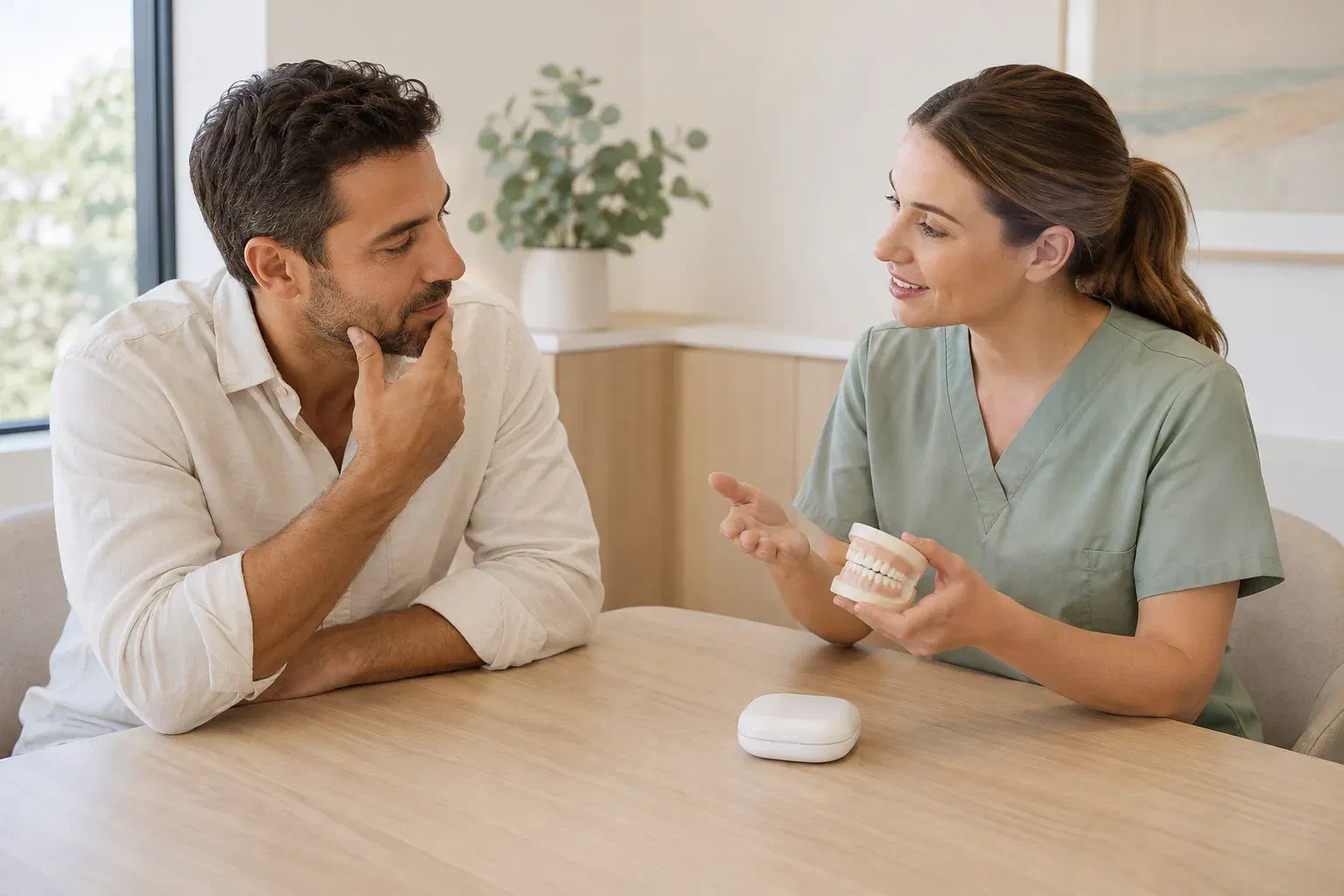
Illustrative consultation about teeth grinding and possible tooth wear
Specialized Care

Teeth-Grinding Treatment in Erin

Most grinding care happens at home, at bedtime and in the quiet moments of the day when the jaw tightens. For adults in Erin and Hillsburgh, we assess what your teeth show, then help you build a home routine that is realistic and worth keeping.

Grinding at home, from Erin

The appointment is an hour. The routine is every night.

A plan for grinding only helps if it fits the way you actually live. A guard that sits in the bathroom drawer protects nothing, and daytime advice that is too fiddly to remember fades within a week. Grinding and clenching, grouped by dentists as bruxism, can happen asleep or awake, so home habits often matter as much as anything done in the chair.

The routine should still rest on a proper assessment. Tooth wear has many causes besides grinding, and a flat surface from years ago says nothing certain about this month. The dentist considers your history, how you feel now and what the examination shows, then explains whether watching, protecting, repairing or a further opinion makes most sense.

Tell us honestly what you will and will not manage at home. If you have tried a guard before and stopped wearing it, say why, and bring it with you. We would rather build a plan you can keep than one that looks ideal on paper, and we will not suggest that any appliance or habit will make grinding vanish for good.

Plan grinding care you can keep up at home
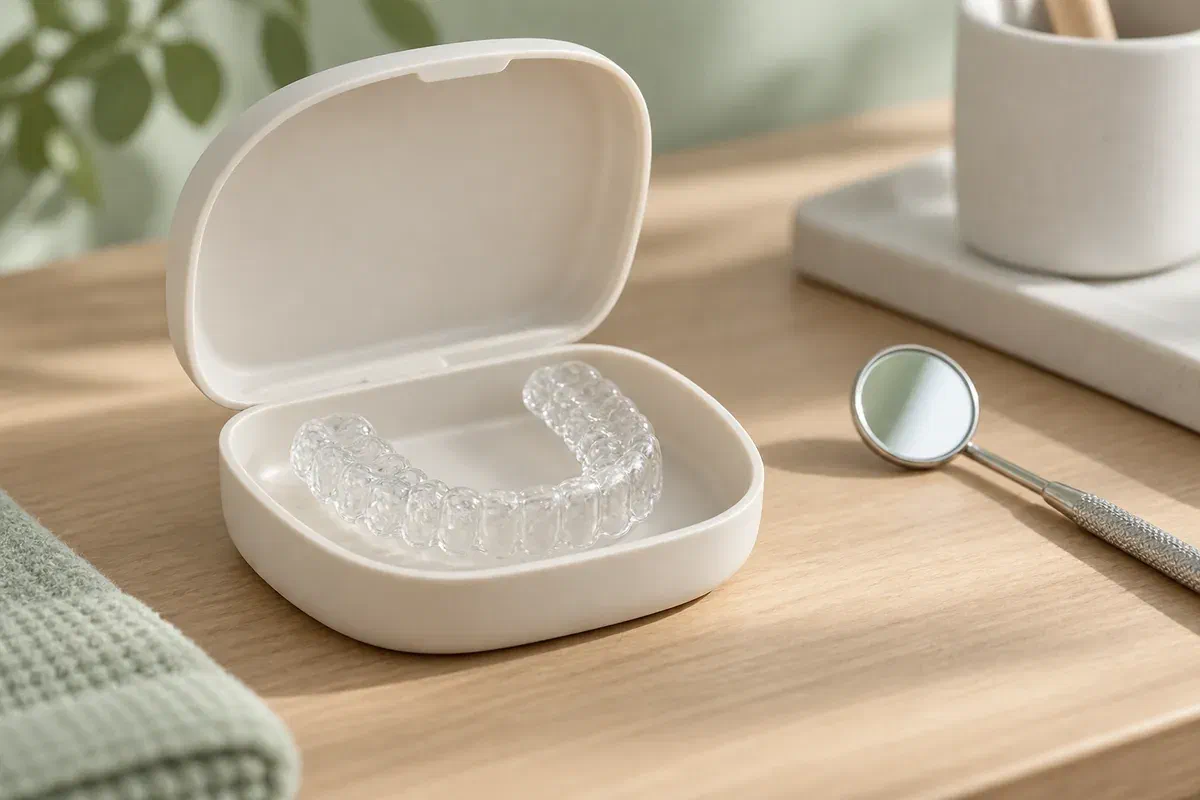
Illustrative single-arch clear dental nightguard in a protective case
Everyday signs

Things you might notice around the house

Small observations count. A sore jaw over morning coffee or a comment at breakfast is enough to start a conversation; you do not need a diary or a recording.

A comment about grinding sounds overnight

Pass on what was heard and how often, along with anything else about your sleep. The report helps but cannot measure tooth damage or name the cause. If snoring, breathing pauses or real trouble staying awake in the day are part of the picture, mention them so a doctor's opinion can be discussed.

Teeth that ache at breakfast or edges that feel rough

Note whether it is new, whether it hurts to chew and how long it lasts. Several things wear enamel, and the dentist considers them all. If one tooth aches on its own, it may need specific tests rather than being put down to a restless night.

A guard you stopped wearing, or one that broke

Many people abandon a guard because it felt bulky, loose or sore. Bring it in, along with details of any fillings that keep chipping. The device and your teeth are best reviewed together, and a problem with either does not automatically call for something stronger.

Do not save urgent problems for a routine visit. If a tooth snaps or splits, pain becomes hard to manage, your face or gums swell, or the jaw suddenly locks or shifts, give us a prompt call.

Why a realistic routine matters

Care that fits your evenings and your workday

A good plan gives each part a clear job. A guard may protect teeth through the night, a damaged tooth may need a repair, and daytime clenching may respond best to a few simple cues. Knowing which finding each step answers makes it easier to stick with the parts that matter most.

Success is measured in the long run. Whether you can wear an appliance comfortably most nights, whether jaw soreness eases and whether surfaces hold steady across visits tell far more than a single quiet night or a scratch on the plastic.

Patient information: NIDCR — bruxism assessment and management

Track whether wear is still changing

Earlier records or photos can help the dentist read today's surfaces, and other causes of wear are considered as well. Ask what will be watched between visits and what would justify treatment, rather than assuming every worn tooth needs immediate work.

Choose a guard you will actually wear

If protection is advised, talk about comfort and coverage as well as purpose and limits. The guard should be fitted clinically and adjusted if it bothers you, since an uncomfortable one tends to end up unused. Sports guards, retainers and sleep-apnea devices serve other purposes and are not substitutes.

Fit habits around real life

Sleep, stress, routines and medicines may be relevant, and none of them means you are to blame. We can suggest small changes that fit your day. If something falls outside dentistry, we may recommend speaking with your physician.

Your visit

Assess first, then build the home plan together.

Bring any guard you have, including one you gave up on. The first appointment clarifies findings and choices, then turns them into something you can do at home.

  1. Talk about your days and nights

    We ask about grinding sounds, when discomfort appears, how your teeth or dental work have changed, and what your routine looks like. Medicines and sleep are part of the discussion. Not knowing whether you grind at night is fine and is weighed with the examination.

  2. Examine teeth, dental work and jaw

    The dentist looks for wear, cracks and sensitivity, and checks the jaw muscles and joints. Some teeth may need extra tests, and X-rays or notes from earlier visits can reveal whether anything has moved on. You should hear what the findings point to and whether another cause could explain them.

  3. Agree on a plan that suits home life

    Some people leave with a handful of habits and a review date; others with an impression taken for a guard, a repair booked, or a note to see their doctor. Ask what each part should achieve and where it falls short, and be frank about what you can maintain. A more elaborate plan is not automatically better, especially if it will not survive a busy week.

  4. Check in and adjust

    Follow-up looks at your teeth, your symptoms and any appliance. Tell us how the routine has gone, including what has slipped. Persistent problems lead to a fresh look at the plan rather than a series of replacement guards.

The home routine

Night, morning and the moments in between

What you do at home depends on what was found and what was provided. If instructions from an earlier dentist or a guard's packaging differ from ours, ask which to follow.

Night and morning guard care

Put the guard in at bedtime as advised. In the morning, rinse it, clean it the way you were shown and let it dry in its ventilated case, out of reach of pets and away from sunny windowsills or hot water. Bring it to reviews. If it cracks, warps or hurts, stop wearing it and call.

Small daytime reminders

Pick a few everyday cues, such as boiling the kettle or stopping at a red light, to check whether your teeth are pressed together. If they are, let them part and soften the jaw. Avoid grinding on purpose to feel worn edges, and tell us if the reminder is not working.

Keep track of changes worth reporting

New tooth pain, a chip, poorer sleep or a medicine that seems linked are all worth a call. Do not stop a prescription without your prescriber. If another clinician is involved, we can discuss what should be passed along.

Options for Erin households

Which plan will you keep?

Ask what each reasonable choice involves, including monitoring. No one should claim that reshaping your teeth is a reliable way to end grinding.

When symptoms are mild and wear looks stable

Habits and monitoring

A few daytime cues and a scheduled review are often enough to start, and there is no device to look after or forget on a busy night. Ask what the dentist will compare next time, and what would lead to a guard or treatment instead.

When teeth or restorations need protecting or fixing

A comfortable guard and targeted repair

A well-fitted guard you can tolerate may help protect surfaces at night, and a damaged tooth may be treated separately. Ask about the purpose and routine for each. Repairing a tooth does not show the grinding has eased.

When symptoms persist despite a good routine

More assessment if things do not settle

Sometimes a sensible routine is followed faithfully and the jaw still aches, a tooth stays tender, sleep stays poor or a medicine seems to be involved. That is when another dental or medical opinion earns its place. Be clear on what it is meant to answer, and leave heavier appliances or permanent bite changes until it has.

Patient information: NHS — when to seek review for teeth grinding

Home-care questions from Erin

Living with a grinding plan day to day

Bring your questions about the routine as well as the teeth. These answers aim to separate realistic care from promises that cannot be kept.

(905) 876-4488
How should I clean my nightguard?
Follow the method you were given at fitting, which usually involves rinsing and gentle cleaning. Avoid hot water and harsh products unless advised. If you are unsure, bring the guard to your next visit and ask.
What if I keep taking my guard out in my sleep?
It is a common problem and worth mentioning. The fit, comfort or design may need checking. Do not trim or reshape it yourself; bring it in so the dentist can assess it.
Can I just skip the guard on nights I feel relaxed?
Grinding is hard to predict from how you feel. Ask the dentist how often your guard is meant to be worn and what to do if you miss nights.
Do daytime reminders really help with clenching?
For many people, noticing when the teeth are pressed together and letting them part can reduce daytime pressure. It takes practice. Tell us if it is not working so another approach can be tried.
My guard smells or looks cloudy. Is it still safe to use?
Clean it as instructed and bring it to your next visit. Discolouration or odour can mean it needs better cleaning or replacing. If it is cracked or rough, stop wearing it until it is checked.
Is it worth the trip if I only grind occasionally?
Often, yes. An examination shows whether your teeth need protection or simple monitoring. If you are coming from Erin, ask about combining the visit with other dental care to make the trip more efficient.
Grinding care for Erin

Let us help you build a routine you will keep.

Contact Milton Dental Clinic about grinding sounds, morning jaw soreness or a guard that has been gathering dust. If you have pain or a recent break, say so when you call and we will decide how soon to see you.

The plan depends on the examination and may involve habits, monitoring, a fitted guard, dental treatment or referral.

Visit Milton Dental Clinic
Unit 1, 342 Bronte St. S, Milton, ON L9T 5B7
Get directions Clinic hours
Monday–Thursday
11am–7pm
Friday–Sunday
By appointment only

Areas we serve

  • Milton
  • Oakville
  • Mississauga
  • Georgetown
  • Halton Hills
  • Acton
  • Campbellville
  • Brampton
  • Burlington
  • Puslinch
  • Rockwood
  • Erin
  • Caledon
  • Etobicoke
  • Old Milton
  • Bronte Meadows
  • Timberlea
  • Dorset Park
  • Dempsey
  • Clarke
  • Beaty
  • Coates
  • Harrison
  • Scott
  • Willmott
  • Ford
  • Bowes
  • Cobden
  • Walker
  • Mountain View
  • Milton Heights
  • Hawthorne Village
  • Valley View
  • Fallingbrook
  • Nassagaweya
  • Trafalgar
  • Esquesing
  • Nelson
  • Brookville
  • Moffat
  • Glen Williams
  • Norval
  • Limehouse
  • Stewarttown
  • Ashgrove
  • Hornby
  • Silver Creek
  • Speyside
  • Scotch Block
  • North Oakville
  • River Oaks
  • Glen Abbey
  • West Oak Trails
  • Palermo
  • Bronte Creek
  • College Park
  • Joshua Creek
  • Uptown Core
  • Preserve
  • Iroquois Ridge
  • Lisgar
  • Meadowvale
  • Meadowvale Village
  • Churchill Meadows
  • Erin Mills
  • Central Erin Mills
  • Streetsville
  • East Credit
  • Creditview
  • Heartland
  • Sheridan
  • Mount Pleasant
  • Credit Valley
  • Huttonville
  • Churchville
  • Springbrook
  • Northwest Brampton
  • Bram West
  • Fletcher's Meadow
  • Fletcher's Creek South
  • Alton Village
  • Orchard
  • Millcroft
  • Headon Forest
  • Tansley
  • Brant Hills
  • Tyandaga
  • Kilbride
  • Lowville
  • Aberfoyle
  • Morriston
  • Arkell
  • Hillsburgh
  • Freelton
  • Carlisle
  • Waterdown
  • Flamborough
  • Mountsberg

How can we help?

Milton Dental Clinic

Have a question about your smile? Choose the option that works best for you.

For urgent dental concerns, please call.
Messages are reviewed during clinic hours.