
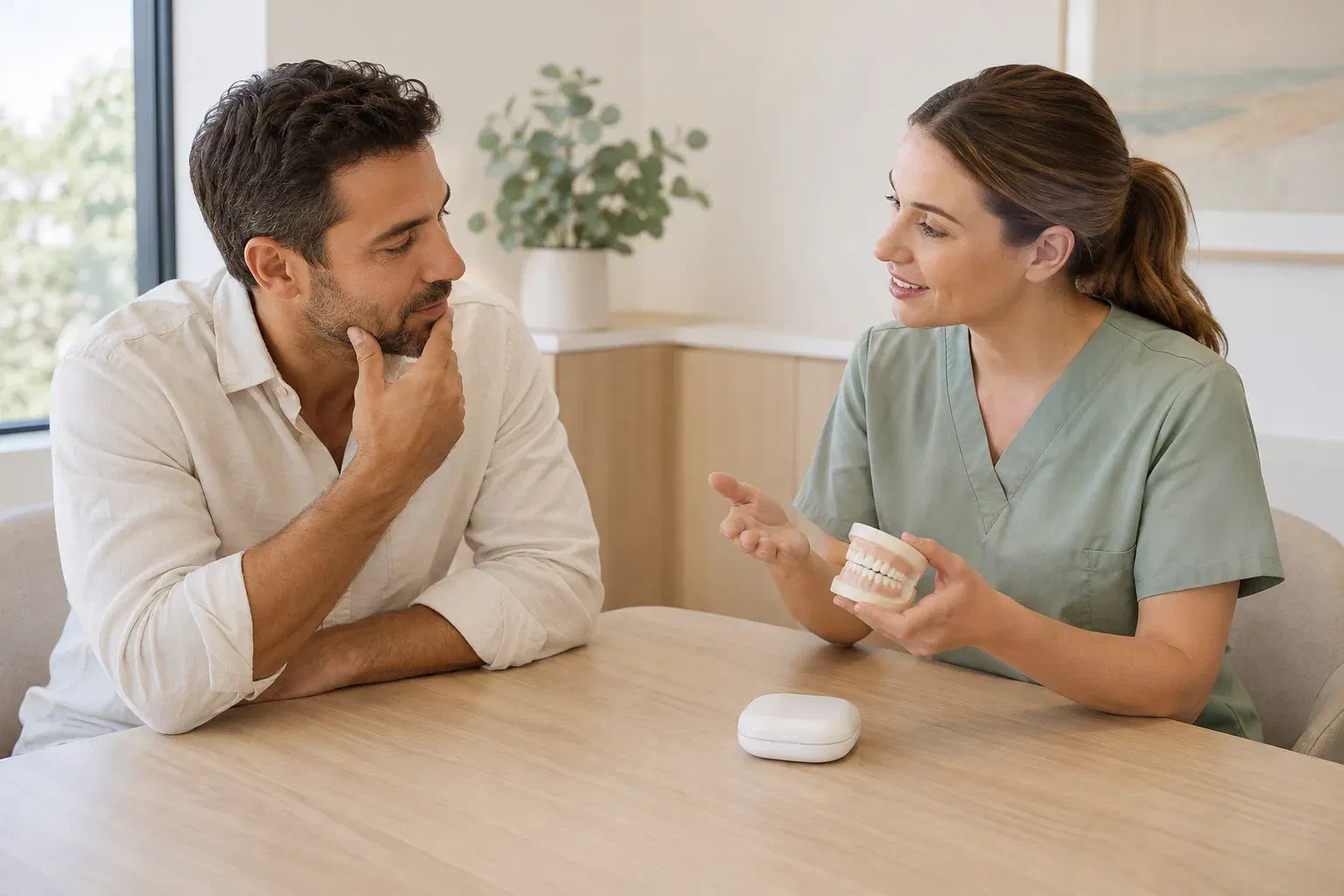
Illustrative consultation about teeth grinding and possible tooth wear
Specialized Care

Teeth-Grinding Treatment in Old Milton

Old fillings that crack again, a crown that loosened, or a guard from years ago that no longer feels right can all point back to grinding. Our Bronte Street practice sits near Old Milton, where we review your history and the teeth themselves before recommending anything.

Old Milton and long dental histories

When the same filling breaks twice, the pattern deserves a closer look.

Someone who has lived in Milton's historic downtown for decades may carry a mouth full of dental history: crowns from one era, fillings from another, perhaps a nightguard that went into a drawer long ago. When repairs start failing more often, grinding is one of the questions worth asking. Dentists describe it, along with clenching, as bruxism, and it can happen while asleep or awake.

Repeated breakage does not prove grinding on its own. Restorations age, teeth change, and wear can have several sources. An edge that looks flat today may have reached that shape long before the current concern. That is why the dentist puts your history, present symptoms and the examination side by side before talking about watching, protecting, repairing or referring.

Tell us which teeth have needed repeated attention and roughly when. Mention any guard you were given in the past and bring it if you still have it, even if it no longer fits. A plan should have a stated purpose, such as protecting a vulnerable restoration or checking a lingering ache, and it should never promise that an appliance will switch the habit off.

Review repeated dental repairs and grinding
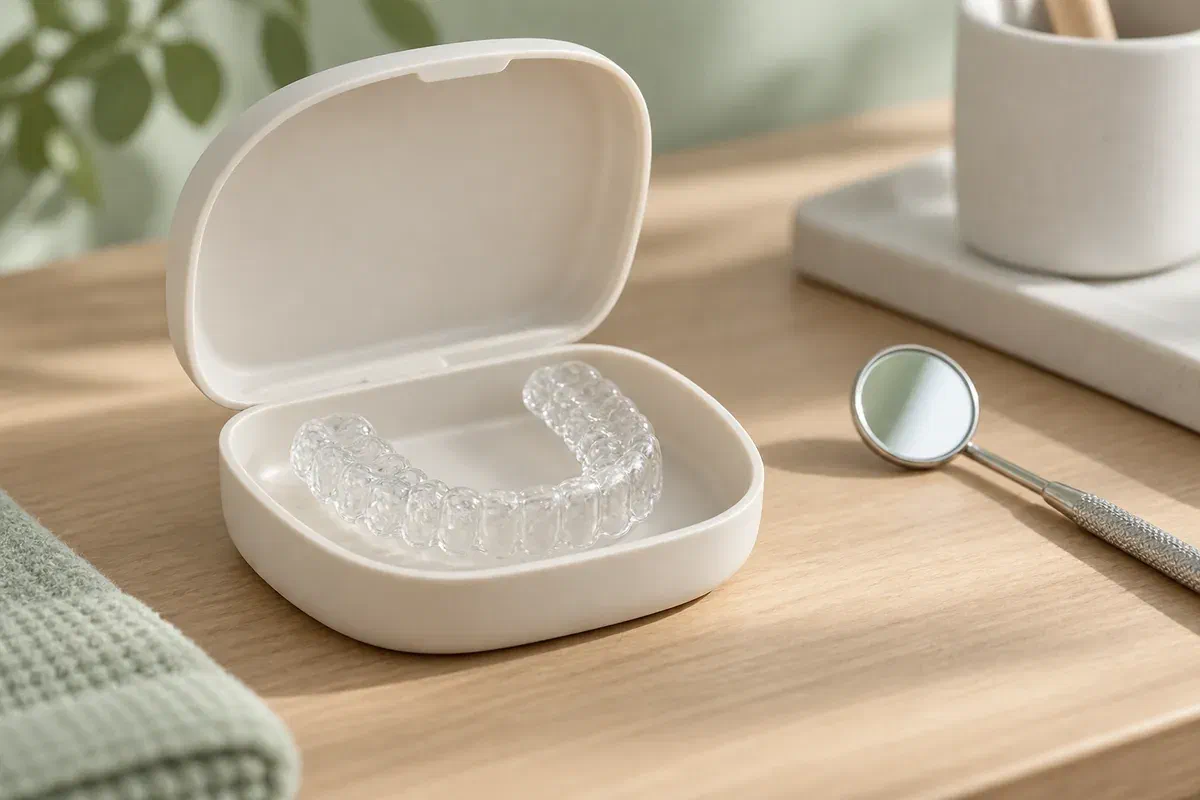
Illustrative single-arch clear dental nightguard in a protective case
What tends to prompt a visit

Three common starting points

Any one of these is reason enough to ask. You do not need proof that grinding happens every night, only a description of what you or someone close to you has noticed.

A spouse mentions noises while you sleep

Pass along what was heard and how often, plus anything else about your sleep that concerns you. The account is useful background but cannot measure tooth damage or explain every cause. Snoring, gaps in breathing and persistent daytime drowsiness should be mentioned so a medical review can be suggested if appropriate.

Teeth that feel rougher, shorter or more sensitive

Describe when you first noticed the change, whether it hurts and whether it affects meals. Several things besides grinding can wear enamel, and the dentist considers each of them. A sensitive tooth may need its own tests, so try not to assume it is only the after-effect of a restless night.

Crowns, fillings or an old guard that keep failing

List the restorations that have chipped or come loose and bring any guard, worn or cracked. Looking at the device and your teeth together tells more than either alone. Breakage does not automatically mean the next guard should be thicker or the next filling bigger; the examination guides that decision.

Do not wait for a routine visit if a tooth breaks, pain becomes severe, swelling appears or your jaw suddenly moves differently. A long-running grinding question should not delay care for a new problem.

Benefits of sorting the questions out

Protection, comfort and repair are separate decisions.

With a long dental history, it is easy for everything to blur into one problem. In practice, a guard may be suggested to shield teeth and restorations, a particular cracked tooth may need its own repair, and a sore jaw may need its own look. Ask which finding each suggestion is responding to.

Progress needs a yardstick too. How comfortable you are, whether you manage to wear an appliance, and how your teeth and dental work hold up over time are all part of it. Those comparisons say more than whether noise was heard on one particular night or whether a guard picked up a scratch.

Patient information: NIDCR — bruxism assessment and management

Use your records to judge whether wear is new

Previous X-rays, photos or charts may help the dentist decide whether today's surfaces have changed. Share other history as well, since not every worn edge comes from grinding. Ask what will be monitored and what would justify treatment, rather than assuming each tired tooth needs a crown immediately.

Fit protection to the teeth and to its job

If a guard is suitable, ask about its purpose, how it should sit, when to wear it and where its limits lie. It should be fitted clinically and checked if it is uncomfortable. A sports guard, an orthodontic retainer and a sleep-apnea appliance each serve a separate purpose and are not interchangeable.

Consider wider influences fairly

Sleep, medicines, daily routines and stress may all be relevant. Discussing them can inform care without suggesting a single cause or placing blame on you. If something in the history goes beyond dentistry, the dentist may recommend involving your physician or another provider.

Step by step

History first, then the examination, then a plan in proportion.

If you have an appliance, old or new, bring it and tell us how it has gone. The first appointment should make the findings and options clear rather than apply one routine to everyone who grinds.

  1. Go over your dental and health history

    Explain which repairs have failed, what has been reported about night-time noise, and when discomfort appears. Mention medicines, sleep issues and earlier advice. Being unsure whether you grind at all is perfectly acceptable; that uncertainty is weighed alongside the examination instead of being filled with a guess.

  2. Examine teeth, restorations and the jaw

    The dentist looks for wear, fractures, sensitivity and tenderness in the muscles or joints. A suspicious tooth may need further testing, and older records can help show change over time. Ask what the findings support and what else might explain your symptoms before choosing a device or restoration.

  3. Compare the reasonable choices

    Decide together whether anything needs doing now and what each option is meant to achieve. That could be practical advice, a fitted guard, repair of identified damage or another opinion. Ask about likely benefit and limitations rather than treating the most extensive choice as the strongest.

  4. Check back and revise as needed

    Agree when to return and which changes should bring you in early. Any appliance is reviewed for fit and condition along with your teeth. Ongoing pain or repeated breakage calls for a fresh assessment, not a series of replacement guards that never revisits the original question.

Day-to-day care

A plan you can actually keep, with a quick call when it stops working.

Instructions depend on what was found and on any device or dental work you received. If new advice seems to contradict what an earlier dentist or appliance maker told you, ask us to clarify.

Treat a fitted guard with care

Clean and store it as instructed and bring it to your reviews. Do not warm, bend, trim or alter it yourself. Contact us if it fits differently, cracks or hurts, and set aside a broken or painful appliance rather than assuming discomfort is part of wearing it.

Ease off daytime pressure

If clenching or grinding happens during the day, use the reminders we discussed and let your jaw settle into a relaxed resting position. Resist the urge to rub your teeth together to check rough spots. Tell us if a habit change proves hard to stick with so the advice can be adapted.

Keep every provider in the loop

Report new tooth symptoms, sleep changes or a possible connection with a new medicine. Do not stop a prescription without your prescriber. If another clinician is involved, ask what should be shared so your dental plan and general health assessment stay connected.

Choices for Old Milton households

What the examination shows decides the route.

Ask what each sensible option would involve, including keeping watch for now. Care should answer an identified need and should not promise that reshaping teeth will end grinding.

When a conservative approach fits the findings

Watchful review with simple habits

A report of grinding does not automatically mean a device or new restoration. The dentist may suggest practical habits and a review timetable, watching for change in symptoms or wear. Ask what is being followed and what would lead to a different recommendation.

When teeth or restorations need shielding or fixing

Protection and repair aimed at specific teeth

A fitted guard can help protect surfaces, and a damaged tooth may need its own treatment. Discuss the aim, limits and follow-up for each. Rebuilding one worn tooth does not show that grinding has stopped or that other teeth no longer need watching.

When the history or response calls for more assessment

A further opinion for lingering concerns

Ongoing jaw pain, a tooth that stays sore, sleep symptoms or a medication question may need extra dental or medical input. Ask what the next assessment should clarify. A stronger appliance or permanent bite change should not be assumed to be the answer before those questions are settled.

Patient information: NHS — when to seek review for teeth grinding

Common questions near Old Milton

Your dental history and grinding: what to ask

Bring whatever made you wonder, even if it comes and goes. The conversation should help separate sensible protection from claims that no one can honestly make.

(905) 876-4488
Can grinding explain why my old fillings keep cracking?
It may play a part, but older restorations can also fail through age, decay or the way a tooth has changed. The dentist examines each failing restoration and asks about your history before linking it to grinding.
Should I start wearing the nightguard I was given years ago?
Bring it in first. Teeth and dental work change over time, so an older appliance may no longer fit properly. The dentist can check whether it still suits your mouth or whether protection needs to be reconsidered.
Are my previous dental records useful for a grinding assessment?
Often, yes. Earlier photos, X-rays or charts can help show whether wear is progressing or has stayed stable. If records are held elsewhere, ask how they can be requested so they can be compared with the current findings.
Is all of the wear on my teeth caused by grinding?
Not necessarily. Wear can come from several sources, and an old flat surface does not show what is happening today. The dentist considers your history and symptoms and may compare findings over time.
Could a medicine I take be linked to my grinding?
Some medicines have been associated with grinding in some people, so mention everything you take. Do not stop or change a prescription on your own; the dentist may suggest discussing the question with your prescriber.
Will new crowns stop me grinding my teeth?
That should not be expected. Crowns address the condition of a tooth, not the habit itself. Ask why a crown is recommended, what other choices exist, and how protection and review will continue afterwards.
Grinding reviews for Old Milton

Bring your history, your old guard, and your questions.

Call Milton Dental Clinic to talk about repairs that keep failing, reported grinding sounds or a guard that no longer seems right. Mention pain or a recent break so we can judge how soon to see you.

Recommendations follow the examination and may include monitoring, protection, dental treatment or referral.

Visit Milton Dental Clinic
Unit 1, 342 Bronte St. S, Milton, ON L9T 5B7
Get directions Clinic hours
Monday–Thursday
11am–7pm
Friday–Sunday
By appointment only

Areas we serve

  • Milton
  • Oakville
  • Mississauga
  • Georgetown
  • Halton Hills
  • Acton
  • Campbellville
  • Brampton
  • Burlington
  • Puslinch
  • Rockwood
  • Erin
  • Caledon
  • Etobicoke
  • Old Milton
  • Bronte Meadows
  • Timberlea
  • Dorset Park
  • Dempsey
  • Clarke
  • Beaty
  • Coates
  • Harrison
  • Scott
  • Willmott
  • Ford
  • Bowes
  • Cobden
  • Walker
  • Mountain View
  • Milton Heights
  • Hawthorne Village
  • Valley View
  • Fallingbrook
  • Nassagaweya
  • Trafalgar
  • Esquesing
  • Nelson
  • Brookville
  • Moffat
  • Glen Williams
  • Norval
  • Limehouse
  • Stewarttown
  • Ashgrove
  • Hornby
  • Silver Creek
  • Speyside
  • Scotch Block
  • North Oakville
  • River Oaks
  • Glen Abbey
  • West Oak Trails
  • Palermo
  • Bronte Creek
  • College Park
  • Joshua Creek
  • Uptown Core
  • Preserve
  • Iroquois Ridge
  • Lisgar
  • Meadowvale
  • Meadowvale Village
  • Churchill Meadows
  • Erin Mills
  • Central Erin Mills
  • Streetsville
  • East Credit
  • Creditview
  • Heartland
  • Sheridan
  • Mount Pleasant
  • Credit Valley
  • Huttonville
  • Churchville
  • Springbrook
  • Northwest Brampton
  • Bram West
  • Fletcher's Meadow
  • Fletcher's Creek South
  • Alton Village
  • Orchard
  • Millcroft
  • Headon Forest
  • Tansley
  • Brant Hills
  • Tyandaga
  • Kilbride
  • Lowville
  • Aberfoyle
  • Morriston
  • Arkell
  • Hillsburgh
  • Freelton
  • Carlisle
  • Waterdown
  • Flamborough
  • Mountsberg

How can we help?

Milton Dental Clinic

Have a question about your smile? Choose the option that works best for you.

For urgent dental concerns, please call.
Messages are reviewed during clinic hours.