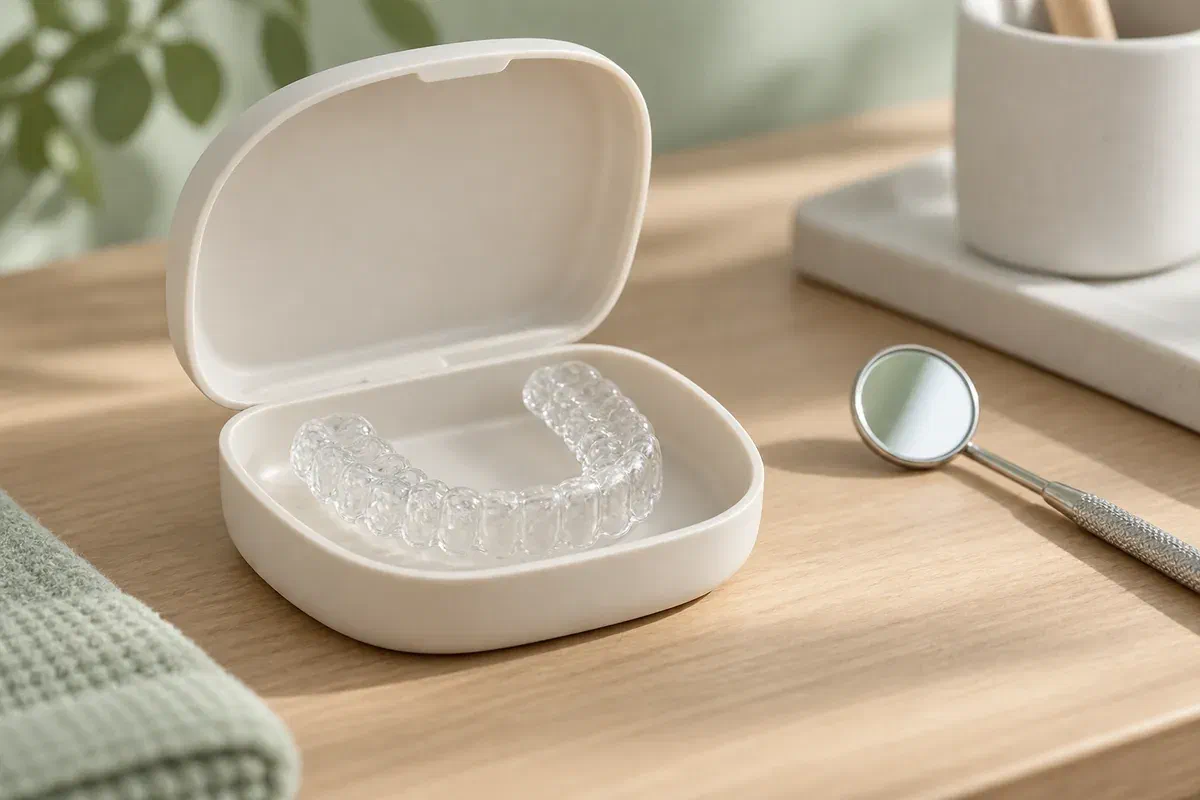
Flat biting surfaces and smooth, shiny patches on enamel are easy to spot and hard to date. A previous dentist may have mentioned grinding, or you may have worn a guard as a younger adult and stopped. Bruxism, the clinical name for grinding and clenching, can come and go over a lifetime, during sleep or while awake, and the teeth keep a record of all of it.
That record does not come with dates. A surface that wore down decades ago can look much like one that is changing now, and not every worn area is caused by grinding at all. So the dentist looks for other signs, such as fresh chips, muscle tenderness, new sensitivity or damage to recent dental work, and compares them with any older records before suggesting a next step.
If you can, request records or X-rays from earlier dental offices before your visit, and bring any guard you still have. Tell us what, if anything, has changed recently. The plan we discuss should have a defined aim, perhaps setting a baseline to compare against or protecting surfaces that are clearly at risk, and it should not overstate what any appliance can do.