

Illustrative consultation about teeth grinding and possible tooth wear
Specialized Care

Teeth-Grinding Treatment in Rockwood

Heavily worn teeth can lead to talk of crowns or rebuilding, and that is a big, often permanent decision. Coming from Rockwood, you can have grinding assessed first, so you understand what repair would and would not change before committing to anything irreversible.

Before rebuilding: a Rockwood perspective

Repairing teeth and managing grinding are two different jobs.

When teeth look short, chipped or flattened, the conversation can jump quickly to crowns, onlays or bonding. Sometimes restoration is genuinely needed. But rebuilding a tooth does not, by itself, change the grinding or clenching that may have worn it. Dentists call that habit bruxism, and it can occur during sleep or while you are awake and absorbed in something.

So the first job is understanding. Not every worn surface comes from grinding; erosion, age and bite factors also play a part. An old flat edge may tell you nothing about what is happening now. The dentist looks at the history, today's symptoms and the clinical findings before discussing whether to watch, protect, repair, look further, or combine several of those.

Bring any treatment plan you have already been given, along with a guard if you use one. Ask us to explain which teeth genuinely need restoring and why, and what would protect that work afterwards. A good plan has a purpose for every step and never suggests that crowns or any appliance will put an end to grinding permanently.

Get grinding assessed before major repair
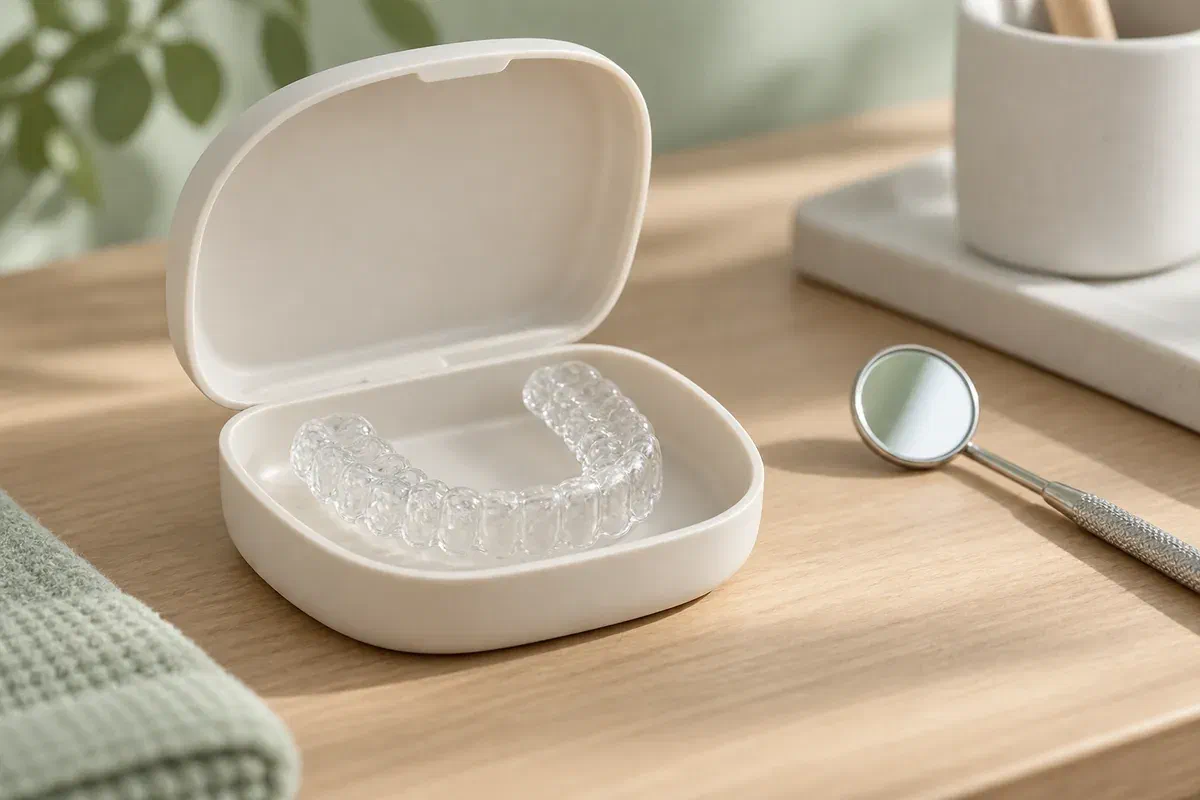
Illustrative single-arch clear dental nightguard in a protective case
Questions that lead here

What brought the rebuilding conversation up?

Tell us what has been noticed or suggested. A few clear observations are enough; nobody needs nightly proof of grinding before the assessment begins.

Grinding reported by someone at home

Describe what has been heard and anything else about your sleep. That account is useful context but cannot measure damage or explain why it happens. If there is snoring, pausing in breathing or heavy daytime fatigue, mention it so a medical review can be considered.

Teeth that have shortened, chipped or become sensitive

Explain whether the changes are recent, painful or affecting eating. The dentist weighs grinding against other causes of wear. If one tooth is sore on its own, it may need its own investigation rather than being treated as part of a general rebuild.

Previous repairs or a guard that failed

Restorations that broke soon after placement, or a guard that cracked, are important clues about the forces your teeth meet. Please bring that guard along; its wear pattern, set beside your teeth, says more than a description. A failure does not automatically mean bigger restorations or a tougher device are the answer.

A tooth that has broken, severe pain, swelling, or a jaw that abruptly stops moving normally should be seen promptly. Phone us rather than waiting for a planning appointment.

Why understanding comes first

Make permanent decisions with the full picture.

A considered plan separates repair from protection and from symptom care. Certain teeth may need restoring, a guard may be suggested to protect both natural and restored surfaces, and an aching jaw may need its own approach. Asking which finding each step addresses keeps the overall plan understandable.

Restorations placed on teeth that are still being heavily ground may wear, chip or fail sooner than hoped. That is why the plan should include ongoing protection where appropriate and a way to check progress, judged over months rather than by one quiet night or a single mark on a guard.

Patient information: NIDCR — bruxism assessment and management

Know which teeth truly need repair

Earlier records and photos can show whether wear is still progressing or has stabilised. Other causes of wear are considered too. Ask which teeth have reached the point where restoration helps, and which may simply be monitored for now.

Plan protection for natural and restored teeth

If a guard is part of the plan, ask about its purpose, its fit, when it should be worn and where it stops helping. It should be fitted by a clinician and checked if uncomfortable. Sports guards, retainers and sleep-apnea appliances are designed for other jobs and are not substitutes.

Consider contributing factors without blame

Sleep, medicines, stress and daily habits may be relevant. Discussing them helps shape the plan without suggesting a single cause or that you are at fault. Where the history raises a medical question, we may recommend speaking with your physician.

From assessment to decision

Understand, examine, weigh, then decide

Bring any existing plan or appliance and tell us what has or has not helped. The first appointment is about clarity and choice, not about committing you to extensive work.

  1. Review the history and any proposed treatment

    We talk through reported grinding, symptoms, past repairs, medicines and sleep, and look at any treatment plan you have been given. If you do not know whether you grind at night, that uncertainty is simply part of what the examination considers.

  2. Examine every relevant tooth and the jaw

    The dentist assesses wear, cracks, sensitivity and the jaw muscles and joints. Some teeth may need further tests, and older records can help show change. For each tooth on a proposed treatment list, you should hear why it is there, how much sound tooth remains, and whether something besides grinding, such as erosion, has shaped it.

  3. Weigh the conservative and the extensive options

    Choices may range from monitoring and a fitted guard to repair of specific teeth or broader restoration. Ask what each would achieve, what it would not, and which steps are reversible. The most extensive option is not automatically the most effective one.

  4. Review before and after any repair

    Follow-up checks your teeth, any guard and how restorations are holding up. Get in touch sooner if something breaks or new pain develops. If problems keep returning, the plan is revisited rather than simply repeating repairs or replacing guards.

Protecting your investment

Look after new restorations and the teeth around them.

Care depends on the findings and any treatment or appliance provided. If advice about your restorations seems to conflict with advice about your guard, ask us to clarify.

Wear and maintain a guard as directed

Clean and store the guard as shown and bring it to reviews so it can be checked alongside your restorations. Never soften it with heat or cut it to make it more comfortable. Call if it cracks, loosens or hurts, and stop using a damaged guard until it is seen.

Spare restored teeth from daytime pressure

If clenching happens while you are awake, use the cues we discussed and rest the jaw with your lips together and teeth apart. Avoid testing new crowns or bonding by grinding across them or biting very hard objects. Tell us if a habit is difficult to keep.

Report changes early

New sensitivity, a chipped restoration, a crown that suddenly feels high, sleep changes or a medicine that seems linked are all worth mentioning. A small problem caught early is usually simpler to deal with. Any medicine question goes to your prescriber; please do not stop a prescription on your own. When your physician is also involved, we can agree what each office needs to know.

Rockwood treatment choices

From watching to rebuilding, and what lies between

Ask about every reasonable option, including monitoring. Be wary of any plan that presents crowns or bite reshaping as a way to end grinding.

When wear is stable and symptoms are minor

Monitoring and protective habits

If the teeth have stopped changing and nothing hurts, rebuilding may not be needed yet, and waiting does not commit you to removing any tooth structure. Practical habits and a review schedule can be a sound choice. Ask what change at a future visit would lead to a different recommendation.

When certain teeth need restoring and protecting

Protection with selective repair

Restoring only the teeth that need it, with a fitted guard to protect them afterwards, is often a more measured route than a full rebuild. Ask about the purpose, limits and follow-up of each step. A restored tooth is not proof that grinding has stopped.

When symptoms or history leave questions open

Further evaluation before irreversible work

Persistent jaw pain, a tooth that keeps aching, sleep symptoms or a medicine question may need more dental or medical input. Ask what that assessment should clarify before agreeing to extensive restoration or permanent bite changes.

Patient information: NHS — when to seek review for teeth grinding

Questions about rebuilding worn teeth

Crowns, bonding and grinding: what to ask

Bring the plan or concern that prompted your visit. These answers aim to separate useful treatment from promises nobody can make.

(905) 876-4488
Do all of my worn teeth need crowns?
Not necessarily. Some worn teeth can be monitored, some may suit smaller repairs and some may need more extensive restoration. The decision depends on how much tooth remains, symptoms and whether wear is still progressing.
Can restorations break if I keep grinding?
They can wear, chip or crack under heavy grinding, just as natural teeth can, and different materials respond in different ways. That is one reason protection is often discussed alongside repair. Ask how your restorations would be protected and how often they would be checked.
Is bonding a reasonable alternative to crowns for worn edges?
In some situations it may be. The choice depends on the amount of wear, the forces involved and your goals. Ask the dentist to compare the options, including how each is affected by grinding.
Should I get a second opinion before a full-mouth rebuild?
It is entirely reasonable to want one for extensive, irreversible treatment. Ask for copies of your records, X-rays and the written treatment plan so another dentist can review them properly. A sound plan should hold up well to questions, and no one should mind you asking them.
If my crowns are new, do I still need a guard?
It depends on whether grinding is still active and how much force is involved. A guard may help protect new work. Ask the dentist whether it is recommended in your case and why.
Can grinding be fixed by reshaping my bite?
Permanent bite changes should not be assumed to stop grinding. Ask why any such procedure is suggested, what the evidence and alternatives are, and how review will continue.
Grinding and repair planning for Rockwood

Understand the grinding before you rebuild.

Contact Milton Dental Clinic to discuss worn teeth, a proposed restoration plan or a guard that has not held up. Let us know about pain or a recent break when you call, and we will work out how soon to book you.

No plan is decided in advance. Watching, a guard, repairing selected teeth or referral are all possible, depending on what we find.

Visit Milton Dental Clinic
Unit 1, 342 Bronte St. S, Milton, ON L9T 5B7
Get directions Clinic hours
Monday–Thursday
11am–7pm
Friday–Sunday
By appointment only

Areas we serve

  • Milton
  • Oakville
  • Mississauga
  • Georgetown
  • Halton Hills
  • Acton
  • Campbellville
  • Brampton
  • Burlington
  • Puslinch
  • Rockwood
  • Erin
  • Caledon
  • Etobicoke
  • Old Milton
  • Bronte Meadows
  • Timberlea
  • Dorset Park
  • Dempsey
  • Clarke
  • Beaty
  • Coates
  • Harrison
  • Scott
  • Willmott
  • Ford
  • Bowes
  • Cobden
  • Walker
  • Mountain View
  • Milton Heights
  • Hawthorne Village
  • Valley View
  • Fallingbrook
  • Nassagaweya
  • Trafalgar
  • Esquesing
  • Nelson
  • Brookville
  • Moffat
  • Glen Williams
  • Norval
  • Limehouse
  • Stewarttown
  • Ashgrove
  • Hornby
  • Silver Creek
  • Speyside
  • Scotch Block
  • North Oakville
  • River Oaks
  • Glen Abbey
  • West Oak Trails
  • Palermo
  • Bronte Creek
  • College Park
  • Joshua Creek
  • Uptown Core
  • Preserve
  • Iroquois Ridge
  • Lisgar
  • Meadowvale
  • Meadowvale Village
  • Churchill Meadows
  • Erin Mills
  • Central Erin Mills
  • Streetsville
  • East Credit
  • Creditview
  • Heartland
  • Sheridan
  • Mount Pleasant
  • Credit Valley
  • Huttonville
  • Churchville
  • Springbrook
  • Northwest Brampton
  • Bram West
  • Fletcher's Meadow
  • Fletcher's Creek South
  • Alton Village
  • Orchard
  • Millcroft
  • Headon Forest
  • Tansley
  • Brant Hills
  • Tyandaga
  • Kilbride
  • Lowville
  • Aberfoyle
  • Morriston
  • Arkell
  • Hillsburgh
  • Freelton
  • Carlisle
  • Waterdown
  • Flamborough
  • Mountsberg

How can we help?

Milton Dental Clinic

Have a question about your smile? Choose the option that works best for you.

For urgent dental concerns, please call.
Messages are reviewed during clinic hours.