

Illustrative consultation about jaw-joint movement and discomfort
Specialized Care

TMJ Assessment in Brampton

Plenty of people expect a jaw problem to be solved by a scan. In practice, the conversation and the hands-on exam usually come first. For anyone booking from Brampton, a TMJ assessment explains what an examination can show, when imaging earns its place, and whether monitoring, conservative care or a referral is the better route.

Brampton · before any scan

Why the picture starts with your story, not an image

It's natural to want proof. If the jaw hurts, surely an X-ray or MRI will show why? Sometimes imaging is genuinely useful. Often, though, the most important information comes from how you describe the problem and what a careful examination finds. Images show structures; they don't always explain pain, and a picture that looks unremarkable can sit alongside very real symptoms.

The temporomandibular joints are the small hinges just in front of your ears, and they rely on the surrounding muscles to move smoothly. An assessment looks at them together with your teeth and overall health. A click that has never bothered you, a jaw that locked last week and an ache that may be a tooth all call for different thinking, and not all of them call for a scan.

When you book from Brampton, let us know what prompted the visit and what has become harder day to day. Bring previous imaging reports, any guard or splint, and the advice you were given. We'll use that to decide what to examine, whether a particular test would answer a real question, and when a medical or specialist opinion would help.

Ask whether imaging is right for you
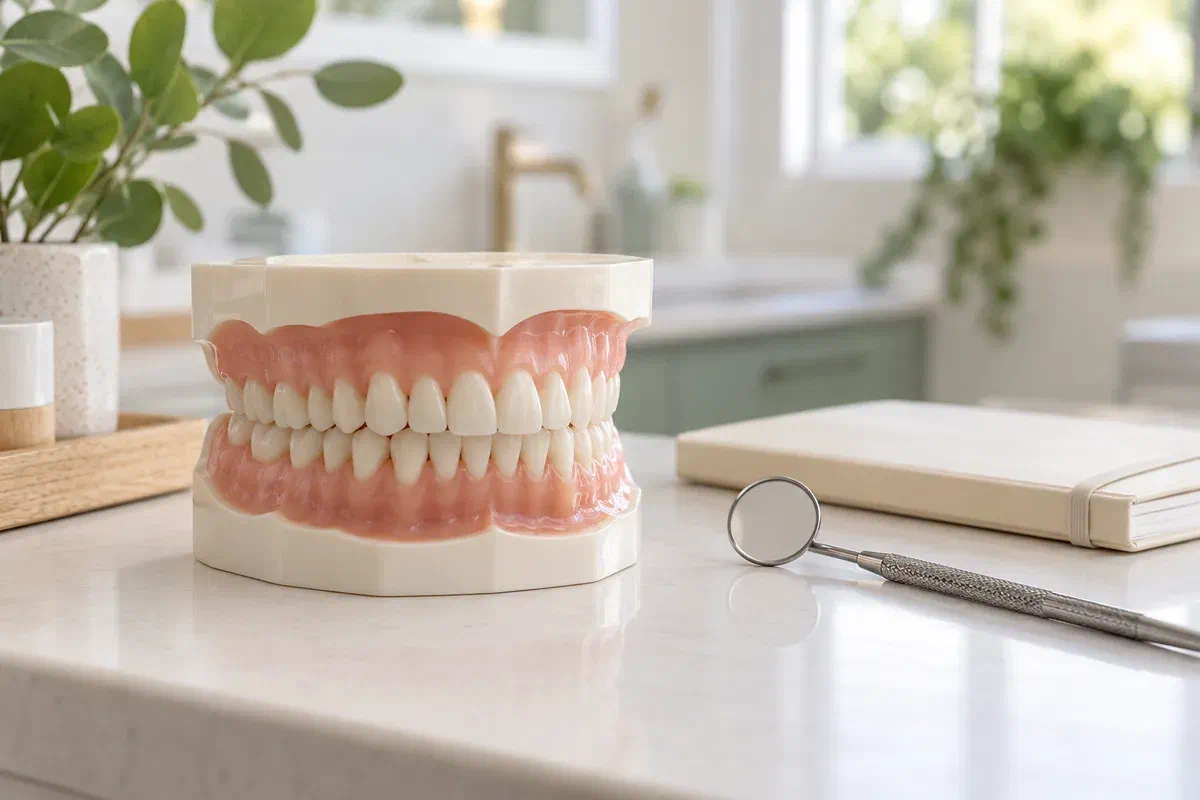
Illustrative supported dental teaching cast beside a mirror and closed notebook
The details that guide testing

Your description often decides whether a scan is worthwhile.

Tell us how it began, how it has changed and whether it is constant or on and off. You don't need to have worked out what's wrong, and you won't be asked to repeat painful movements to prove a point.

The pain itself: where, when and how it behaves

Show us where it is and say whether chewing, opening, waking or nothing in particular sets it off. Mention a sore tooth or symptoms elsewhere in the face. This guides which areas get examined and which tests, if any, might be relevant.

Changes in movement or the bite

Restriction, catching or a bite that suddenly feels different can carry more weight than pain alone, especially after an injury. Don't force the jaw to demonstrate. If it suddenly won't open or close normally, call for advice straight away.

Noises from the joint

Say whether a click hurts or comes with locking. A painless noise on its own rarely needs imaging or treatment, and a louder sound doesn't mean more damage. The clinician considers it alongside everything else you describe.

Call promptly about a recent injury, significant swelling, fever or sudden trouble moving the jaw. If you have serious associated symptoms or can't eat or drink, seek urgent medical help rather than waiting for a routine assessment.

What you gain from a careful exam

Tests chosen for a reason, or not needed at all

A well-run assessment can help tell apart a dental issue, muscle or joint findings, and symptoms that belong with a physician or specialist. That sorting is what decides whether imaging is useful. Ask the clinician to explain their thinking in everyday language, including why a test is or isn't being suggested.

It also creates a reference point. When today's symptoms and limitations are noted, a later review can show whether things are settling, so decisions about further testing rest on real change rather than guesswork. One visit isn't meant to give you a permanent label; it's meant to give you a plan and a time to revisit it.

Patient information: NIDCR — history, examination, and diagnostic considerations for TMD

What daily life looks like right now

Tell us what you avoid or struggle with, from chewing tougher food to long conversations. That context often matters more than a pain score, and it helps set the goals for whatever comes next, including whether a test would change anything for you.

An examination aimed at the right areas

Depending on your history, the clinician may check jaw movement, joints, muscles and teeth. Let them know when something reproduces your usual discomfort. You can pause at any point, and the exam is adjusted to what's comfortable.

A straight answer on imaging

If a test is suggested, ask which question it answers and how the result might change care. If it isn't suggested, ask why. Should monitoring be the plan, find out what changes would make a test, or an earlier visit, more worthwhile.

The assessment in four parts

Talk, examine, interpret, decide.

If wide opening is difficult or a long visit would be hard, let us know in advance. Bring any earlier imaging reports, but don't hold off on getting advice for a new symptom while you track them down.

  1. Your account and any previous tests

    We cover onset, how things have changed, injuries, dental and medical history, and what you've tried. If you've had X-rays or scans before, tell us when and why. Mention what helped or hurt. On a good day, describe how a bad day goes.

  2. A hands-on look at function

    The clinician observes how your jaw moves and checks the joints, muscles and teeth that your history points to. You may be asked about tenderness or whether a movement feels familiar. Speak up if anything hurts; there's no need to push through.

  3. What the findings do and don't show

    You'll hear which findings seem to matter, what else was considered and how confident the clinician can be at this stage. Some questions can't be settled by examination alone, and that is usually where a test comes into the conversation. Unremarkable findings don't mean your pain isn't real, and they don't close the door on further review.

  4. The plan, including any imaging

    Next steps might be monitoring, conservative advice, a targeted test or a referral. Ask who arranges each part and who will explain any results. Agree which new symptoms should prompt you to call before the planned review.

After your visit

Follow the plan and flag anything new.

You may go home with advice to try, a review appointment, or a requisition or referral for further assessment. If you're unsure which part comes first or who is booking it, ask us.

Keep to the advice for your findings

Use any suggested comfort measures within the limits discussed. Skip forceful exercises or online techniques for resetting a disc. If something makes your jaw worse, stop and check with the treating provider.

Note how things go, without testing constantly

Jot down whether eating, opening and comfort are improving and whether anything new has turned up. There's no need to keep clicking the jaw or measuring it at home. A short summary is more useful at review than daily checks.

Make sure imaging results are explained

If a scan was ordered, confirm where it's done and who will go over the report with you. A result on paper isn't the end of the process; it needs to be read alongside your symptoms. Tell us if timing or travel is a problem.

Possible directions

Sometimes a scan helps. Often something simpler comes first.

Assessment doesn't automatically mean treatment or testing. Ask why a step is suggested and what would justify changing course at review.

When findings don't need active treatment

Explanation and monitoring

A painless click or stable finding may be explained and watched without imaging, an appliance or a procedure. Ask what change would matter. Monitoring is a deliberate choice, not an instruction to ignore new pain or lost movement.

When symptom management makes sense first

Conservative care with a review

Practical measures may be tried with a planned check on how daily function responds. Know what to try and when to return. If symptoms persist or the explanation starts to fit less well, the plan, including the need for a test, can be reconsidered.

When a specific question needs answering

Targeted imaging or referral

Different kinds of imaging show different structures, and sometimes a medical or specialist assessment is more useful than any picture. Ask what a result could change and who will explain it. Images are interpreted with your symptoms and exam, never alone.

Brampton imaging questions

Scans, X-rays and what they can tell you

Ask about the limits of any test and the reasons for each recommendation. Understanding the plan comes before deciding on treatment.

(905) 876-4488
What's the difference between a dental X-ray and an MRI for the jaw?
They show different things. Dental X-rays mainly show teeth and bone, while an MRI can show soft tissues such as the disc inside the joint. Which, if either, is useful depends on the question the clinician is trying to answer, and many people need neither. Ask what the image would be looking for.
Why didn't my jaw assessment include any imaging?
Many jaw concerns can be assessed through history and examination alone. Imaging is considered when it would answer a relevant question and help guide care. Ask what would make a test worthwhile later.
Can I bring a scan that was done at a hospital?
Yes. Bring the report and tell us when and why it was done. The clinician can consider it with your current findings, though older imaging may not reflect recent changes.
Does radiation from dental imaging need to be considered?
Any test using radiation is weighed against its likely benefit. Tell the team if you are or might be pregnant, and ask why a specific image is being recommended.
If my scan shows a displaced disc, do I need treatment?
Not necessarily. Imaging findings are interpreted alongside symptoms and function, and something seen on a scan isn’t always the source of pain. Some findings don’t need active treatment at all, so ask how the result relates to what you’re actually experiencing and what would change if symptoms shifted.
Can my family doctor order jaw imaging instead?
In some situations other providers order imaging. Let us know if this happens so the results can be considered alongside the dental assessment and nothing is duplicated unnecessarily.
Plan a visit from Brampton

Start with an exam, and decide on tests together.

Contact Milton Dental Clinic about jaw discomfort, movement changes or questions about previous imaging. Let us know when you call about any sudden restriction or recent injury, so the urgency and the right appointment can be discussed.

Next steps can include monitoring, conservative advice, targeted imaging or referral.

Visit Milton Dental Clinic
Unit 1, 342 Bronte St. S, Milton, ON L9T 5B7
Get directions Clinic hours
Monday–Thursday
11am–7pm
Friday–Sunday
By appointment only

Areas we serve

  • Milton
  • Oakville
  • Mississauga
  • Georgetown
  • Halton Hills
  • Acton
  • Campbellville
  • Brampton
  • Burlington
  • Puslinch
  • Rockwood
  • Erin
  • Caledon
  • Etobicoke
  • Old Milton
  • Bronte Meadows
  • Timberlea
  • Dorset Park
  • Dempsey
  • Clarke
  • Beaty
  • Coates
  • Harrison
  • Scott
  • Willmott
  • Ford
  • Bowes
  • Cobden
  • Walker
  • Mountain View
  • Milton Heights
  • Hawthorne Village
  • Valley View
  • Fallingbrook
  • Nassagaweya
  • Trafalgar
  • Esquesing
  • Nelson
  • Brookville
  • Moffat
  • Glen Williams
  • Norval
  • Limehouse
  • Stewarttown
  • Ashgrove
  • Hornby
  • Silver Creek
  • Speyside
  • Scotch Block
  • North Oakville
  • River Oaks
  • Glen Abbey
  • West Oak Trails
  • Palermo
  • Bronte Creek
  • College Park
  • Joshua Creek
  • Uptown Core
  • Preserve
  • Iroquois Ridge
  • Lisgar
  • Meadowvale
  • Meadowvale Village
  • Churchill Meadows
  • Erin Mills
  • Central Erin Mills
  • Streetsville
  • East Credit
  • Creditview
  • Heartland
  • Sheridan
  • Mount Pleasant
  • Credit Valley
  • Huttonville
  • Churchville
  • Springbrook
  • Northwest Brampton
  • Bram West
  • Fletcher's Meadow
  • Fletcher's Creek South
  • Alton Village
  • Orchard
  • Millcroft
  • Headon Forest
  • Tansley
  • Brant Hills
  • Tyandaga
  • Kilbride
  • Lowville
  • Aberfoyle
  • Morriston
  • Arkell
  • Hillsburgh
  • Freelton
  • Carlisle
  • Waterdown
  • Flamborough
  • Mountsberg

How can we help?

Milton Dental Clinic

Have a question about your smile? Choose the option that works best for you.

For urgent dental concerns, please call.
Messages are reviewed during clinic hours.