

Illustrative consultation about jaw-joint movement and discomfort
Specialized Care

TMJ Assessment in Erin

Heat packs, soft food, a video of jaw stretches at midnight: most people try something at home before they book. For households in Erin and Hillsburgh, a TMJ assessment takes stock of what you've been doing, examines how your jaw moves and how your teeth meet, and helps you decide which home habits are worth keeping.

What you've already tried at home

Before the next stretch, get the jaw properly looked at.

Self-care is a sensible first instinct, and some of it genuinely helps. The trouble is knowing which parts. A warm cloth on a tired muscle is one thing; forcefully pushing a locked jaw open because a video said so is another. A TMJ assessment gives you a chance to lay out your home routine and get a clear view of what fits your situation and what to drop.

Each temporomandibular joint sits in front of an ear, and the pair work with the chewing muscles every time you talk or chew. Problems in this area can involve the joints, the muscles, the teeth or something else, and the right home approach depends on which. The assessment is a conversation plus a focused examination, not one test. A painless click needs different handling from a jaw that suddenly won't open or an ache that might be a tooth.

From Erin, it's worth writing down what you've tried, for how long, and what happened. Bring any guard, exercise sheet or reports. We'll use that to plan the examination, and we'll tell you plainly when a physiotherapist, physician, another dentist or a specialist could add something.

Review your home jaw routine with us
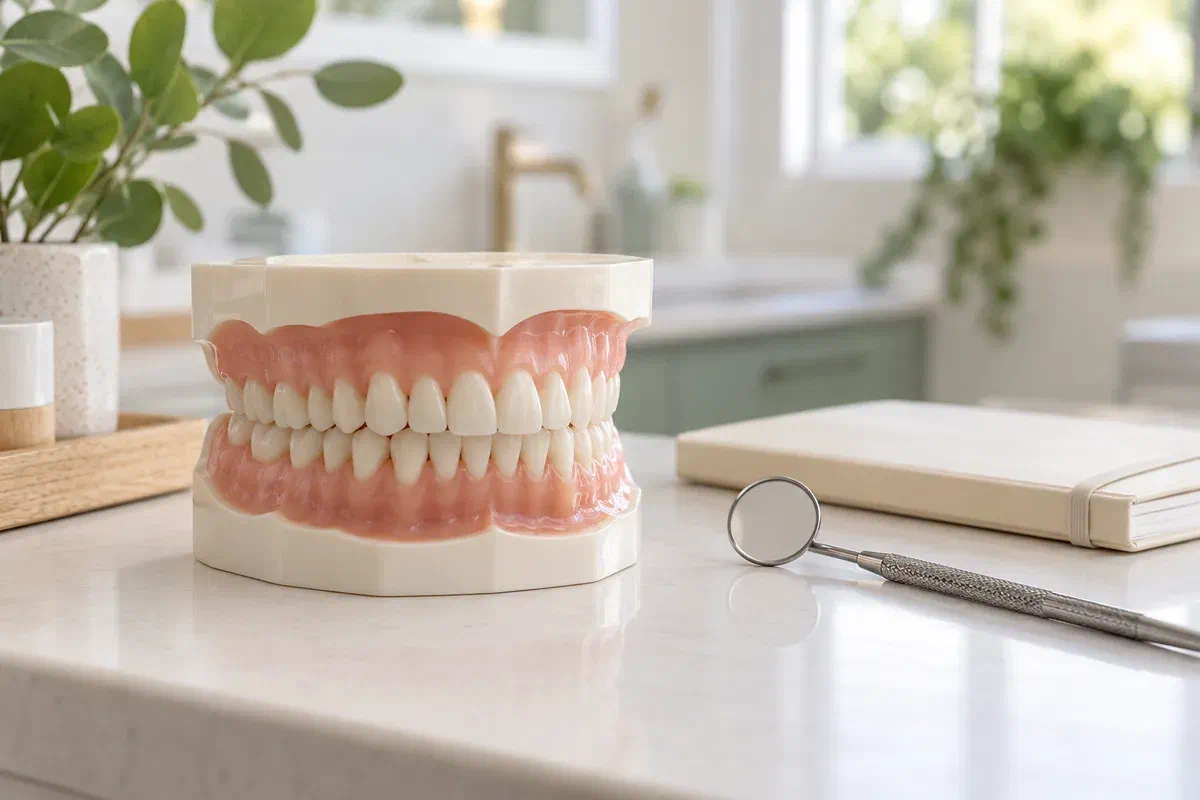
Illustrative supported dental teaching cast beside a mirror and closed notebook
Tell us about your routine and your symptoms

What helped, what didn't, and what made it worse

Describe when it began, how it has changed, and whether it's steady or intermittent. Include anything you've been doing for it. You don't need a diagnosis, and you shouldn't try to provoke symptoms before coming in.

Pain and what you've used for it

Show us where it hurts and say when: meals, mornings, after a long day. Mention any tooth that feels tender and pain elsewhere in your face, plus heat, cold, massage or pain relievers you've used and their effect. That way, other causes stay in the picture as well.

Stiffness, catching or a different-feeling bite

Mention restricted opening, catching or teeth that meet differently, and whether it followed an injury. If you've been stretching the jaw to open it further, say so. Stop forcing it. A jaw that suddenly can't open or close needs a prompt call, not more home exercises.

Clicks and what you've been doing about them

Some people try to stop a click by holding the jaw a certain way or doing exercises. Let us know. A sound alone usually isn't a reason for treatment, and how loud it is doesn't reflect damage. It's considered alongside your movement and history.

Don't manage these at home: a recent injury, notable swelling, fever, or a jaw that suddenly won't move. Call promptly. Trouble swallowing food or water, or any other symptom that frightens you, is a matter for urgent medical help, not a home remedy or a routine booking.

Why a proper look is worth the trip

Home care works better when it matches the cause.

An assessment helps work out whether your symptoms seem to come from a tooth, from the muscles or joint, or from something that needs another provider. That matters for home care, because what's helpful for tight muscles may not suit a tooth problem. Ask for the reasoning in plain words. The answer may be to keep doing some things, stop others, or find out more first.

The visit also gives you a reference point for judging your home routine. With today's symptoms noted, a later review can show whether the changes are helping. The aim isn't to stamp a permanent label on you after one appointment; it's to give you a routine you can trust and a time to check it.

Patient information: NIDCR — history, examination, and diagnostic considerations for TMD

What daily life looks like right now

Tell us what you've stopped doing or eating, and what you'd most like to get back to. Those details shape both the questions and the home plan more usefully than a pain score alone.

An exam that informs your home plan

The clinician may check movement, joints, chewing muscles and teeth, depending on your history. Say when something feels like your usual symptom. The exam stays comfortable, and you can stop whenever you want.

Clear advice on what to keep and what to stop

If a test or referral is suggested, ask what it would show. Just as importantly, ask which of your current habits are reasonable to continue, which to pause, and what change would mean calling sooner.

During the appointment

We'll go through your routine before touching your jaw.

Let us know when booking if opening is limited or a long visit is hard. Bring earlier reports if you can, but don't delay getting advice about a new problem while you look for them.

  1. History, habits and home remedies

    Expect questions about onset, changes, injuries, dental and medical history, and everything you've tried: heat, ice, soft foods, exercises, a guard or over-the-counter pain relief. Tell us what helped and what didn't. If symptoms vary, describe a typical bad day.

  2. A gentle look at the jaw and teeth

    The clinician observes how your jaw moves and checks the joints, chewing muscles and teeth as your history suggests. If a spot you've been massaging at home is tender, or a movement feels like the one that bothers you, point it out. Say stop if anything hurts.

  3. What the findings mean for home care

    Ask which findings matter most, which other causes were considered and how clear things are at this point. Some questions need more investigation. If findings look normal, that doesn't mean your discomfort isn't real.

  4. A revised routine and a review point

    You may leave with a simplified home plan, a test, a referral or simply reassurance. Know who books each step and how results will reach you. Agree on which changes mean calling rather than adjusting things yourself.

Back home in Erin

Simpler is often better.

Many people walk out with a shorter home routine than the one they arrived with. Some also have a recheck to book, or a name and number for another provider. If you're unsure which part is essential, which can be skipped, or who books what, ask the team before heading home.

Stick to the routine you agreed on

Do the things you were advised to do, within the limits discussed, and drop the ones you were told to stop. Avoid adding forceful stretches or disc-repositioning moves from online sources. If anything makes your jaw worse, pause it and check in.

Track how you're doing, briefly

Once a week or so, note how eating, opening and comfort feel and whether anything new has appeared. Avoid constantly testing the click or measuring your opening. A short log is easier to discuss at review.

Finish any follow-up that was planned

Check how imaging, physiotherapy or another appointment will be arranged and who explains results. Let us know if timing or travel is difficult; households farther out often need to plan ahead.

After the assessment

Three ways forward, each with its own home routine

An assessment doesn't automatically mean treatment. Ask why one approach suits you better than another and what would make you change course.

When nothing needs active treatment

Reassurance and keeping an eye on it

A painless click or stable finding may need no exercises, device or procedure at all. You may be able to stop some home routines. Ask what change would matter. Watching is a plan, and new pain or lost movement should prompt a call.

When managing symptoms at home is the first step

Guided conservative self-care

You may be given a short, specific set of things to do, with a review to see how they affect eating and comfort. Know exactly what to do and when to return. If symptoms don't ease, the routine is reassessed.

When home care alone isn't the answer

Further investigation or another provider

Sometimes no amount of careful home care will settle the question. An X-ray or other image, a visit with your physician, physiotherapy or a specialist referral may be the next sensible step. Find out what each would tell you and who will help you make sense of it alongside what you've described.

Erin home-care questions

What's safe to do for a sore jaw at home?

Ask about anything you've read or been told, and why a recommendation is made, before deciding on treatment.

(905) 876-4488
Are jaw exercises from online videos safe to try?
Some may not suit your situation, and forceful ones can aggravate symptoms. It’s best to have the jaw assessed first and use exercises recommended for your findings.
Should I use heat or ice on a sore jaw?
Either may feel soothing for some people, but ask the clinician what suits your symptoms. If swelling appears, especially with fever, call promptly rather than treating it at home.
Is it okay to take over-the-counter pain relief before my visit?
Follow the label and any advice from your physician or pharmacist, and tell the clinician what you’ve taken. Pain relief can make symptoms milder on the day, so describe your usual pattern.
Does eating soft food help a sore jaw?
Many people find softer foods more comfortable during a flare. Mention any foods you’ve been avoiding, and the clinician can advise whether to continue.
Can massage help jaw muscle tension?
Gentle massage may be comfortable for some people, but ask before relying on it, especially if pain is sharp or the jaw catches. The clinician can advise based on your findings.
When should I stop home care and call?
Call if your jaw locks, opening gets worse, pain persists or your bite changes. Seek urgent care for injury, significant swelling, fever or difficulty eating or drinking.
Book from Erin

Bring your routine. We'll help you refine it.

Contact Milton Dental Clinic about jaw pain, stiffness, clicking or questions about home remedies you've tried. If your jaw has suddenly locked or you've had a recent injury, let us know when you call so we can talk about urgency.

The outcome may be reassurance, a simpler home routine, further investigation or a referral.

Visit Milton Dental Clinic
Unit 1, 342 Bronte St. S, Milton, ON L9T 5B7
Get directions Clinic hours
Monday–Thursday
11am–7pm
Friday–Sunday
By appointment only

Areas we serve

  • Milton
  • Oakville
  • Mississauga
  • Georgetown
  • Halton Hills
  • Acton
  • Campbellville
  • Brampton
  • Burlington
  • Puslinch
  • Rockwood
  • Erin
  • Caledon
  • Etobicoke
  • Old Milton
  • Bronte Meadows
  • Timberlea
  • Dorset Park
  • Dempsey
  • Clarke
  • Beaty
  • Coates
  • Harrison
  • Scott
  • Willmott
  • Ford
  • Bowes
  • Cobden
  • Walker
  • Mountain View
  • Milton Heights
  • Hawthorne Village
  • Valley View
  • Fallingbrook
  • Nassagaweya
  • Trafalgar
  • Esquesing
  • Nelson
  • Brookville
  • Moffat
  • Glen Williams
  • Norval
  • Limehouse
  • Stewarttown
  • Ashgrove
  • Hornby
  • Silver Creek
  • Speyside
  • Scotch Block
  • North Oakville
  • River Oaks
  • Glen Abbey
  • West Oak Trails
  • Palermo
  • Bronte Creek
  • College Park
  • Joshua Creek
  • Uptown Core
  • Preserve
  • Iroquois Ridge
  • Lisgar
  • Meadowvale
  • Meadowvale Village
  • Churchill Meadows
  • Erin Mills
  • Central Erin Mills
  • Streetsville
  • East Credit
  • Creditview
  • Heartland
  • Sheridan
  • Mount Pleasant
  • Credit Valley
  • Huttonville
  • Churchville
  • Springbrook
  • Northwest Brampton
  • Bram West
  • Fletcher's Meadow
  • Fletcher's Creek South
  • Alton Village
  • Orchard
  • Millcroft
  • Headon Forest
  • Tansley
  • Brant Hills
  • Tyandaga
  • Kilbride
  • Lowville
  • Aberfoyle
  • Morriston
  • Arkell
  • Hillsburgh
  • Freelton
  • Carlisle
  • Waterdown
  • Flamborough
  • Mountsberg

How can we help?

Milton Dental Clinic

Have a question about your smile? Choose the option that works best for you.

For urgent dental concerns, please call.
Messages are reviewed during clinic hours.