

Illustrative consultation about jaw-joint movement and discomfort
Specialized Care

TMJ Assessment in Georgetown

Waking with a sore, tired jaw is a common reason people from Georgetown get in touch. A TMJ assessment looks at when the discomfort shows up, how the jaw moves and what the teeth show, then talks through what would help most: keeping an eye on it, gentle self-care, an image, or an opinion from someone else.

Georgetown mornings and a stiff jaw

Sore before breakfast

You haven't eaten or talked yet, but the jaw already feels tight. Maybe the temples ache, or the first bite of toast feels like hard work. Morning jaw discomfort is one of the most common patterns people describe, and timing like this is a useful clue. It is not a diagnosis, though, and a proper assessment looks at the whole picture before drawing conclusions.

Two small joints, one in front of each ear, connect the lower jaw to the skull and move with the help of strong chewing muscles. A TMJ assessment considers those joints, the muscles, your teeth and your general health together. There is no one test that sorts it all out. Night-time clenching is one possibility among several, and soreness near the joint doesn't always mean the joint is the problem.

Start by telling us when it hurts, what's changed and what you've tried. A partner's comments about grinding are useful too. If you've had a night guard before, or reports from another provider, bring them. We can then focus the exam on what matters and tell you clearly if a dental, medical or specialist assessment would add something.

Book a visit about morning jaw ache
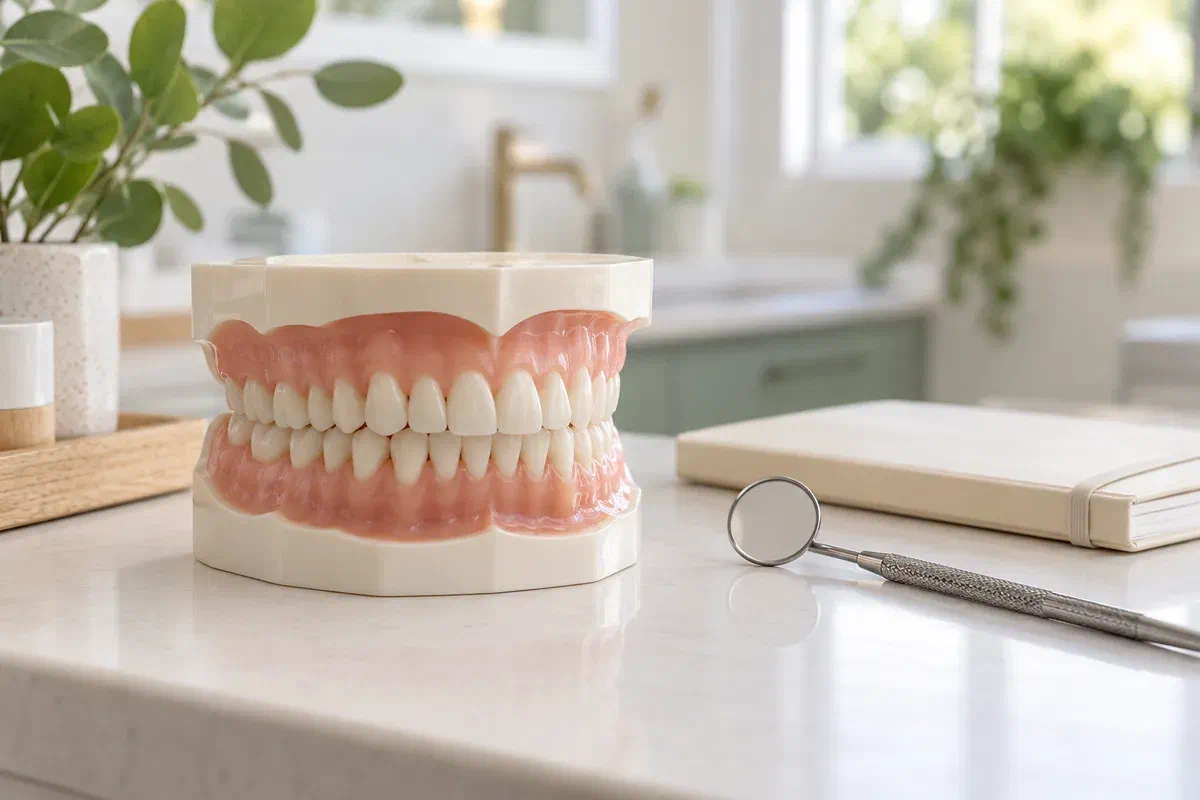
Illustrative supported dental teaching cast beside a mirror and closed notebook
Timing tells a story

Morning, evening or mealtimes? Each points somewhere a little different.

Try to notice when symptoms start and ease, whether they're daily or occasional, and how long they've been around. You don't need to know the cause, and you won't be asked to keep making a painful movement.

When the ache arrives and how long it lasts

Is it worst on waking and better by lunch? Does it build through the day or only flare with chewing? Mention any single tooth that's tender or headaches around the temples. These patterns help the clinician consider teeth, muscles and joints instead of assuming one answer.

Stiffness, catching or a bite that feels off in the morning

Some people notice their teeth don't quite meet normally first thing, or the jaw catches on opening. Note whether this is new and whether it followed an injury. Don't force the jaw. If it suddenly won't open or close normally, call for advice promptly.

Noises and signs of grinding

Clicks and pops are worth a mention, as is a partner who hears grinding at night. Say whether any of it is painful or seems to come with the jaw catching. A sound alone doesn't mean treatment is needed, and loudness isn't a measure of harm. The clinician weighs it with your other symptoms and findings.

If the jaw is suddenly stuck, you've had a recent injury, or there's notable swelling or fever, call right away. Inability to eat or drink, or other serious symptoms, need urgent medical attention rather than a routine jaw appointment.

What the assessment can clarify

Is it clenching, the joint, a tooth, or something else?

Morning discomfort can come from several places. An assessment helps separate signs that point to the teeth, to the chewing muscles or joint, and to issues another provider should look at, such as sleep concerns or medical conditions. Ask for an explanation without jargon. The next step may be simple care or monitoring, or the clinician may need more information first.

It also creates a record. Noting how your mornings feel now, and what you find difficult, makes a review in a few weeks far more useful. The point isn't to give you a permanent label after one visit; it's to give you a workable plan and a time to see how it's going.

Patient information: NIDCR — history, examination, and diagnostic considerations for TMD

How mornings are affecting your day

Tell us whether the ache fades quickly or lingers, and whether it's affecting meals, work or sleep. These real-life details often matter more than a score out of ten, and they help set the goals for any care.

Signs that match your pattern

The clinician may check jaw movement, joints and muscles, and look at the teeth for wear or other relevant findings. Say when something reproduces your morning ache. The exam stays comfortable, and you can pause at any time.

Thoughtful decisions about guards, tests or referrals

If an appliance, imaging or another assessment is suggested, ask what it's meant to achieve and how you'll know if it helps. Not everyone with morning jaw ache needs the same approach. If you're asked to monitor, find out what to look for.

Your visit

A step-by-step look at your jaw

Let us know if opening wide is hard or a long appointment would be difficult. Previous reports help, but a new or worsening symptom shouldn't wait while you hunt for them.

  1. Your history, including sleep and habits

    We'll ask when the problem began, how it's changed, any injuries, dental treatment, health history and medications. Mention sleep issues, grinding, or daytime clenching you've noticed, and anything you've tried. If mornings vary, describe the usual pattern.

  2. Checking movement, muscles and teeth

    The clinician watches how your jaw moves and checks the joints, chewing muscles and teeth for relevant signs. You may be asked whether pressure feels like your usual ache. Tell us if anything hurts; forcing your jaw isn't needed.

  3. Talking through what was found

    Ask what stands out, what alternatives were considered and how certain the picture is so far. Some questions need further assessment, including sleep-related ones. A normal-looking exam doesn't mean your discomfort isn't real.

  4. Agreeing what to do and when to check in

    Some people leave with nothing more than a few habits to try and a date to compare mornings. Others talk through whether an appliance makes sense, or need a test or referral first. Whatever the plan, you should know who is booking each piece, how results will reach you, and which new symptoms mean you should call before the review.

Over the next few weeks

Watch how your mornings change.

You may go home with advice, a review date or a referral. If you're unsure which part is optional, which comes next, or who books it, ask the team to clarify.

Stick with the advice for your situation

Use any comfort or habit changes within the agreed limits. Avoid forceful exercises or online techniques for repositioning the jaw. If something makes mornings worse, stop it and contact the provider.

Keep a simple morning log

A quick note a few times a week about how your jaw feels on waking, and whether meals are easier, is plenty. Avoid testing your jaw over and over. A short record makes your review more useful than constant self-checks.

Complete any agreed follow-up

If imaging, a sleep-related referral or another appointment is planned, find out who books it and who explains the findings. Let us know if timing is a problem. A recommendation should lead to a clear next step.

Where things might head

Different patterns lead to different next steps.

Being assessed doesn't automatically mean you need treatment or an appliance. Ask why a particular approach is suggested and what would lead to revisiting it.

When active treatment isn't called for

Understanding and monitoring

Mild morning stiffness that eases quickly, or a painless click, may simply be explained and watched. Ask what change would matter. Monitoring is a deliberate plan, and new pain or loss of movement should prompt a return.

When managing symptoms first makes sense

Conservative care for morning symptoms

You may discuss habit awareness, comfort measures and, in some cases, whether an appliance is appropriate, with a review of how mornings respond. Ask what to try and when to come back. The plan can change if symptoms persist.

When more information would help

Imaging or another provider's view

If sleep, medical or joint questions remain, a targeted test or referral may be more useful than further dental treatment. Ask what each step could clarify and who will explain the results. Images are interpreted with your symptoms and exam.

Morning jaw questions

What Georgetown households often ask

Ask what tests can and can't show and why something is recommended before deciding on treatment. The assessment should leave things clearer.

(905) 876-4488
Why does my jaw hurt more in the morning than at night?
One possibility is clenching or grinding during sleep, but there are others. The clinician considers the timing along with your history and examination before suggesting an explanation.
Will I automatically be given a night guard?
No. An appliance is one option that may be discussed if it suits your findings, and many people start without one. Ask what it would aim to do, how its effect would be reviewed, how long you’d wear it before judging, and what alternatives exist.
Can snoring or poor sleep be connected to jaw problems?
Sleep issues and jaw symptoms sometimes occur together, though one doesn’t prove the other. Mention snoring, daytime tiredness or breathing pauses noticed by a partner, as these may need assessment by a physician. The dental team can help coordinate that conversation.
Do headaches at the temples have anything to do with my jaw?
They can sometimes be associated with the chewing muscles, but headaches have many causes. Tell the clinician about them, and see a physician for new, severe or unusual headaches.
Is tooth wear a sign that I grind my teeth?
Wear can have several causes, including grinding, diet and acid. The dentist can look at the pattern and discuss what it might suggest alongside your symptoms.
Should I change my pillow or sleeping position?
Ask the clinician for advice based on your findings rather than making big changes on your own. Mention how you usually sleep and whether any position seems to make mornings worse.
Book from Georgetown

Tell us about your mornings.

Contact Milton Dental Clinic about morning jaw ache, stiffness, clenching or a bite that feels different. If your jaw has suddenly locked or you've had an injury, let us know when you call so we can discuss how soon to see you.

Next steps may include monitoring, practical advice, further investigation or a referral.

Visit Milton Dental Clinic
Unit 1, 342 Bronte St. S, Milton, ON L9T 5B7
Get directions Clinic hours
Monday–Thursday
11am–7pm
Friday–Sunday
By appointment only

Areas we serve

  • Milton
  • Oakville
  • Mississauga
  • Georgetown
  • Halton Hills
  • Acton
  • Campbellville
  • Brampton
  • Burlington
  • Puslinch
  • Rockwood
  • Erin
  • Caledon
  • Etobicoke
  • Old Milton
  • Bronte Meadows
  • Timberlea
  • Dorset Park
  • Dempsey
  • Clarke
  • Beaty
  • Coates
  • Harrison
  • Scott
  • Willmott
  • Ford
  • Bowes
  • Cobden
  • Walker
  • Mountain View
  • Milton Heights
  • Hawthorne Village
  • Valley View
  • Fallingbrook
  • Nassagaweya
  • Trafalgar
  • Esquesing
  • Nelson
  • Brookville
  • Moffat
  • Glen Williams
  • Norval
  • Limehouse
  • Stewarttown
  • Ashgrove
  • Hornby
  • Silver Creek
  • Speyside
  • Scotch Block
  • North Oakville
  • River Oaks
  • Glen Abbey
  • West Oak Trails
  • Palermo
  • Bronte Creek
  • College Park
  • Joshua Creek
  • Uptown Core
  • Preserve
  • Iroquois Ridge
  • Lisgar
  • Meadowvale
  • Meadowvale Village
  • Churchill Meadows
  • Erin Mills
  • Central Erin Mills
  • Streetsville
  • East Credit
  • Creditview
  • Heartland
  • Sheridan
  • Mount Pleasant
  • Credit Valley
  • Huttonville
  • Churchville
  • Springbrook
  • Northwest Brampton
  • Bram West
  • Fletcher's Meadow
  • Fletcher's Creek South
  • Alton Village
  • Orchard
  • Millcroft
  • Headon Forest
  • Tansley
  • Brant Hills
  • Tyandaga
  • Kilbride
  • Lowville
  • Aberfoyle
  • Morriston
  • Arkell
  • Hillsburgh
  • Freelton
  • Carlisle
  • Waterdown
  • Flamborough
  • Mountsberg

How can we help?

Milton Dental Clinic

Have a question about your smile? Choose the option that works best for you.

For urgent dental concerns, please call.
Messages are reviewed during clinic hours.