

Illustrative consultation about jaw-joint movement and discomfort
Specialized Care

TMJ Assessment in Mississauga

A burger you can't quite fit in, a yawn that stops short, a jaw that feels tight by mid-afternoon. For people travelling from Mississauga, a TMJ assessment focuses on how your jaw opens and moves, reviews the dental side, and explains whether monitoring, conservative care, imaging or a referral makes sense.

When opening wide gets harder

The bite that won't fit

Reduced opening tends to creep up. You cut food smaller without thinking about it, or you notice that a yawn catches halfway. Movement problems like these are one of the clearest reasons to have the jaw looked at, because they affect eating, speaking and even how comfortable a dental cleaning feels.

Each temporomandibular joint sits in front of an ear, and the two have to move in step with the chewing muscles. When opening is limited, the cause could be muscular, could involve the joint, or could relate to something else entirely. Working that out takes a conversation and a targeted examination rather than one quick test. A stiffness that eases by lunch and a jaw that is suddenly stuck are very different situations.

Coming from Mississauga, you may want to make the most of a single visit. Tell us what prompted the booking and what you now find awkward, and bring any reports, guards or earlier advice. That lets us plan the right examination and be clear about when a medical, dental or specialist colleague should weigh in.

Book an assessment for jaw stiffness
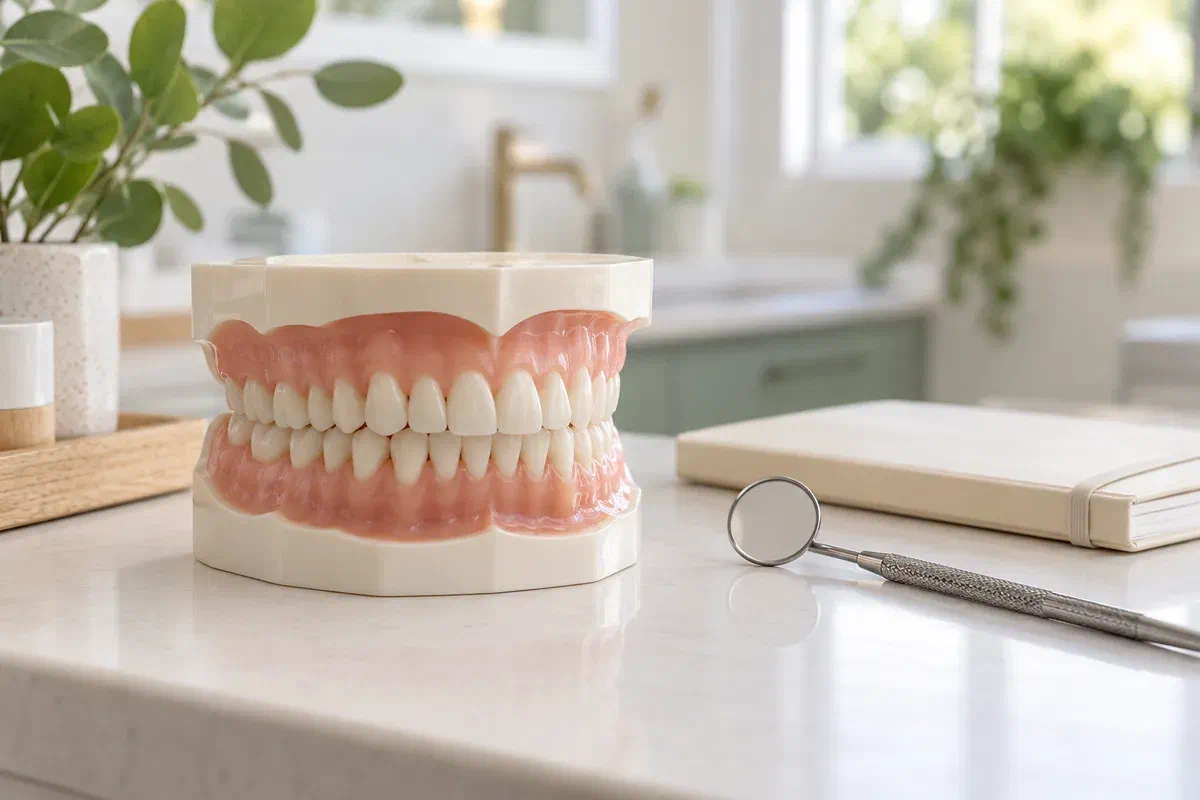
Illustrative supported dental teaching cast beside a mirror and closed notebook
Describing the restriction

How much, how often, and since when?

Try to recall when you first noticed it, whether it is getting better or worse and whether it varies through the day. No one expects you to name the cause, and you won't be pressed to open further than is comfortable.

Any ache that comes with the stiffness

Note where it sits and whether it arrives with chewing, on waking or after a long meeting. Mention tooth pain or soreness elsewhere in the face too. That helps the clinician consider several sources instead of assuming the joint is responsible for everything near the ear.

Catching, deviation or a change in how the teeth meet

Does the jaw swing to one side as it opens, catch and release, or close differently than before? Did it start after a knock? Don't force it open to show us. A jaw that suddenly can't open or close normally needs a prompt call, not a wait for a routine date.

Sounds that come and go with movement

Some people notice a click disappear just as their opening becomes more limited. Tell us about any change like that, and whether noises hurt. A sound by itself doesn't decide treatment, and loudness isn't a gauge of harm, so it's considered with everything else.

Call promptly if the restriction follows an injury, or comes with significant swelling, fever or sudden difficulty moving. If you cannot eat or drink or have serious associated symptoms, seek urgent medical care instead of waiting for a jaw appointment.

What the visit should give you

A measured starting point and a reason for each next step

With restricted opening, it helps to know whether the pattern looks muscular, joint-related, dental or like something for another provider. You're entitled to a plain explanation of how the clinician reached their view. The answer may be watchful waiting, practical care, or a need for more information before anything specific is suggested.

Recording how far and how comfortably you open today gives a useful reference. If you return in a few weeks, the comparison has meaning. The point isn't to hand you a permanent diagnosis after one visit; it is to leave you with a plan you can follow and a clear time to check it.

Patient information: NIDCR — history, examination, and diagnostic considerations for TMD

Your own goals for eating and talking

Maybe you want to bite into an apple again, or get through a presentation without your jaw tiring. Tell us. These goals are more useful than a pain number alone, and they shape both the questions and what care aims to achieve.

A targeted look at movement and related areas

The clinician may observe opening and side-to-side movement and check the joints, muscles and teeth. Point out when something reproduces your usual tightness or ache. The examination stays within comfortable limits, with pauses whenever you want them.

A rationale for imaging, review or referral

If a scan or outside opinion is raised, ask what it would clarify and whether it could change your care. Limited opening doesn't always need the same investigation. If monitoring is chosen, find out what to watch and what would justify coming back early.

During your appointment

How the assessment runs

If you can only open a little, or sitting for a long visit is difficult, tell us when you book so we can plan for it. Bring any old imaging reports, though a new restriction is worth discussing now rather than after you've gathered every file.

  1. History first

    We'll talk about when the stiffness started, what has changed, past injuries, dental treatment, your health and anything you've tried, from heat packs to a guard. Note what eased it and what made it worse. If it's better today, describe a typical tight day.

  2. Watching the jaw move

    Opening, closing and side movements are observed gently, and the relevant joints, muscles and teeth are checked. You may be asked whether a spot is tender or a motion feels familiar. Say stop if it hurts; your concern counts without forcing anything.

  3. Explaining what was seen

    Ask what seems most relevant, which other explanations were considered and whether a working diagnosis can be made yet. A particular question may need further investigation. Normal-looking findings don't mean your restriction is imagined or that the discussion is over.

  4. Planning what comes next

    Choices include monitoring, conservative advice, a test or referral. Ask who will arrange each step and how you'll hear the results. Agree on which changes, such as the jaw getting stuck, mean you should call rather than wait.

The days after

Small, steady steps and a clear line to call

You might leave with a few things to try, a follow-up booked or a referral. If you're unsure which step comes first, which is optional or who arranges it, ask before you head home.

Stay within the advice you were given

Use any comfort measures or changes to eating habits as discussed. Don't add aggressive stretching or try to pop the jaw into place after watching a video. If something increases the stiffness or pain, stop and check with the provider.

Notice, but don't keep measuring

A brief weekly note on how meals, yawning and comfort are going is useful. Constantly checking how many fingers fit between your teeth isn't, and can keep the area irritated. Bring your notes to the review.

Follow through on the next appointment

Confirm how imaging or another visit will be booked and who will explain the findings. If your work schedule or travel makes timing hard, tell us. A referral should end in a clear next action, not an open question.

Next steps that may follow

Matching the plan to the question that's left

Being assessed doesn't commit you to treatment. Ask why an approach is suggested for your situation and what would make it worth reconsidering.

When there's nothing to actively treat

Explanation and observation

Mild, stable stiffness or a painless sound may be explained and simply watched. Ask what change would be significant and whether a recheck is useful. Monitoring is a decision, not a brush-off, and a jaw that gets worse should bring you back.

When easing symptoms is the first goal

A conservative symptom plan

Practical measures may be suggested, with a review of how your opening and eating respond. Make sure you know what to try and when to return. If things don't improve, or the first explanation starts to fit less well, the plan should be revisited.

When further information would guide the decision

Imaging or an outside assessment

Different tests answer different questions, and a medical or specialist opinion may help more than further dental work. Ask what the result could change and who will go over it with you. An image is read alongside your history and exam, never on its own.

Mississauga questions about jaw movement

Limited opening, explained

Ask about the limits of any test and the reason for a recommendation before deciding on treatment. The aim is to make the problem clearer.

(905) 876-4488
How far should a jaw normally open?
It varies between people, which is why your own change matters more than a single number. The clinician may observe or measure your opening as part of the assessment and compare it at later visits.
Can stiffness in the morning be related to clenching at night?
It can be one possibility. Mention morning tightness, tired cheeks or a partner noticing grinding. The clinician considers this along with other explanations rather than assuming one cause.
Is it safe to keep eating normally if my opening is limited?
Choose foods that feel comfortable and avoid forcing your jaw wide. If you cannot eat or drink, or the jaw becomes stuck, call promptly or seek urgent care.
Can a dental cleaning be adapted if I can't open wide?
Tell the team ahead of time. Breaks and adjustments can often be discussed, and knowing about the restriction helps plan the visit.
What does it mean if my jaw shifts to one side when I open?
It is one finding the clinician may note, but on its own it doesn’t confirm a diagnosis. It’s considered alongside your symptoms, history and the rest of the examination.
Can I book one visit that covers both jaw concerns and my regular checkup?
Ask when you call. Depending on the time needed, the team can discuss whether to combine them or schedule separately so the jaw concern gets enough attention.
Booking from Mississauga

Tight, stuck or just not opening like it used to?

Contact Milton Dental Clinic about reduced opening, jaw ache or a bite that feels different. If the jaw has recently locked or you've had an injury, say so when you call so we can discuss how soon you should be seen.

Outcomes may include monitoring, conservative advice, further investigation or a referral.

Visit Milton Dental Clinic
Unit 1, 342 Bronte St. S, Milton, ON L9T 5B7
Get directions Clinic hours
Monday–Thursday
11am–7pm
Friday–Sunday
By appointment only

Areas we serve

  • Milton
  • Oakville
  • Mississauga
  • Georgetown
  • Halton Hills
  • Acton
  • Campbellville
  • Brampton
  • Burlington
  • Puslinch
  • Rockwood
  • Erin
  • Caledon
  • Etobicoke
  • Old Milton
  • Bronte Meadows
  • Timberlea
  • Dorset Park
  • Dempsey
  • Clarke
  • Beaty
  • Coates
  • Harrison
  • Scott
  • Willmott
  • Ford
  • Bowes
  • Cobden
  • Walker
  • Mountain View
  • Milton Heights
  • Hawthorne Village
  • Valley View
  • Fallingbrook
  • Nassagaweya
  • Trafalgar
  • Esquesing
  • Nelson
  • Brookville
  • Moffat
  • Glen Williams
  • Norval
  • Limehouse
  • Stewarttown
  • Ashgrove
  • Hornby
  • Silver Creek
  • Speyside
  • Scotch Block
  • North Oakville
  • River Oaks
  • Glen Abbey
  • West Oak Trails
  • Palermo
  • Bronte Creek
  • College Park
  • Joshua Creek
  • Uptown Core
  • Preserve
  • Iroquois Ridge
  • Lisgar
  • Meadowvale
  • Meadowvale Village
  • Churchill Meadows
  • Erin Mills
  • Central Erin Mills
  • Streetsville
  • East Credit
  • Creditview
  • Heartland
  • Sheridan
  • Mount Pleasant
  • Credit Valley
  • Huttonville
  • Churchville
  • Springbrook
  • Northwest Brampton
  • Bram West
  • Fletcher's Meadow
  • Fletcher's Creek South
  • Alton Village
  • Orchard
  • Millcroft
  • Headon Forest
  • Tansley
  • Brant Hills
  • Tyandaga
  • Kilbride
  • Lowville
  • Aberfoyle
  • Morriston
  • Arkell
  • Hillsburgh
  • Freelton
  • Carlisle
  • Waterdown
  • Flamborough
  • Mountsberg

How can we help?

Milton Dental Clinic

Have a question about your smile? Choose the option that works best for you.

For urgent dental concerns, please call.
Messages are reviewed during clinic hours.