

Illustrative conversation about a manageable jaw self-care plan
Specialized Care

TMJ Self-Care Guidance in Campbellville

Living out of town, you want to know which jaw symptoms you can look after at home and which ones justify a call today. Get clear self-care steps, sensible limits, and a simple rule for when to phone before you drive in.

Home care for a rural household

Manage it at home, or pick up the phone?

When the nearest appointment means a drive into town, it helps to know where the line sits. Jaw self-care covers the everyday side of a joint or muscle problem: a few practical measures that keep eating, talking and working comfortable while a conservative plan runs its course. It is meant to sit beside a proper assessment, never to replace one.

That line depends on your own situation. Mild soreness after a long, chewy meal is something many people can ease at home. A painless click often needs nothing at all. A jaw that has suddenly locked, or one that comes with swelling or fever, is a different matter. Ask which symptoms fit your plan and which mean ringing us first.

Households in Campbellville often group errands and appointments, and a jaw review can fit into that kind of planning. Tell us what has been checked before, what you have tried, and anything that made the ache sharper. We can help you leave with a short plan and a clear rule for when to call, so you are not left wondering.

Plan home jaw care with our team
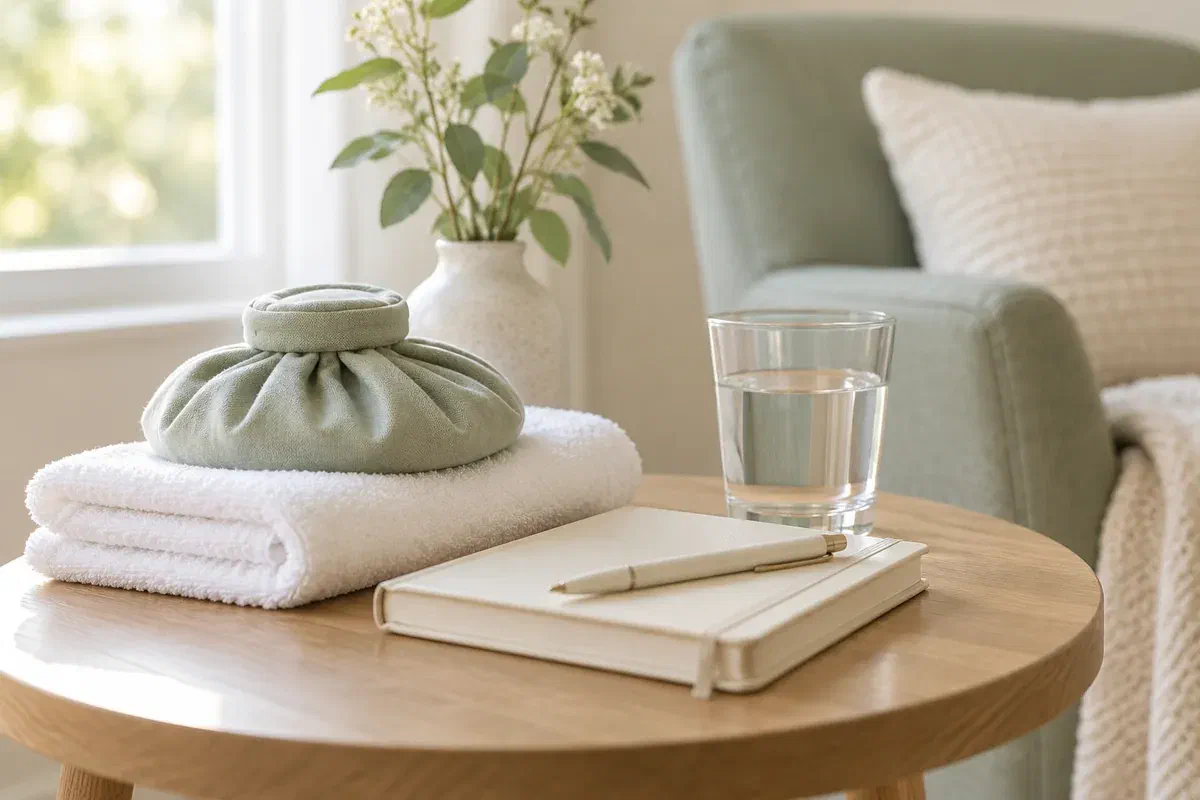
Illustrative covered comfort pack, folded towel, and journal on a home side table
Questions worth settling in one visit

The everyday situations behind the ache

Choose a few moments that cause real difficulty. Explain what sets discomfort off, which advice seems unclear, and whether anything has changed since your jaw was last examined.

Work, meals and long days aggravate the jaw

Physical work, early starts, quick meals on the go and tough or chewy food can all add up. Softer choices and smaller bites for a short period may ease avoidable strain. Ask how to stay properly fed while you do this and when to return to your usual diet; normal chewing is not the enemy.

You clench when concentrating or under strain

Many people clench while driving, lifting, working outdoors or dealing with stress, and gum or nail biting can add to it. Advice focuses on noticing those moments and letting the jaw relax. You do not need to watch it all day or hold it in a fixed position.

You are not sure a home remedy is safe

Describe anything you have tried, from stretches to heat packs to devices bought online, especially if pain increased. What works for one jaw problem can aggravate another. Ask to have suitable measures demonstrated with limits, rather than piecing together a routine from several sources.

Call before you drive in, or seek urgent care, for a jaw that locks suddenly, being unable to eat or drink, clear swelling, fever, or symptoms after a fall or injury. A home routine should never postpone checking a new or worsening problem.

What good guidance gives you at home

Confidence about what to do, and what to call about

Clear guidance means you are not guessing on a bad evening. Ask which steps suit your findings and what each one is expected to do. It helps to know which measures are for a flare, which address daily habits, and which target one awkward movement, so you can tell when a step has done its job.

It should also fit how you live. Seasonal work, caring for animals, long commutes and family schedules all shape what is realistic. Mention them. If a step proves impractical or uncomfortable, raise it by phone or at your review instead of persisting, so the plan stays useful and later visits can look at real progress.

Patient information: NIDCR — conservative and self-management approaches for TMD

Knowing what to modify and what is fine

Your clinician can help you tell activities worth easing off from ordinary movements you can carry on with. Ask about short-term adjustments during a flare and how to come back from them. Easing strain never means holding the jaw still or giving up normal food for good.

Instructions you can repeat with confidence

For a warm pack, massage or gentle exercise, ask how to do it, how long for and when to stop, and ask to see it. That way you can repeat it at home without second-guessing. A general idea is not a reason to stretch hard or keep repeating a movement.

A clear plan for follow-up

Agree when progress will be reviewed and what should prompt a call before then. Symptoms that hang on deserve another look or a change of approach. Difficulty keeping up with a routine is no indication that your concern is unimportant.

How we put your plan together

Four steps, one visit where possible

Self-care makes most sense when the cause has been considered. Ask whether your jaw should be examined first, particularly if symptoms are new, changing or unlike anything discussed previously.

  1. Go over what is known so far

    Share earlier findings, what you were told and how symptoms are behaving now. Mention any night appliance, medication or exercise programme. The clinician will judge whether to offer guidance straight away or examine the jaw first.

  2. Pick the daily situations to work on

    Talk through work, meals, driving, habits and sleep. Instead of a long list of restrictions, settle on the two or three changes likely to make the biggest difference, and talk about how they slot into a day that may start early and end late.

  3. See it demonstrated and try it yourself

    Review any advice on resting the jaw, using warmth or cooling, or gentle movement, and practise it while the clinician watches. Check the sensation you are aiming for and the point at which you should stop. Rising pain is not evidence that a measure is working.

  4. Agree on a review date and a phone rule

    Decide what improvement would be worthwhile, when you will return and which signs mean ringing the clinic first. Ask which questions can be handled by phone and which need a visit. If the plan does not seem to help, that should lead to a rethink, not a heavier routine.

Looking after your jaw between visits

Keep it gentle and keep it simple

Stay with the steps we settled on together. Where they seem to clash with what another provider said, or with your appliance instructions, a quick call can sort it out before you change course.

Adjust food and habits for a set time

Softer textures, smaller pieces and a break from gum or nail biting may make sore days easier. Ask how long each change should last. If you are struggling to eat or drink enough, contact a professional rather than restricting further.

Use packs wrapped and within limits

If warmth or cooling has been recommended, wrap the pack and keep to the suggested time. Avoid direct ice, very hot packs or nodding off with one in place. Stop if your skin is irritated or symptoms worsen, and ask first if you have reduced feeling in the area.

Move the jaw only as shown

Stick to the demonstrated technique. Forcing a wide opening, pushing the jaw into new positions or adding resistance can aggravate the problem. If an activity makes the pain worse or the jaw starts to lock, stop and phone your provider.

Patient information: NHS — conservative comfort measures for temporomandibular symptoms

Next steps from Campbellville

Home care is one route. Here are the others.

Self-care is only part of looking after a sore jaw. Ask what would support carrying on at home, and what would make a fuller assessment more useful than another exercise.

When findings support self-care first

Supported home measures with review

A few clearly explained steps and a booked review may be enough to start. Ask which step carries the most weight and what you should notice if it is helping. The plan should feel manageable and carries no promise of fixing every symptom.

When symptoms continue or the plan is hard to fit in

A revised plan or guided therapy

We might rework the advice, or talk about seeing a physiotherapist who works with jaw problems if that seems a good fit. Ask what the change is meant to achieve. More exercises are not automatically better.

When symptoms change or stay unexplained

Further dental, medical or specialist review

Lasting pain, reduced opening or findings that no longer fit the first explanation may need a broader look. Ask what the review would aim to find and which home measures to continue. A plan that has not helped is not proof that you need surgery or permanent bite work.

Campbellville questions about jaw care at home

What you can handle, and what needs us

Clear advice saves unnecessary trips and prevents risky delays. Bring any instruction that seems unclear or hard to follow.

(905) 876-4488
Which jaw symptoms can usually wait for my scheduled review?
Mild, familiar soreness that eases with gentle care, or a painless click that has not changed, can often wait for a planned review. Ask at your visit which symptoms fit your plan. When you are unsure, phoning is better than guessing.
When should I call before driving in with jaw pain?
Call for a jaw that suddenly locks, pain that stops you eating or drinking, swelling, fever, symptoms after an injury, or anything that feels very different. We can advise whether to come in or seek urgent care elsewhere.
Can heavy lifting or physical work affect my jaw?
Some people clench hard during effort. Noticing it and relaxing the jaw between tasks may help. Mention the kind of work you do so advice can be practical, and stop any activity that clearly worsens symptoms until you have discussed it.
Is a cold drink or ice chips a good idea for a sore jaw?
Sipping cold water is fine, but chewing ice adds hard, repeated load to the jaw and can be tough on teeth, so it is best avoided while symptoms are flaring. If cooling has been recommended for comfort, use a wrapped pack on the outside of the face instead, for the time you were given.
Is it safe to use a heat pack after a long day outside?
If warmth has been suggested for you, a wrapped pack used for the recommended time is the usual approach. Avoid very hot packs and stop if your skin reacts or pain increases. Ask first if you have reduced sensation or a skin concern.
Should I keep eating soft food until my next appointment?
Only for as long as you were advised. Ask how to reintroduce firmer foods gradually. If pain stops you eating or drinking enough, contact us rather than waiting.
Jaw self-care for Campbellville

Know what to do at home and when to call.

Phone Milton Dental Clinic about looking after a sore jaw joint or tight jaw muscles between visits. Mention what has been checked before and which remedies you have used at home, so we can tell you whether a visit, a phone call or a simple adjustment is the sensible next step.

Home measures work beside an assessment. If your jaw stops improving, gets worse or behaves differently, let us look again.

Visit Milton Dental Clinic
Unit 1, 342 Bronte St. S, Milton, ON L9T 5B7
Get directions Clinic hours
Monday–Thursday
11am–7pm
Friday–Sunday
By appointment only

Areas we serve

  • Milton
  • Oakville
  • Mississauga
  • Georgetown
  • Halton Hills
  • Acton
  • Campbellville
  • Brampton
  • Burlington
  • Puslinch
  • Rockwood
  • Erin
  • Caledon
  • Etobicoke
  • Old Milton
  • Bronte Meadows
  • Timberlea
  • Dorset Park
  • Dempsey
  • Clarke
  • Beaty
  • Coates
  • Harrison
  • Scott
  • Willmott
  • Ford
  • Bowes
  • Cobden
  • Walker
  • Mountain View
  • Milton Heights
  • Hawthorne Village
  • Valley View
  • Fallingbrook
  • Nassagaweya
  • Trafalgar
  • Esquesing
  • Nelson
  • Brookville
  • Moffat
  • Glen Williams
  • Norval
  • Limehouse
  • Stewarttown
  • Ashgrove
  • Hornby
  • Silver Creek
  • Speyside
  • Scotch Block
  • North Oakville
  • River Oaks
  • Glen Abbey
  • West Oak Trails
  • Palermo
  • Bronte Creek
  • College Park
  • Joshua Creek
  • Uptown Core
  • Preserve
  • Iroquois Ridge
  • Lisgar
  • Meadowvale
  • Meadowvale Village
  • Churchill Meadows
  • Erin Mills
  • Central Erin Mills
  • Streetsville
  • East Credit
  • Creditview
  • Heartland
  • Sheridan
  • Mount Pleasant
  • Credit Valley
  • Huttonville
  • Churchville
  • Springbrook
  • Northwest Brampton
  • Bram West
  • Fletcher's Meadow
  • Fletcher's Creek South
  • Alton Village
  • Orchard
  • Millcroft
  • Headon Forest
  • Tansley
  • Brant Hills
  • Tyandaga
  • Kilbride
  • Lowville
  • Aberfoyle
  • Morriston
  • Arkell
  • Hillsburgh
  • Freelton
  • Carlisle
  • Waterdown
  • Flamborough
  • Mountsberg

How can we help?

Milton Dental Clinic

Have a question about your smile? Choose the option that works best for you.

For urgent dental concerns, please call.
Messages are reviewed during clinic hours.